
What is the International Baccalaureate programme?
If you’ve been researching secondary education options, you’ve likely come across the International Baccalaureate programme and wondered whether it’s truly different from standard national qualifications. It is. The IB isn’t simply a harder A-level equivalent. It’s a globally recognised framework that builds academic rigour alongside critical thinking, research skills, and real-world application. For students with an interest in sciences, the IB offers particularly rich pathways through subjects like international baccalaureate biology and international baccalaureate chemistry. This guide covers the programme structure, science subject specifics, benefits, and how to choose the right school.
Table of Contents
- Key takeaways
- What is the International Baccalaureate programme?
- Structure of the IB Diploma Programme
- Benefits and challenges of IB sciences
- Admission and choosing the right IB school
- My honest take on the IB science experience
- How Tibertutor supports IB science students
- FAQ
Key takeaways
| Point | Details |
|---|---|
| Four distinct programmes | The IB covers ages 3 to 19 across four separate programmes, each with its own educational focus. |
| Science depth at two levels | Biology and chemistry are available at both Standard and Higher Level, with distinct assessment requirements. |
| Holistic diploma requirements | The IB Diploma includes Theory of Knowledge, an extended essay, and CAS alongside six subject areas. |
| Globally recognised qualification | Universities worldwide accept the IB Diploma as strong evidence of academic preparedness and independence. |
| Parental involvement matters | Active parental support in planning and time management contributes significantly to student success. |
What is the International Baccalaureate programme?
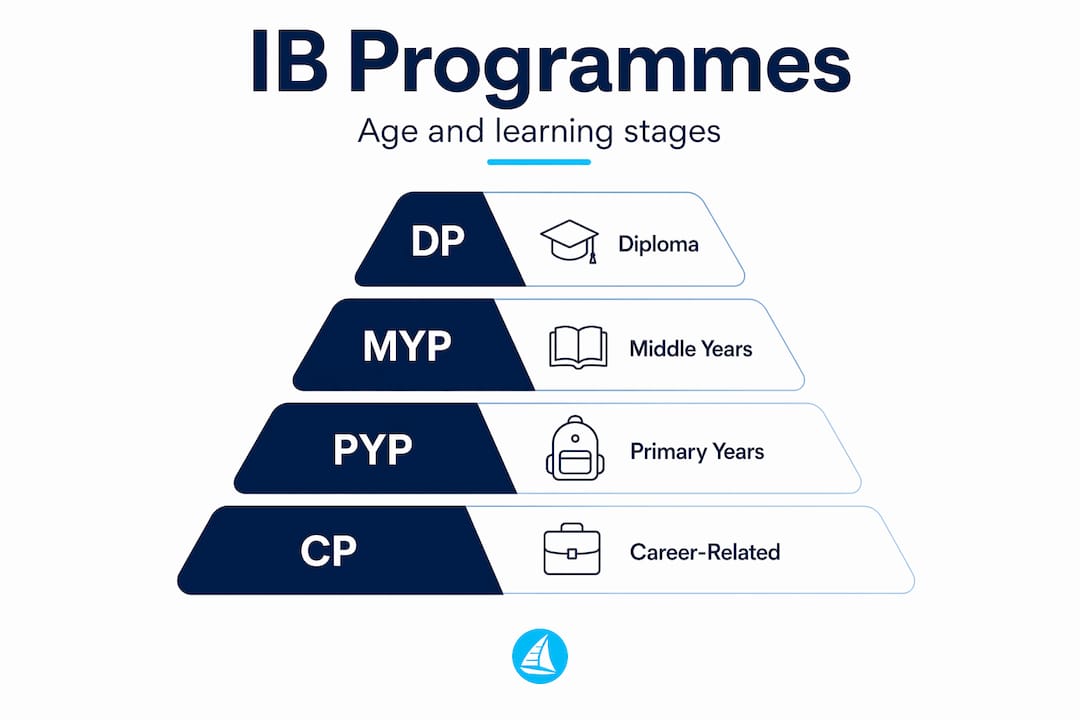
The International Baccalaureate is a not-for-profit educational foundation offering four programmes covering ages 3 to 19. Each programme is designed to meet students at a specific stage of their development, building progressively towards independent, internationally minded learners.
Here is a clear overview of each:
- Primary Years Programme (PYP): Ages 3 to 12. Focuses on inquiry-based learning across all subjects, encouraging curiosity from an early age.
- Middle Years Programme (MYP): Ages 12 to 16. Introduces disciplinary and interdisciplinary study, laying the groundwork for science investigation and academic writing.
- Diploma Programme (DP): Ages 16 to 19. The most widely recognised IB qualification, studied in over 3,600 schools across 155 countries.
- Career-related Programme (CP): Ages 16 to 19. Combines academic IB subjects with professional and vocational learning.
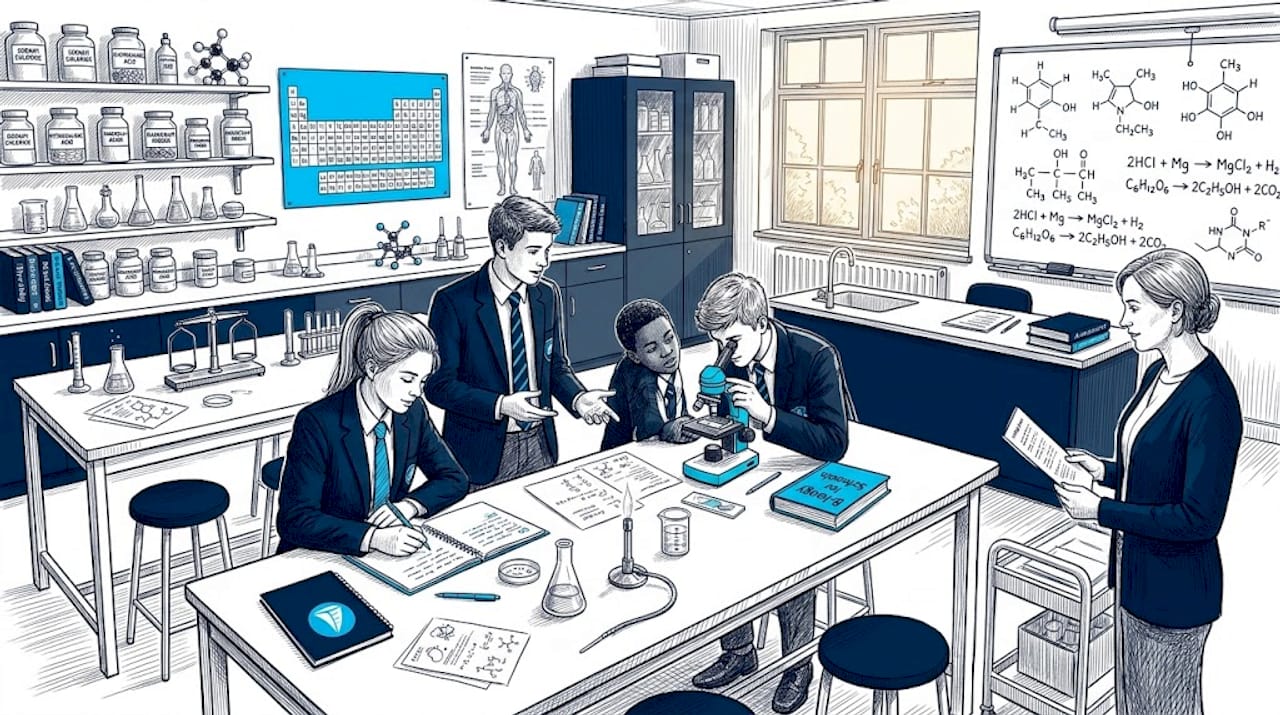
Sciences, including biology and chemistry, feature prominently in the MYP and DP. These subjects are taught within IB World Schools that have been formally authorised and regularly reviewed by the IB organisation to meet teaching and resource standards.
| Programme | Age range | Key focus |
|---|---|---|
| Primary Years (PYP) | 3 to 12 | Inquiry and transdisciplinary learning |
| Middle Years (MYP) | 12 to 16 | Disciplinary rigour and personal project |
| Diploma (DP) | 16 to 19 | Academic depth, core requirements, exams |
| Career-related (CP) | 16 to 19 | Professional skills combined with DP subjects |
Structure of the IB Diploma Programme
The IB Diploma Programme is where most students and parents focus their attention, and with good reason. It is academically demanding, deeply structured, and highly regarded by universities worldwide.
Students study six subjects drawn from different groups: languages, social sciences, sciences, mathematics, and the arts. Every student chooses at least one science subject. Within the Diploma, the sciences (including biology and chemistry) are available at two levels.
- Higher Level (HL): Covered in approximately 240 teaching hours. HL courses go into significantly greater depth and breadth than SL, and universities often look at HL grades when setting entry requirements.
- Standard Level (SL): Covered in approximately 150 teaching hours. SL still offers rigorous study but with a narrower scope, making it manageable alongside other demanding subjects.
Beyond the six subjects, the Diploma has three core components that every student must complete:
- Theory of Knowledge (TOK): A course exploring how we know what we know. For science students, this often produces fascinating dialogue about the nature of scientific evidence.
- Extended Essay (EE): A 4,000-word research paper on a topic of the student’s choice. Science students frequently write theirs in biology or chemistry.
- Creativity, Activity, Service (CAS): Structured activity outside the classroom, covering creative pursuits, physical activity, and community service.
Assessment across the six subjects follows a grades 1 to 7 scale, combining external international baccalaureate exams with internal assessments such as lab reports and investigations. The maximum total score is 45 points.
Pro Tip: If your child is strong in science, seriously consider taking biology or chemistry at Higher Level. HL science grades carry significant weight in university applications for medicine, engineering, and natural sciences.
Benefits and challenges of IB sciences
The IB Diploma develops well-rounded students by balancing academic, social, emotional, and physical growth. For science students specifically, the benefits are clear and practical.
What students gain:
- Deep inquiry skills through practical investigations and internal assessments in biology and chemistry
- The ability to write scientifically, present data, and evaluate methodology
- Preparation for higher education at universities worldwide, which recognise the IB for its academic rigour
- Experience with real-world scientific problems rather than purely theoretical content
The interdisciplinary nature of the programme also sets IB science students apart. A student studying chemistry will draw on mathematical reasoning from their maths course and philosophical thinking from TOK. This builds the kind of flexible thinking that university science courses demand.
That said, there are genuine challenges. Managing the workload across CAS, the extended essay, and science subjects simultaneously can feel like a lot. Students often underestimate how much time internal assessments consume alongside exam preparation. Time management is not just useful in the IB. It is non-negotiable.
Pro Tip: Encourage your child to start their extended essay early, ideally in the first year of the DP. Choosing a science topic they are genuinely curious about makes the process far more rewarding than treating it as a box to tick.
Admission and choosing the right IB school
Getting into an IB programme starts with finding an authorised IB World School. Not every school offers the IB, and the quality of science provision varies considerably between those that do.
Here is what to look for when choosing a school:
- Authorisation status: Confirm the school is formally recognised by the IB organisation. Authorised schools meet strict standards for teaching, resourcing, and programme delivery.
- Science facilities: Laboratories equipped for practical biology and chemistry work are non-negotiable for HL students. Ask specifically about lab availability and quality.
- Subject combinations offered: Some schools offer limited HL options. Verify that the science subjects your child wants are available at the level they need.
- Support structures: Look for schools with strong academic mentoring, TOK guidance, and extended essay supervision.
- Track record: Ask about the school’s average IB score and, specifically, the performance of science students in recent years.
Admission requirements vary by school, but most IB programmes expect students to demonstrate solid academic performance in prior years, particularly in maths and sciences. Some schools hold entrance assessments or interviews.
Parents play a vital role not just in choosing the right school but in supporting their child through the application process and the years that follow. Understanding the structure of the programme helps parents provide informed encouragement rather than unnecessary pressure.
My honest take on the IB science experience
I’ve supported hundreds of IB science students over the years, and the biggest misconception I see is this: students think the IB is about knowing more. It isn’t. It’s about thinking differently.
The students who thrive aren’t necessarily the ones who memorise the most. They are the ones who practise applying knowledge under pressure, who learn to manage their time before the deadline forces them to, and who treat their internal assessments as genuine scientific investigations rather than hoops to jump through.
What I’d tell every parent is to resist the urge to panic about the workload in the first term. The IB is designed to be demanding. The discomfort is part of the process. What matters is building good habits early, seeking help when a concept doesn’t land, and staying curious about the subject beyond the syllabus.
The IB science experience, done well, produces students who are genuinely ready for university science. Not just academically, but in terms of confidence and independence.
— Oliver
How Tibertutor supports IB science students
If your child is preparing for the IB sciences or you are exploring what additional support looks like, Tibertutor is built specifically for this.
The IB science question bank at Tibertutor gives students access to thousands of exam-style questions in biology, chemistry, and physics, all mapped to the current IB syllabus. Resources include animated videos, detailed notes, flashcards, and mock exams, built by experienced IB examiners who know exactly what markers look for. Progress tracking and performance analytics help students identify weak areas and direct their revision where it counts most. Explore flexible support options at Tibertutor pricing and give your child the preparation they deserve.
FAQ
What does the IB Diploma qualify you for?
The IB Diploma is recognised by universities worldwide as a rigorous pre-university qualification. It meets entry requirements for undergraduate programmes across the UK, US, Europe, and beyond, with HL science grades carrying particular weight for courses such as medicine and engineering.
What is the IB bilingual diploma?
The IB bilingual diploma is awarded to students who complete certain requirements in two languages, such as completing two Group 1 language courses or writing their extended essay in a language different from their Group 1 subject. It is an additional distinction noted on the IB diploma certificate.
How are IB science exams structured?
International baccalaureate exams in sciences combine external written papers with internal assessments such as laboratory investigations. Each subject is graded on a scale of 1 to 7, and the overall diploma requires a minimum total score across all six subjects plus the core components.
What is the difference between HL and SL sciences in the IB?
Higher Level science courses cover greater depth and breadth than Standard Level, requiring around 240 teaching hours compared to 150 for SL. Both are assessed on the same 1 to 7 scale, but HL grades are often the ones universities scrutinise most closely for science-related degree applications.
Can students take both IB biology and chemistry?
Yes. Students can choose both biology and chemistry within the IB Diploma, either at Standard or Higher Level. Many students aiming for medicine or biomedical science choose both, though this increases the overall workload and requires strong time management.