IB Biology Immune System: 3 Revision Priorities to Score Higher
The immune system is the body’s coordinated defence network against pathogens, working through two linked branches: innate immunity, which responds immediately but non-specifically, and adaptive immunity, which is slower, pathogen-specific, and builds lasting memory. This split sits at the heart of the “Defence Against Infectious Disease” syllabus statement, and examiners expect you to name both branches, contrast their speed and specificity, and explain how they interact.
TL;DR:
- The immune response relies heavily on the correct sequence from pathogen recognition through phagocytosis to clonal selection, requiring precise step order for exam success.
- Primary lymphoid organs produce lymphocytes, while secondary organs activate them, making their roles in defence distinct and frequently confused in exam answers.
- Vaccines trigger primary responses that build memory cells, enabling faster secondary responses upon re-exposure, which booster doses aim to reinforce and extend.
- HIV infection destroys helper T cells, impairing both antibody production and cytotoxic T-cell activation, leading to a compromised immune system.
- Mistakes in labelling cells and organs, or skipping steps in the immune process, are common errors that significantly reduce exam scores, making practice with exam-specific questions essential.
Table of Contents
- Innate vs adaptive immunity explained for IB answers
- The cells, tissues and organs you need to label correctly
- The stepwise immune response: from phagocytosis to clonal selection
- Antibodies, humoral immunity and how vaccines build memory
- HIV and the collapse of helper T-cell function
- Turning this topic into marks with Tiber Tutor
- Primary versus secondary immune response: what actually differs
- How immune tolerance works, and what happens when it fails
- Beyond HIV: allergies and other immune disorders worth knowing
- Author note: three revision priorities and common errors
- Practise this topic properly with Tiber Tutor’s examiner-built resources
- Where to go for diagrams and deeper reading
- Sources
- FAQ
Innate vs adaptive immunity explained for IB answers
Innate immunity is your body’s first line of defence, and it acts within minutes without recognising specific pathogens. Adaptive immunity takes longer to mobilise but targets one pathogen precisely and remembers it for years, sometimes decades.
For exam answers, structure your response around these components:
- Innate immunity: physical barriers (skin, mucous membranes), phagocytic cells (neutrophils, macrophages), the complement system, and the inflammatory response.
- Adaptive immunity: B lymphocytes (produce antibodies) and T lymphocytes (helper, cytotoxic, regulatory), defined by specificity and immunological memory.
The two systems aren’t isolated. Innate immune cells, particularly dendritic cells and macrophages, engulf pathogens and then present fragments of them (antigens) to T cells, effectively switching on the adaptive response. This handoff is a favourite examiner question, so a strong sentence to memorise reads: “Phagocytes present processed antigens on MHC molecules, activating helper T cells and initiating the adaptive immune response.” Use this kind of precise, cause-and-effect phrasing whenever a question asks how the two systems interact rather than just what they are.
The cells, tissues and organs you need to label correctly
Diagram-labelling and “state the role of” questions reward precision over prose. Learn each structure by its single defining function rather than a paragraph of context.
- Neutrophils: short-lived phagocytes, first responders that engulf pathogens at infection sites.
- Macrophages: longer-lived phagocytes that engulf pathogens and act as professional antigen-presenting cells (APCs).
- Dendritic cells: the most efficient APCs, capturing antigens in tissues and migrating to lymph nodes to activate T cells.
- B lymphocytes: recognise antigens directly and differentiate into antibody-secreting plasma cells.
- Helper T cells: coordinate the response by activating B cells and cytotoxic T cells via cytokine signalling.
- Cytotoxic T cells: destroy infected or abnormal body cells directly.
Primary lymphoid organs, the bone marrow and thymus, are where lymphocytes are produced and mature. Secondary lymphoid organs, the spleen and lymph nodes, are where mature lymphocytes actually meet antigens and mount a response. Mixing these two categories up is a common way to lose an easy mark, so fix the distinction firmly: production happens in primary organs, activation happens in secondary ones.
The stepwise immune response: from phagocytosis to clonal selection
IB questions on mechanism reward answers written in strict sequence. Learning the process as four discrete steps, rather than one blurred paragraph, makes it far easier to reproduce under exam pressure.
- Recognition and opsonisation: pathogens are tagged by antibodies or complement proteins, marking them for destruction and making them easier for phagocytes to engulf.
- Phagocytosis and antigen processing: a phagocyte engulfs the pathogen into a phagosome, which fuses with a lysosome; digestive enzymes break the pathogen down, and antigen fragments are retained.
- Antigen presentation and T-cell activation: processed antigens are displayed on MHC molecules on the phagocyte’s surface; a matching helper T cell binds this complex and becomes activated, then proliferates.
- B-cell activation and clonal selection: activated helper T cells stimulate B cells with matching antigen receptors; selected B cells proliferate and differentiate into antibody-secreting plasma cells and long-lived memory cells.
Pro Tip: When a question asks you to “outline” this sequence, number your points exactly as above. Examiners mark against a sequential scheme, and a jumbled but factually correct answer often scores lower than a clean, ordered one.
Antibodies, humoral immunity and how vaccines build memory
Antibodies work through three distinct mechanisms, and naming all three separates a strong answer from an average one: neutralisation (blocking a pathogen’s ability to bind host cells), opsonisation (tagging pathogens to enhance phagocytosis), and complement activation (triggering a cascade that lyses pathogen cell membranes.
- Humoral immunity: mediated by B cells and free antibodies circulating in blood and lymph; effective against extracellular pathogens like bacteria.
- Cell-mediated immunity: mediated by T cells acting directly on infected cells; essential against viruses and intracellular pathogens.
Vaccination works by exposing the immune system to a harmless form of an antigen, triggering a primary response that generates memory B and T cells without causing disease. If the real pathogen appears later, those memory cells enable a faster, larger secondary response, which is precisely why booster doses exist: they reinforce and expand the memory cell population rather than starting from scratch.
HIV and the collapse of helper T-cell function
HIV specifically targets and destroys helper T lymphocytes, and this single fact explains nearly every downstream consequence examiners ask about. Because helper T cells coordinate both B-cell antibody production and cytotoxic T-cell activity, their loss doesn’t just weaken one arm of immunity, it compromises the whole adaptive system.
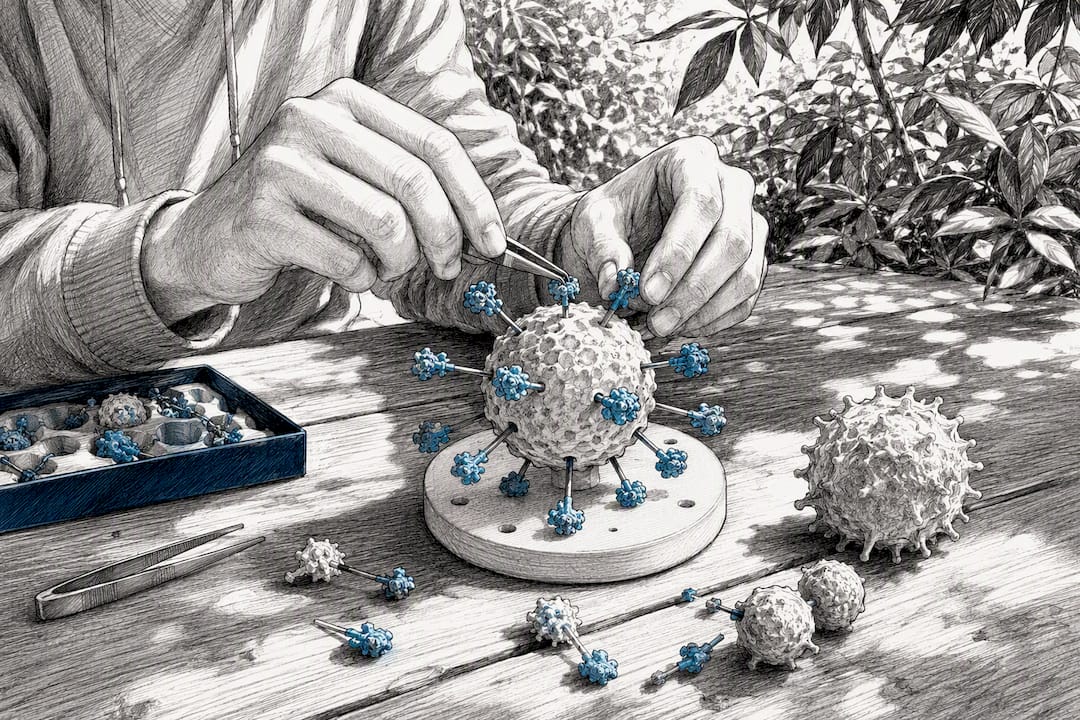
The CDC’s overview of HIV confirms that untreated infection progressively depletes helper T cell counts, reducing antibody production and leaving the body unable to mount effective responses to opportunistic infections. That’s the mechanism examiners want: infection → helper T cell destruction → impaired B-cell activation → vulnerability to secondary infection.
Turning this topic into marks with Tiber Tutor
Understanding the immune system is one thing. Reproducing it accurately under timed exam conditions is another skill entirely, and it needs deliberate practice rather than re-reading notes. Spaced retrieval, where you test yourself on the same content at increasing intervals, consistently outperforms passive review for exams like this one.
Tiber Tutor’s IB Biology notes are written by examiners and mapped directly to each syllabus statement covered here, so you’re never revising content that won’t appear in your paper. Once the concepts feel solid, move to topic tests for rapid retrieval practice on the immune system specifically, then use the custom test builder to drill any subtopic your analytics flag as weak.
A sensible weekly plan looks like this:
- Days 1 to 2: review notes on innate/adaptive immunity and cell roles.
- Days 3 to 4: complete a topic test, review every wrong answer against the mark scheme.
- Day 5: attempt a full timed mock exam and check the analytics dashboard for weak syllabus points.
Primary versus secondary immune response: what actually differs
A primary immune response happens the first time your body meets a particular antigen, and it’s slow. It takes several days to reach peak antibody concentration because naive B and T cells must first be located, activated, and expanded through clonal selection.
A secondary immune response happens on any later exposure to the same antigen, and it’s dramatically faster and stronger. Memory B and T cells generated during the primary response already exist in circulation, so they recognise the antigen immediately and expand rapidly, producing a higher concentration of antibodies within a much shorter timeframe.
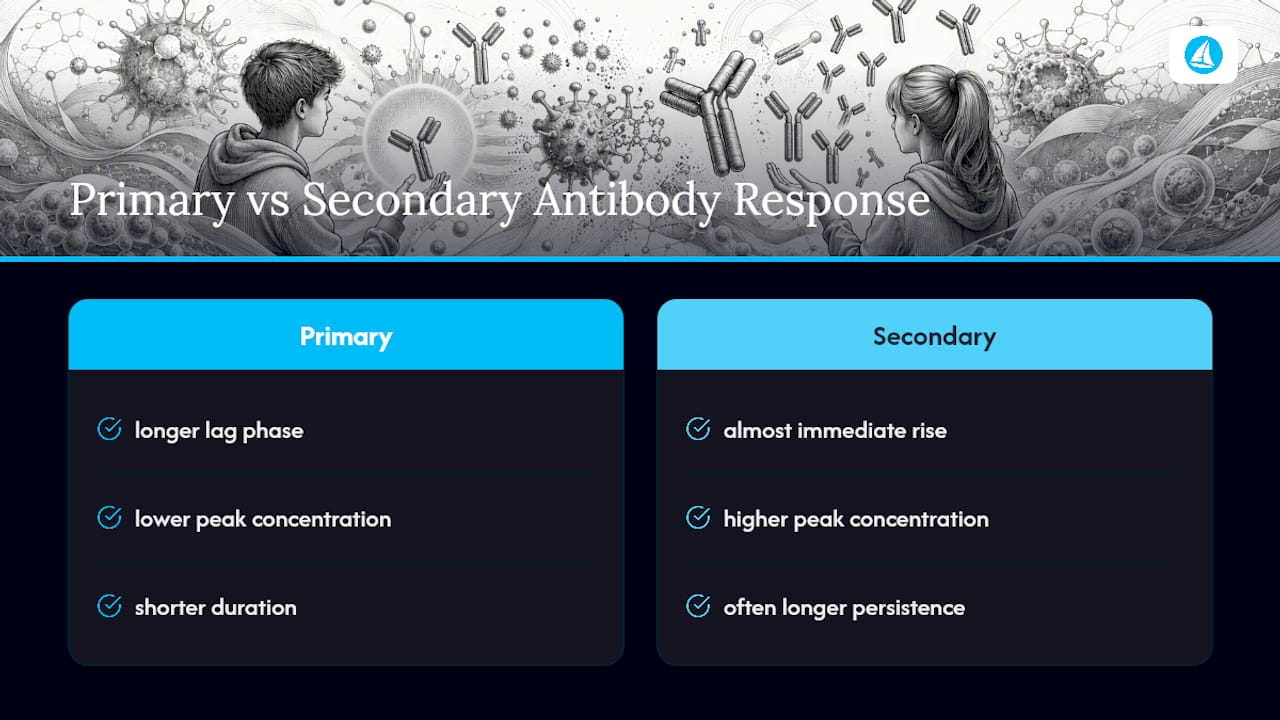
Examiners often present this as a graph question, showing antibody concentration against time for both responses on the same axes. The features you’re expected to identify are: a longer lag phase in the primary response, a lower peak antibody concentration, and a shorter duration of antibody presence compared with the secondary response. The secondary curve, by contrast, rises almost immediately, peaks higher, and often persists longer.
This distinction is also the biological basis for why some vaccines require multiple doses. The first dose triggers a primary response and establishes a pool of memory cells; the second or third dose (the booster) triggers a secondary-style response, pushing antibody concentrations to a much higher and longer-lasting level than a single exposure ever could. When a question asks why booster vaccinations improve protection, this mechanism, not a vague reference to “building immunity”, is the answer that scores marks.
How immune tolerance works, and what happens when it fails
Immune tolerance is the process by which the immune system learns to recognise the body’s own molecules as “self” and avoid attacking them. This happens largely during lymphocyte maturation in the primary lymphoid organs: T cells developing in the thymus, and B cells in the bone marrow, are screened against self-antigens, and those that react strongly against the body’s own tissues are eliminated or inactivated before they ever reach circulation.
This screening process isn’t flawless. Autoimmunity occurs when self-reactive lymphocytes escape this process and go on to attack the body’s own cells as though they were foreign pathogens. The immune system essentially misclassifies “self” as “non-self”, triggering an inflammatory or antibody-mediated response against healthy tissue.
The consequences depend on which tissue is targeted. In type 1 diabetes, autoreactive cytotoxic T cells destroy insulin-producing beta cells in the pancreas. In rheumatoid arthritis, the immune system attacks joint tissue, causing chronic inflammation and damage. In multiple sclerosis, immune cells attack the myelin sheath surrounding neurons, disrupting nerve signal transmission.
For exam purposes, the key causal chain to write out is: failure of self-tolerance during lymphocyte development → survival of self-reactive lymphocytes → immune attack on healthy tissue → chronic tissue damage specific to the organ targeted. Naming a specific example, rather than describing autoimmunity in the abstract, is usually what separates a top-band answer from a mid-range one.
Beyond HIV: allergies and other immune disorders worth knowing
HIV isn’t the only immune disorder that shows up in IB Biology questions, and examiners increasingly draw on allergic and autoimmune examples to test whether you understand mechanism rather than memorised facts.
Allergies occur when the immune system mounts an inappropriate response to a normally harmless substance, an allergen such as pollen, dust mite proteins, or certain foods. On first exposure, the body produces antibodies specific to the allergen, which then bind to mast cells. On subsequent exposure, the allergen cross-links these antibodies, triggering mast cells to release histamine and other inflammatory mediators. This causes the classic symptoms: swelling, itching, increased mucus production, and in severe cases, anaphylaxis, a rapid, whole-body reaction that can be life-threatening without immediate treatment.
Autoimmune diseases, as covered above, arise from a breakdown in self-tolerance rather than an overreaction to a foreign substance. It’s worth being precise about this distinction in an exam: allergies involve an exaggerated response to something genuinely foreign, while autoimmune conditions involve an attack on the body’s own tissue.
A third category worth knowing is immunodeficiency, where part of the immune system is missing or non-functional, either from a genetic condition present from birth or an acquired cause such as HIV infection. The shared consequence across all three categories, allergy, autoimmunity, and immunodeficiency, is that the finely tuned balance of the immune system has broken down in one direction or the other: either overreacting, misdirecting its attack, or failing to respond at all.
Author note: three revision priorities and common errors
If you take one thing from this topic, prioritise the response sequence, then cell and organ labelling, then past-paper phrasing. Most lost marks come from muddling primary and secondary lymphoid organs, describing mechanisms vaguely instead of naming specific cells, or skipping steps in the phagocytosis-to-clonal-selection chain. Fix these three habits and this becomes one of the more reliably scorable topics on the paper. Try a timed mock exam once the sequence feels automatic.
— Oliver
Practise this topic properly with Tiber Tutor’s examiner-built resources
Tiber Tutor gives you something no generic revision guide can: exam questions and mark schemes written by actual IB examiners, mapped directly to every syllabus statement covered in this article, and backed by analytics that show exactly which immune-system subtopic is costing you marks.
Start with the IB Biology mock exams to see how the immune response, HIV mechanism, and tolerance questions actually appear under timed conditions, then use the progress dashboard to spot patterns across your answers, whether that’s mixing up primary and secondary lymphoid organs or missing steps in clonal selection. Because every resource on the platform, from notes to flashcards to full mock papers, is interlinked and built against the same syllabus map, you’re never guessing whether you’re studying the right thing. Try a free 7 day trial and sit your first timed IB Biology exam test this week.
Where to go for diagrams and deeper reading
For visual learners, animated diagrams often make abstract processes like antigen presentation click far faster than text alone.
- HHMI BioInteractive’s immune system modules offer free, interactive animations covering innate and adaptive interactions in detail.
- ibguides’ notes on defence against infectious disease offer additional syllabus-aligned summaries for extra practice alongside Tiber Tutor’s resources.
Sources
FAQ
Is it hard to get a 7 in IB Biology?
Achieving a 7 requires precise, syllabus-matched answers rather than broad understanding alone; the immune system topic specifically rewards students who can sequence mechanisms correctly and name exact cell roles rather than describe them vaguely.
What is the immune system in biology?
It is the body’s defence network against pathogens, comprising a fast, non-specific innate branch and a slower, specific adaptive branch that includes B and T lymphocytes and immunological memory.
Is IB Biology harder than AP Biology?
The two courses differ in structure rather than raw difficulty: IB Biology places heavier weight on extended, application-based responses like the immune response sequence, while AP Biology leans more on multiple-choice recall, so students often find one format more challenging than the other depending on their exam strengths.
Does IBS mess with your immune system?
Irritable bowel syndrome (IBS) is a digestive condition rather than a syllabus topic covered here, and it isn’t classified as an immune disorder in the way HIV, allergies, or autoimmune diseases are within IB Biology.