IB biology option topics explained: the 2025 guide
The IB Biology option topics, as traditionally understood, no longer exist in the current syllabus. From 2025, the International Baccalaureate Organisation removed Paper 3 and all elective option topics, integrating much of that content into a restructured core curriculum built around four overarching themes. If you are preparing for exams in 2026, understanding where former option content now lives is the single most important step you can take for your revision.
How are IB biology option topics explained in the new syllabus?
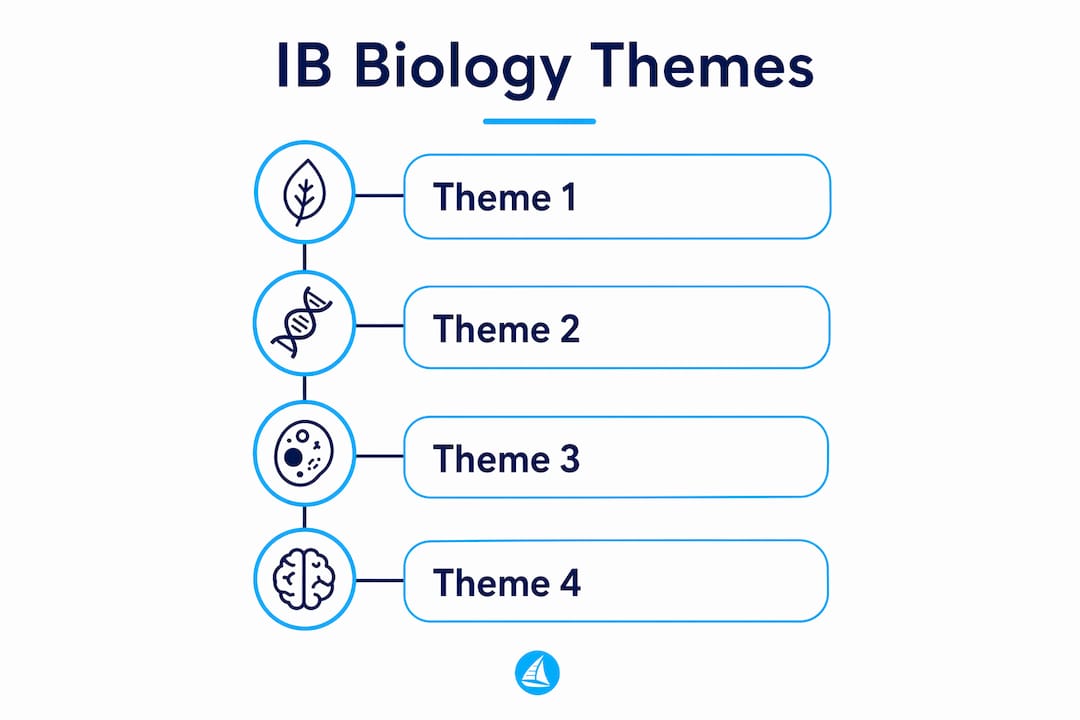
The 2025 syllabus replaced the old eleven-topic structure with four conceptual themes. Those themes are Unity and Diversity, Form and Function, Interaction and Interdependence, and Continuity and Change. Every piece of content, including material that once lived in elective options, now sits within one of these four frameworks.
Each theme is further organised across four levels of biological organisation: molecules, cells, organisms, and ecosystems. This structure means exam questions rarely test a single isolated fact. Instead, they ask you to connect ideas across levels and themes. That is a significant shift from the old model, where option topics were largely self-contained.

The table below shows how the old option structure compares to the new thematic framework.
| Old option topic | New thematic home |
|---|---|
| Neurobiology and Behaviour | Interaction and Interdependence |
| Ecology | Interaction and Interdependence |
| Human Nutrition and Health | Form and Function |
| Physiology of Exercise | Form and Function |
| Energy and Cell Metabolism | Unity and Diversity |
| Evolution | Continuity and Change |
Pro Tip: When you revise, always ask yourself which theme and which level of organisation a concept belongs to. This habit trains you to think the way the exam questions are written.
What happened to the traditional IB biology elective topics?
The scrapping of Paper 3 removed the dedicated option assessment entirely. Paper 3 and option topics were replaced by two external papers covering all themes, with no separate elective section. That means you no longer choose a specialism. You are responsible for all integrated content.
Some option material was absorbed directly into the core. Other content was simply removed. Here is what you need to know about the key former options:
- Neurobiology and Behaviour. Core concepts such as synaptic transmission, reflex arcs, and animal behaviour now appear within the Interaction and Interdependence theme.
- Ecology. Population dynamics, nutrient cycles, and ecosystem interactions are embedded across Interaction and Interdependence at the ecosystem level.
- Human Nutrition and Health. Digestion, absorption, and nutritional disease content sits within Form and Function.
- Physiology of Exercise. Muscle physiology and cardiovascular responses are covered at the organism level in Form and Function.
- Energy and Cell Metabolism. Cellular respiration and photosynthesis are core content in Unity and Diversity.
- Evolution. Natural selection, speciation, and phylogenetics are central to Continuity and Change, which carries the most marks overall in the current assessment.
Pro Tip: Do not waste revision time on option content that was removed rather than integrated. Focus your energy on the thematic content confirmed in the current IB Biology guide.
How should you revise IB biology topics under the new structure?
Effective revision now means organising your notes by theme, not by the old numbered topics. Exam questions test thematic connections, so notes arranged by theme match the way marks are actually awarded. If your notes still follow the old topic numbering, reorganise them now.
- Build a theme-based note system. Create four folders or sections, one per theme. Place every concept, diagram, and definition into its correct theme and level.
- Compile a glossary of key terms. A glossary of exam-specific terms across all themes directly improves marks. Include terms from former option areas such as neurotransmitters, trophic levels, and phylogenetic trees.
- Practise data interpretation daily. Assessment now prioritises data analysis and conceptual integration over memorisation. Use past paper data questions to build this skill.
- Use past papers selectively. Papers from before 2025 contain option questions that are no longer relevant. Focus on specimen papers and any available 2025 or 2026 papers that reflect the current two-paper format.
- HL students: go deeper on extensions. HL students cover 240 teaching hours compared to 150 hours for SL. HL extensions include advanced genetics, muscle physiology, and chemical signalling, all of which align with former option content. Give these areas dedicated revision time.
Pro Tip: Tibertutor’s IB Biology topic tests are built around the new thematic structure, so practising with them trains you for exactly the style of question you will face in the exam.
Which specific subtopics from former options appear in the current syllabus?
The table below maps concrete examples of former option content to their current thematic location. Use this as a revision checklist.
| Former option topic | Specific subtopic | Current theme | Biological level |
|---|---|---|---|
| Neurobiology and Behaviour | Synaptic transmission | Interaction and Interdependence | Organism |
| Neurobiology and Behaviour | Animal behaviour and communication | Interaction and Interdependence | Organism / Ecosystem |
| Energy and Cell Metabolism | Cellular respiration pathways | Unity and Diversity | Cell / Molecule |
| Energy and Cell Metabolism | Photosynthesis and light reactions | Unity and Diversity | Cell / Molecule |
| Evolution | Natural selection and speciation | Continuity and Change | Organism / Ecosystem |
| Human Nutrition and Health | Digestive enzyme function | Form and Function | Organism / Molecule |
| Physiology of Exercise | Muscle contraction mechanics | Form and Function | Organism / Cell |
This mapping matters because it tells you exactly where to look in your notes when a concept feels unfamiliar. HL content in former option areas, such as advanced muscle physiology, now appears as HL extensions within Form and Function rather than as a separate paper. Knowing the thematic address of each concept removes the guesswork from revision.
Key takeaways
The most effective approach to IB Biology revision in 2026 is to organise all study around the four core themes, not the old option topic list.
| Point | Details |
|---|---|
| Options are gone | Paper 3 and all elective option topics were removed from the IB Biology syllabus in 2025. |
| Content is integrated | Former option material now sits within four themes: Unity and Diversity, Form and Function, Interaction and Interdependence, and Continuity and Change. |
| Exams test connections | Both papers reward conceptual links and data analysis, not isolated topic recall. |
| HL students go deeper | HL extensions cover former option content such as muscle physiology and chemical signalling at greater depth. |
| Theme-based revision wins | Organising notes and practice by theme directly matches how exam marks are awarded. |
Why the shift to themes is actually good news for you
Students often panic when a syllabus changes. I understand that reaction. But after working with IB Biology content for years, I genuinely believe the thematic structure is a fairer and more intellectually honest way to assess biology.
The old option system created an uneven playing field. A student whose school chose Ecology as an option had a very different exam experience from one who studied Neurobiology. The new structure removes that lottery. Every student is assessed on the same content, and the questions reward genuine understanding rather than topic-specific cramming.
The misconception I see most often is students assuming that because “options” no longer exist, there is less to learn. The opposite is true. The content is broader, but the depth required for any single concept is more manageable. What the exam now demands is the ability to connect ideas, read data, and reason across levels of organisation. These are skills you can build with deliberate practice, and they are far more transferable than memorising a single option topic in isolation.
My honest advice: spend the first week of your revision mapping every concept you know to its theme and level. That single exercise will show you where your gaps are and give your study a clear direction. Students who do this early consistently feel more confident going into the exam.
— Oliver
Tibertutor’s resources for the new IB Biology syllabus
Adapting to a new syllabus structure takes the right tools. Tibertutor has built its IB Biology resources specifically around the 2025 curriculum, so everything you practise reflects the actual exam you will sit.
The platform offers IB Biology mock exams that mirror the two-paper format, along with detailed IB Biology notes organised by theme and level. Whether you need to consolidate former option content now embedded in core themes or sharpen your data interpretation skills, Tibertutor’s exam practice tests give you targeted, examiner-quality questions. Built by experienced IB educators, the resources are updated to match the current syllabus so you are never revising the wrong material.
FAQ
What are IB Biology option topics?
IB Biology option topics were elective subject areas in the previous syllabus, such as Neurobiology and Behaviour, Ecology, and Human Nutrition. They were removed in 2025 and replaced by an integrated thematic curriculum.
Are IB Biology options still tested in 2026 exams?
No. Paper 3 and option assessments were removed from the syllabus in 2025. Former option content is now tested within the four core themes across Papers 1 and 2.
Which theme carries the most exam marks?
Continuity and Change, which includes evolution and genetics, carries the most marks in the current assessment structure and should receive significant revision time.
Do HL students study more former option content than SL students?
Yes. HL students cover 240 teaching hours versus 150 for SL, and their extensions include advanced content from former options such as muscle physiology and chemical signalling.
How should I organise my revision notes for the new syllabus?
Organise notes by the four themes rather than by old topic numbers. This matches the way exam questions are structured and makes it easier to practise thematic connections.