
IB Biology: Paper 3 Is Gone. 10 Day Practice Plan with Tiber Tutor
Paper 3 no longer exists. The 2025 syllabus scrapped it entirely, folding its option content and experimental-skills questions into a two-paper structure that every IB Biology student now sits. If you have been hunting for “Paper 3 tips” thinking it is still on your exam timetable, stop and redirect that energy: the skills it tested (data handling, extended argument, specialised option knowledge) are still very much examined, just relocated. The sections below show exactly where, and how to train for them properly.
TL;DR:
- Students should focus on developing skills in data handling, extended argument, and experimental design, as these are now integrated into Paper 1 and Paper 2 assessments.
- Practicing past Paper 3 questions remains valuable for understanding the style and expectations of experimental and option-specific questions, but they should be used as practice materials rather than syllabus guides.
- Accurate self-marking, especially on units, graph labelling, and connecting data to biological concepts, is crucial for maximizing scores on data-based and extended-response questions.
- Resources like Tiber Tutor offer exam-style practice with official markschemes, ensuring targeted improvement in core skills aligned with the current two-paper structure.
- The syllabus change emphasizes core skills over option-specific content, making fundamentals like data analysis and structured reasoning more important than ever for exam success.
Table of Contents
- What changed in the 2025 biology syllabus and why paper 3 was removed
- What paper 3 used to contain
- Where to find past paper 3 papers and markschemes
- Practice plan: training the exact skills paper 3 tested
- Examiner tips and common marklosses
- How Tiber Tutor helps you practise former paper 3 skills
- Perspective: the syllabus change is a net gain for exam skills
- Try Tiber Tutor for focused paper 3 skill practice
- Sources
- FAQ
What changed in the 2025 biology syllabus and why paper 3 was removed
The IB rolled out a new Biology syllabus for teaching from August 2023, with the first exams under that syllabus sitting in May 2025. The redesigned assessment structure dropped the standalone options paper and replaced the old three-paper system with two written papers for both Higher Level and Standard Level students.
Here’s how the new structure breaks down:
- Paper 1 now contains two parts. Paper 1A is multiple-choice questions, and Paper 1B tests data-based and short-answer questions, with calculators permitted throughout.
- Paper 2 carries extended-response and structured questions covering core and, for HL students, additional higher-level content.
- The internal assessment component was renamed the “scientific investigation,” reflecting a broader shift toward conceptual understanding and applied skills rather than memorised option content.
If you built your revision timetable around choosing one option topic and drilling it in isolation, that approach is obsolete. Option-adjacent content is now woven into the general syllabus, which means broader, more integrated revision matters more than ever.
What paper 3 used to contain
Understanding the old format still matters, because its question styles map directly onto skills you need today. Former Paper 3 had two distinct sections, and each trained a different muscle.
- Section A tested experimental design and data analysis through short-answer questions, often built around unfamiliar experimental scenarios, graphs, and tables.
- Section B asked extended-response questions tied to whichever option topic a school had chosen, such as Neurobiology and Behaviour, Biotechnology and Bioinformatics, Ecology and Conservation, or Human Physiology.
- Across both sections, examiners rewarded structured argument. Students who could link data to a conclusion in clear, logical steps consistently outscored those who listed facts without connecting them.
An archived Higher Level Paper 3 paper shows this structure clearly: a shared Section A followed by option-specific Section B and C blocks. That layout is worth studying even now, purely as a template for how examiners phrase data-interpretation and extended-response prompts.
Where to find past paper 3 papers and markschemes
Archived Paper 3 material is still useful as practice, provided you treat it as a skills resource rather than a syllabus guide. A handful of sources are worth checking:
- Your school’s exam officer or IB coordinator, who typically has access to the official IBO past-paper archive through the IB Programme Resource Centre.
- Established past-paper repositories that clearly label session, timezone, and level, so you know exactly which Paper 3 variant you are working from.
- Document-hosting sites that carry uploaded markschemes, though these need a quick sanity check before you trust them.
Always pair a Paper 3 question with its official markscheme and mark yourself under timed conditions before checking. Be cautious with unofficial uploads. Cross-reference any markscheme you find on a general document site against the session and timezone printed on the paper itself, since mismatched markschemes are a common source of self-marking errors.
Practice plan: training the exact skills paper 3 tested
The fastest way to convert old Paper 3 material into useful revision is to treat it as raw material for the new papers, not as a standalone exam. Here is a structure that works over a typical revision fortnight.
- Days 1 to 3: Take Section A questions from an archived Paper 3 and answer them as Paper 1B practice, timing yourself at roughly 1.5 minutes per mark.
- Days 4 to 6: Pick Section B extended-response questions from a topic still relevant to your current syllabus (Ecology and Human Physiology content overlaps heavily) and rewrite them as Paper 2 style answers.
- Days 7 to 8: Mark your own answers against the official markscheme, noting exactly where marks were lost, then repeat the weakest question type.
- Days 9 to 10: Sit a full timed mock combining Paper 1 and Paper 2 conditions to test stamina and pacing under realistic pressure.
Pro Tip: Keep a running log of every mark you lose to a “communication” error, missing units, an unlabelled axis, a conclusion not tied back to the data, rather than a content gap. These are the fastest marks to reclaim because they need correction of habit, not more revision hours.
Repurposing an old option question into a Paper 2 extended response works particularly well for Ecology and Human Physiology, since both survived largely intact in the new core syllabus.

Examiner tips and common marklosses
Exam analysis of recent sessions shows a consistent pattern in where students lose marks, and it rarely comes down to a lack of knowledge. It comes down to how the answer is written.
- Missing units on a calculated value cost easy marks even when the calculation itself is correct.
- Answers that describe a trend but never state what it means for the underlying biology lose the “linking” marks that markschemes specifically reward.
- Weak axis labelling and vague comparative language (“this is higher”) instead of precise, referenced comparisons are recurring deductions.
One exam analysis of a 2025 Higher Level paper found Populations, Enzymes, and Defence against Disease among the heaviest-weighted topics, with grade 7 sitting around three quarters of total marks in that particular sitting. Treat that figure as indicative of one session rather than a fixed threshold, since official grade boundaries shift slightly each exam period.
Before submitting any data-based or extended answer, run three quick checks: units on every number, a labelled and titled graph if you have drawn one, and at least one sentence that explicitly ties your data back to the question’s biological concept.
How Tiber Tutor helps you practise former paper 3 skills
Tiber Tutor’s Biology resources are built by practising IB examiners specifically to mirror the current two-paper structure, which means every question you answer reflects exam reality rather than a generic textbook exercise. The platform’s mock exams simulate full timed conditions across Paper 1 and Paper 2, and its exam-style tests let you isolate weak question types, exactly the targeted repetition the practice plan above depends on.
What sets Tiber Tutor apart from scattered past-paper archives is how tightly interlinked everything is:
- Every question links back to specific syllabus content and animated video explanations, so a marklos becomes a clear next revision step.
- Personalised progress tracking flags exactly which skill category (data analysis, extended argument, experimental design) needs more attention.
- Student-led answer review against examiner markschemes builds the habit of self-marking accurately, which is the single most transferable Paper 3 skill.
For converting old option questions into current Paper 2 practice, Tiber Tutor’s extended-response examples and option topic guide show exactly which content survived the syllabus change and how to structure a high-scoring answer around it.
Perspective: the syllabus change is a net gain for exam skills
Losing a dedicated options paper sounds like losing depth, but it pushes students toward stronger fundamentals instead. Data analysis and structured argument, the real backbone of Paper 3, now show up throughout both papers rather than in one isolated slot. That is a better test of actual scientific thinking. If you have been mourning the old format, redirect that energy into targeted practice on the skills that carried over, not the paper number that did not.
— Oliver
Try Tiber Tutor for focused paper 3 skill practice
Most students patch together revision from scattered PDF archives and hope the markschemes they find online are genuine. Tiber Tutor removes that guesswork: every question, mock exam, and markscheme is written by practising IB examiners and mapped directly onto the current two-paper structure, with progress tracking that shows you precisely which skill category still needs work, something no loose past-paper archive can offer.
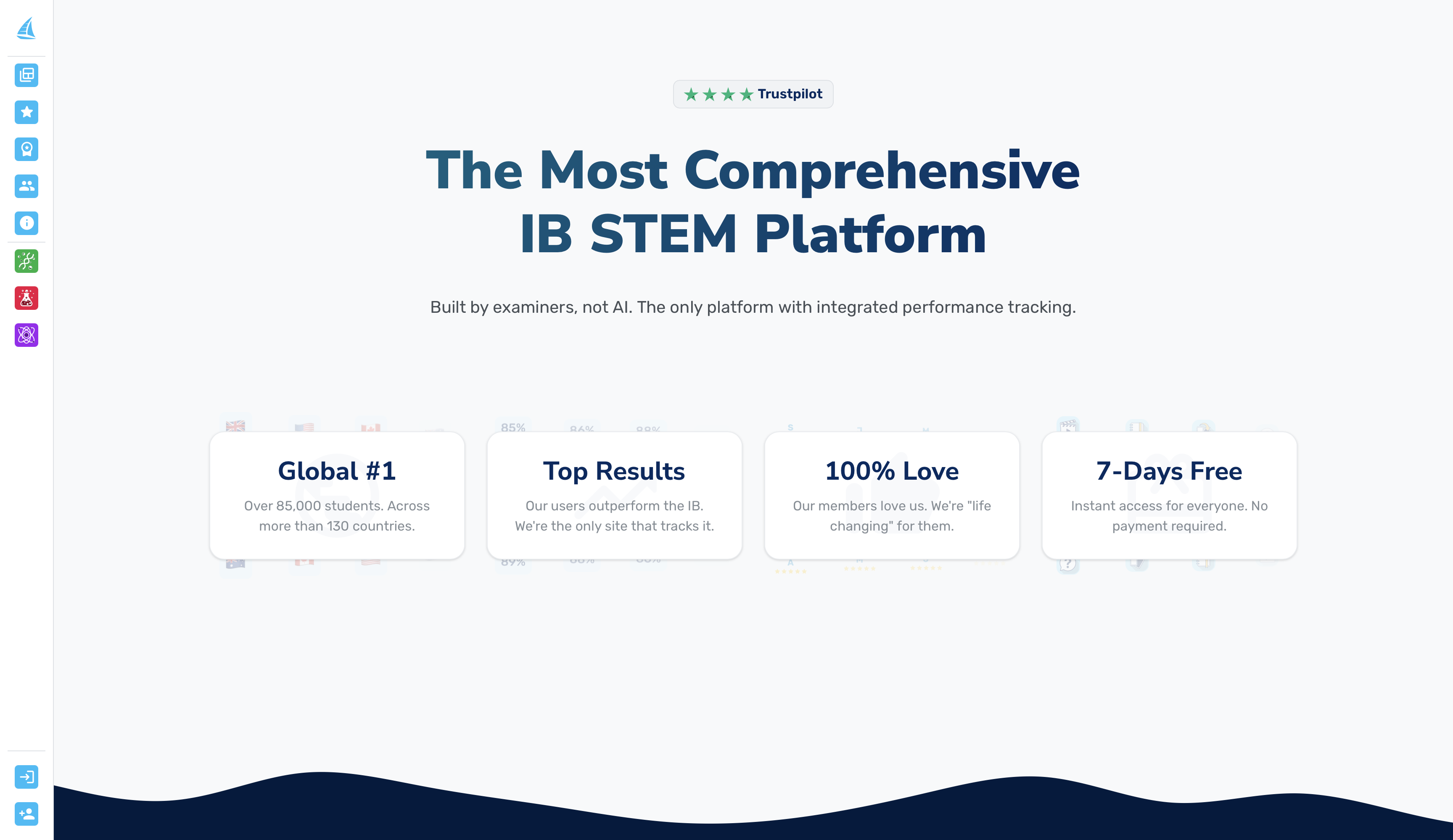
If you are focused purely on Biology, the Per-Subject Plan gives full access to Biology mock exams, exam tests, and progress tracking. Students juggling Biology alongside Chemistry or Physics can choose the All-Access Plan, which covers all three sciences under one login. Start with the Biology exam tests to target your weakest question type first, then move into a full mock once your marklosses start shrinking. A free 7-day trial is available for both plans.
Sources
- Quick Guide To The Updated IB DP Biology Syllabus (2023)
- 2025 IB DP Biology Past Paper: Analysis & Answers | thinka
- Biology Higher level Paper 3 (archived sample) — PapaCambridge
FAQ
Does IB Biology Paper 3 still exist?
No. Paper 3 was removed under the 2025 syllabus revision, and biology is now assessed through Paper 1 (with Sections A and B) and Paper 2 only.
What topics were in Biology Paper 3?
Former Paper 3 combined a shared Section A of experimental and data-based questions with an option-specific Section B covering topics like Ecology and Conservation, Human Physiology, Neurobiology and Behaviour, or Biotechnology and Bioinformatics. Most of that content now sits within the core syllabus tested across Papers 1 and 2.
What percentage is a grade 7 in IB Biology?
Grade boundaries shift slightly every session, so there is no single fixed percentage. One analysis of a 2025 Higher Level paper put grade 7 at roughly 76% of total marks, but always check the official boundaries published for your specific exam session.
What is the hardest topic in IB Biology?
Exam analysis of recent papers points to Enzymes, Populations, and Defence against Disease as consistently heavily weighted and challenging topics, largely because they demand both detailed mechanism knowledge and strong data-interpretation skills. Tiber Tutor’s topic-specific tests let you isolate exactly which of these is weakest for you and drill it directly.