IB Chemistry Paper 1: format, topics, and how to prepare
IB Chemistry Paper 1 is the exam section of short-response and multiple-choice questions that tests recall and data-handling. The fastest way to raise your Paper 1 score is timed past-paper practice plus mark-scheme review. It sits alongside Paper 2 (extended response) and Paper 3 (data-based and option questions) as one of three components in your final chemistry grade, and it rewards speed and precision more than any other paper.
Standard Level students get 1 hour 30 minutes; Higher Level students get 2 hours. Both groups face the same core structure: a run of discrete items covering the syllabus breadth, not depth on any single topic.
- Definition: Paper 1 tests factual recall and quick data interpretation across the whole syllabus
- Timing: 1h 30m for SL, 2h for HL
- Best single prep move: timed past papers, immediate mark-scheme review, then targeted topic tests on whatever you missed
Key Takeaways
IB Chemistry Paper 1 rewards students who pair timed past-paper practice with immediate mark-scheme review and targeted topic testing, more than any other revision habit.
| Point | Details |
|---|---|
| Know your timing | SL sits 1 hour 30 minutes; HL sits 2 hours, so practise under the exact window for your level. |
| Cover the full syllabus breadth | Atomic structure, bonding, stoichiometry, energetics, periodicity, and equilibrium all appear regularly. |
| Use official specimen material first | The IBO’s 2025 specimen Paper 1A shows the exact format before you start timed drills. |
| Log every mistake with a fix | A two-column error log linking each mistake to a specific topic test converts marking into targeted revision. |
| Practise with examiner-built mocks | Tiber Tutor’s IB Chemistry mock exams and analytics let you track syllabus coverage and timing improvement session to session. |
Table of Contents
- What is the format of IB chemistry paper 1?
- What topics appear on paper 1?
- Where can you find official past papers and specimen papers?
- How should you structure timed practice for paper 1?
- What mistakes cost students the most marks?
- How Tiber Tutor’s examiner-built resources support paper 1 practice
- What actually moves the needle on paper 1 scores
- Ready to put a real timed mock to the test?
- Sources
- FAQ
What is the format of IB chemistry paper 1?
Paper 1 splits into two sections under the current syllabus: 1A, made up of data-based and short-response items, and 1B, which covers the option topic for your level. The IBO’s chemistry curriculum pages set out the exact weighting and permitted materials for each session, and these details change slightly between syllabus cycles, so always check the current guidance before a mock.
SL students sit Paper 1 for 1 hour 30 minutes; HL students get 2 hours, reflecting the larger question count and the extra depth of HL-only content. The 2025 specimen Paper 1A for Standard Level confirms this 90-minute window and shows exactly how the question stems, data tables, and answer grids are laid out. That specimen is worth downloading before you sit a single mock, because the visual format rarely changes even when question content does.
Statistic Callout: Under the revised syllabus, calculators are now permitted on every chemistry paper, including Paper 1. That’s a real shift from older syllabus cycles, and it means your timed practice needs to include calculator checks, not just mental arithmetic.
- SL: 1 hour 30 minutes
- HL: 2 hours
- Calculators: permitted on all papers under the current syllabus
- Format: discrete short-response and data-based items, split across 1A and 1B
What topics appear on paper 1?
Paper 1 draws from across the syllabus rather than concentrating on one or two themes, which is exactly why broad recall matters more here than on Paper 2. Six areas turn up with real regularity.
- Atomic structure — electron configuration, isotopes, and mass spectrometry data reading
- Bonding — ionic, covalent, and metallic models, plus intermolecular forces
- Stoichiometry — mole calculations, empirical formulae, and limiting reagent questions
- Energetics — enthalpy changes, Hess’s law applications, and bond enthalpy estimates
- Periodicity — trends in atomic radius, ionisation energy, and electronegativity across periods and groups
- Equilibrium and simple qualitative analysis — Le Chatelier’s principle and basic test-and-observation reasoning
Beyond content, Paper 1 tests four skills: factual recall under time pressure, multiple-choice reasoning (spotting the closest correct answer among plausible distractors), reading data tables or graphs quickly, and running fast numerical sanity checks. Command terms in this paper tend to be compact. Where Paper 2 might ask you to “discuss” or “evaluate” across several sentences, Paper 1 stems often boil down to “calculate,” “identify,” or “which of the following,” so your revision notes should be built for rapid retrieval, not essay-length explanation.
Where can you find official past papers and specimen papers?
The single most reliable resource for Paper 1 preparation is the IBO’s own chemistry curriculum page, which hosts syllabus documents and specimen material directly from the organisation that writes your actual exam. The 2025 Standard Level specimen Paper 1A is worth working through slowly at least once, purely to internalise the exact question phrasing and layout before you start racing the clock.
- Start with the official IBO specimen paper for your level to learn the format
- Work through past papers organised by year and paper type, prioritising your syllabus’s most recent cycle
- Use general guidance on making past papers effective to structure your review, not just your attempt
- Supplement with app-based drills, such as MCQ practice apps available on the App Store, for five-minute warm-ups before a full timed session
- Reserve full past papers for proper timed conditions; apps are for warm-ups, not substitutes
Apps are genuinely useful for short recall drills between classes, but they should never replace a full 90-minute or two-hour sitting under real exam conditions. The pacing muscle only builds when you sit still and race an actual clock.
How should you structure timed practice for paper 1?
A single practice session works best when it follows the same shape every time, so your brain stops wasting energy on logistics and spends it on chemistry.
- Warm up for five to ten minutes with quick recall questions or flashcards on a topic you’re weak in
- Sit a full timed paper under strict conditions, no notes, no pausing the clock
- Mark it immediately against the official scheme while the paper is still fresh in your memory
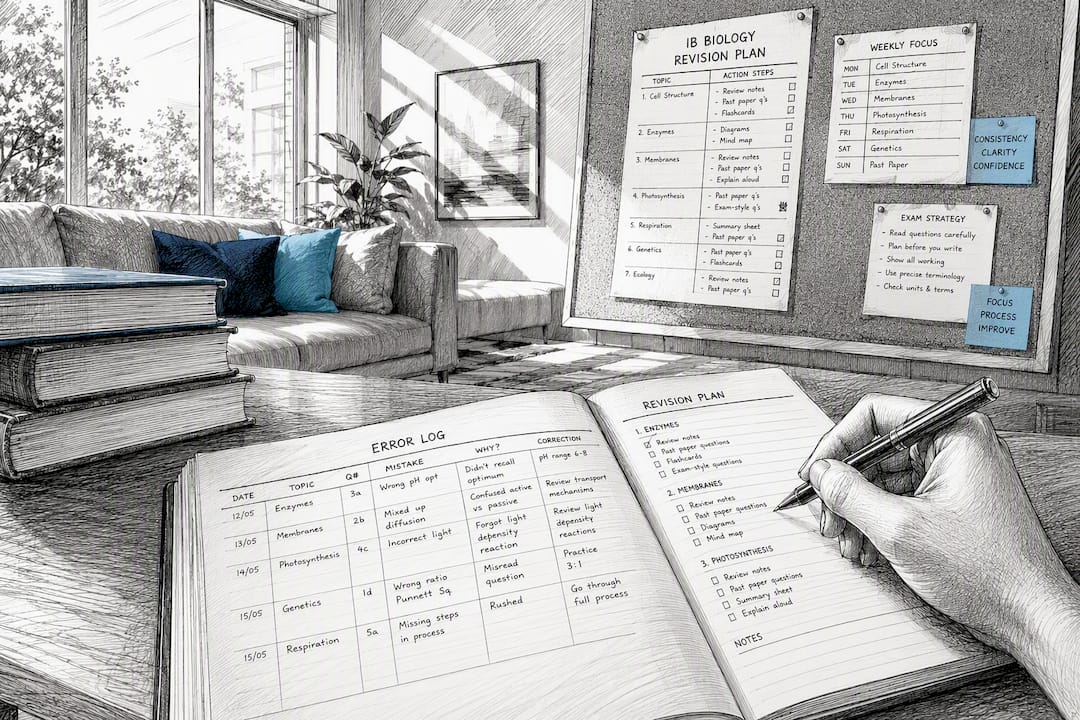
- Log every error in a two-column table: what you got wrong and why, next to the specific topic test that will fix it
Weekly, aim for one full timed paper, two or three short topic-specific tests targeting whatever your error log flagged, and one mixed timed drill combining several topics at once, which mimics how Paper 1 actually jumps between subjects question to question.
For the multiple-choice sections specifically, use elimination first: cross out answers you know are wrong before hunting for the right one. Read every stem twice. Examiners often bury a unit change or a “not” halfway through a sentence specifically to catch rushed readers. Budget roughly a minute per multiple-choice item and slightly longer per data-based question, then move on if you’re stuck. Coming back with fresh eyes beats losing four minutes to one item.
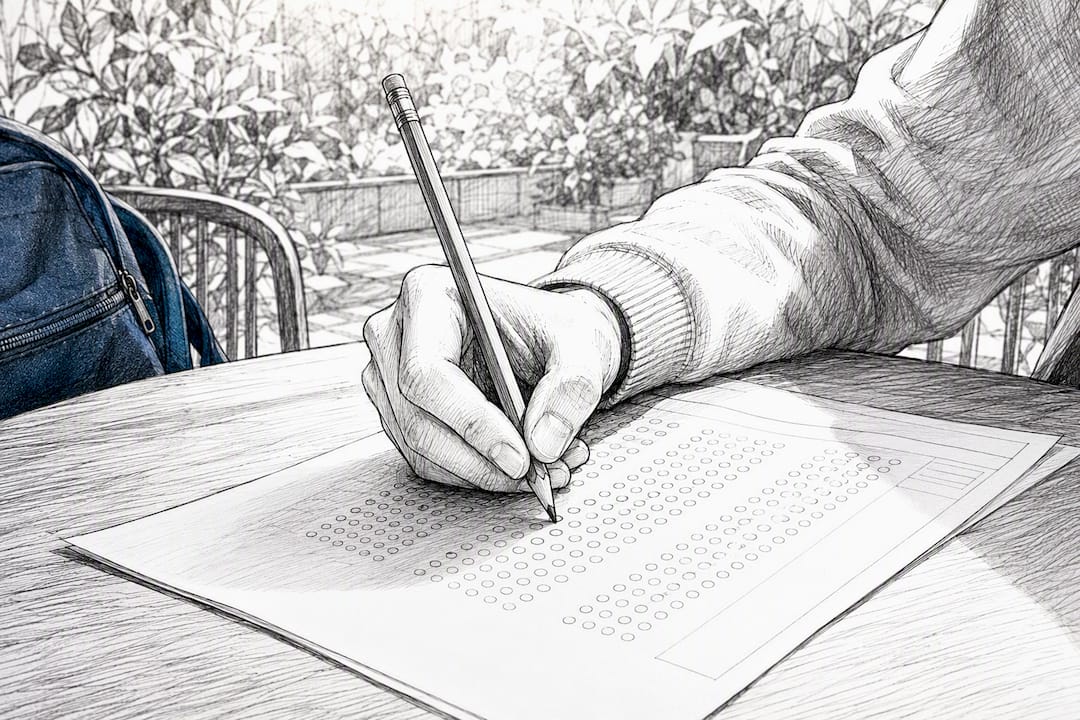
Pro Tip: Keep your error log as a genuine two-column table, not a vague mental note. One column for the mistake and why it happened, one column naming the exact topic test you’ll do to fix it. This turns marking from a passive chore into an active revision plan.
What mistakes cost students the most marks?
Most lost marks on Paper 1 come down to speed, not knowledge. Rushed reading causes students to answer the question they expected rather than the one actually asked. Arithmetic slips, especially with significant figures and unit conversions, are common under time pressure even among strong students. Misapplying command terms, treating “state” as if it demanded a full explanation, wastes precious minutes without earning extra credit.
Mark schemes reward precision over elaboration. Ambiguous answers, ones that could be read as correct or incorrect depending on interpretation, tend to lose the mark rather than gain it, so exact terminology and correct units matter more here than in extended-response papers.
- Reread the question stem before answering, especially watching for “not” or unit changes
- Double-check any calculation involving significant figures or unit conversion
- Match your answer’s precision to the command term used, not more, not less
- After marking, ask: would an examiner accept this exact wording, or only the gist?
How Tiber Tutor’s examiner-built resources support paper 1 practice
Tiber Tutor’s chemistry content is built by practising IB examiners, which matters more on Paper 1 than almost anywhere else in the syllabus. Getting the phrasing of a distractor or the precision a mark scheme demands right requires someone who has actually marked these papers, not just someone who has read the syllabus.
Statistic Callout: Tiber Tutor’s IB Chemistry mock exams replicate real Paper 1 timing and question style, and platforms combining syllabus tracking with examiner-style content and analytics tend to accelerate targeted revision more than unstructured practice alone.
- Mock exams that mirror Paper 1’s actual timing and question mix for both SL and HL
- Topic tests that map directly to the syllabus areas most heavily tested on Paper 1
- Syllabus monitoring that flags which topics you haven’t practised recently
- Analytics comparing your performance across attempts, so your error log becomes measurable progress
Try a timed mock next, then compare your analytics against your previous attempt rather than just your raw score.
What actually moves the needle on paper 1 scores
Most Paper 1 advice online tells students to “know your syllabus” and “practise past papers,” which is true but nearly useless as guidance. The real gap isn’t knowledge, it’s feedback speed. Students who mark their own papers loosely, skimming the scheme and nodding along, learn almost nothing from the exercise. The ones who improve fastest treat every wrong answer as a diagnostic, not a disappointment.
Conventional revision advice also underweights how mechanical Paper 1 actually is. It isn’t testing your understanding of chemistry as a discipline the way Paper 2 does; it’s testing whether you can retrieve a fact or read a data table correctly in under a minute, repeatedly, without fatigue. That’s a trainable skill closer to sight-reading music than essay writing, and it responds to the same solution: structured repetition with instant, accurate feedback.
That’s precisely why examiner-built mocks and analytics matter more here than generic question banks. A syllabus-tracking dashboard that shows you’ve drifted from energetics for three weeks is worth more than another twenty random multiple-choice questions. Prioritise feedback quality over practice volume, and the score follows.
— Oliver
Ready to put a real timed mock to the test?
Past papers and specimen PDFs get you started, but they’re static. They don’t tell you which topic you’re quietly falling behind on, or whether your Paper 1 timing is actually improving month to month. That’s the gap Tiber Tutor closes: examiner-written mock exams, topic-specific tests, and an analytics dashboard that tracks your syllabus coverage automatically, all built by practising IB examiners rather than generic content writers.
Start with an IB Chemistry mock exam under strict timed conditions, then use topic-specific tests to hit whatever your analytics flag as weak. Every subscription begins with a free trial, so you can compare Tiber Tutor’s examiner-built questions against whatever past papers you’ve already worked through before committing. Sign up for the free trial and sit your first timed mock this week.
Sources
- Diploma programme: chemistry — International Baccalaureate®
- Chemistry Standard Level Specimen Paper 1A 2025 PDF | Quizgecko
FAQ
Is chemistry paper 1 hard?
Paper 1 isn’t conceptually harder than Paper 2, but its time pressure and syllabus breadth catch students who haven’t practised pacing. Most difficulty comes from speed and precision, not the underlying chemistry.
What topics are covered in chemistry paper 1?
Paper 1 draws from across the syllabus, most commonly atomic structure, bonding, stoichiometry, energetics, periodicity, and simple equilibrium or qualitative analysis questions, split across sections 1A and 1B.
Is IB chemistry hard compared to other subjects?
IB Chemistry demands broad recall alongside data-handling and calculation skills, which many students find more demanding than subjects with a narrower content base. Structured timed practice, using resources like Tiber Tutor’s chemistry tests, makes the workload far more manageable.
Is AP or IB chemistry harder?
The two courses test differently rather than one being straightforwardly harder. IB Chemistry’s Paper 1 format demands fast recall and data interpretation across the whole syllabus, while AP Chemistry places more weight on free-response depth.
How many marks is IB chemistry paper 1 worth?
The exact mark allocation varies slightly by syllabus cycle and level, so check the current IBO chemistry syllabus documents for the precise weighting in your assessment year.