IB resources for science students: top picks for 2026
Finding the right support for IB sciences can feel genuinely overwhelming. There are dozens of platforms claiming to offer the best IB resources, yet not all of them are built with the IB curriculum in mind or designed to develop the exam skills that actually earn marks. Whether you are a student working through Biology, Chemistry, or Physics, or a parent trying to make sense of what your child needs, this guide cuts through the noise. Here, we compare the most trusted International Baccalaureate study materials available in 2026, so you can make a confident, informed choice.
Table of Contents
- Key takeaways
- 1. What to look for in IB resources
- 2. Overview of leading IB science study platforms
- 3. Comparing top IB science resources side by side
- 4. How to choose the right resource for your needs
- 5. My honest take on using IB science resources well
- Tibertutor: structured IB science exam preparation
- FAQ
Key takeaways
| Point | Details |
|---|---|
| Curriculum alignment matters most | Choose resources that reflect current IB assessment objectives and syllabus requirements precisely. |
| Mix formats for better retention | Combining notes, videos, and exam-style practice produces stronger results than using one format alone. |
| Past papers are non-negotiable | Integrating past papers into your study routine builds genuine exam technique and confidence. |
| Free and paid options both exist | Several strong platforms offer free access; paid tools tend to offer deeper analytics and structured pathways. |
| Match resources to your learning style | Visual learners, note-takers, and practice-driven students each benefit from different platform strengths. |
1. What to look for in IB resources
Not every resource deserves your time. Before comparing platforms, it helps to know what separates a strong tool from a mediocre one.

The starting point is curriculum accuracy. The IB diploma programme updates its syllabuses regularly, and the official IB teaching resources set the standard against which all study materials should be measured. Any platform that has not kept pace with recent syllabus changes will leave gaps in your preparation.
Beyond accuracy, look for these qualities:
- Exam-style content: questions that mirror the real command terms, mark allocations, and paper formats used in IB assessments
- Format variety: a mix of written notes, videos, flashcards, and practice papers to suit different study sessions
- Active learning support: features that require you to recall and apply knowledge, not just read passively
- Expert involvement: content written or reviewed by IB examiners carries significantly more credibility
- Accessibility and cost: consider whether the platform is easy to use on the devices you own, and whether pricing fits your situation
Pro Tip: Check when a platform last updated its content for your specific subject. A resource that has not been revised since the previous syllabus cycle may contain outdated material that could mislead your preparation.
2. Overview of leading IB science study platforms
Here is a clear look at the most widely used platforms for IB science students today.
-
IBResources.org: This repository is one of the best collections available to IB students globally. It aggregates past papers, mark schemes, question banks, and textbooks across subjects. It is largely free, making it an excellent starting point. The main limitation is that it does not offer structured learning pathways or progress tracking.
-
Knowt IB Hub: Knowt offers free, in-depth notes and flashcards for every IB subject. It is a popular choice for students who prefer text-based revision and self-testing. The breadth of coverage is impressive, though the depth of exam-specific guidance can vary between subjects.
-
Nail IB®: With over 5,200 examiner-led video hours and 239 solved past papers, Nail IB holds the distinction of being the largest IB resource platform by video content worldwide. Students who prefer watching explanations over reading will find substantial value here.
-
Tibertutor: Tibertutor’s IB science question bank is built specifically around Biology, Chemistry, and Physics. It offers exam-style questions, animated instructional videos, flashcards, cram sheets, mock exams, and detailed progress analytics. Content is created by IB examiners, which gives it a level of exam-alignment that generalist platforms struggle to match.
3. Comparing top IB science resources side by side
The table below summarises the key features across the leading platforms to help you compare quickly.
| Platform | Past papers | Video content | Notes and flashcards | Progress tracking | Cost |
|---|---|---|---|---|---|
| IBResources.org | ✓ Extensive | ✗ | ✗ | ✗ | Free |
| Knowt IB Hub | Limited | ✗ | ✓ Comprehensive | Basic | Free |
| Nail IB® | ✓ Solved papers | ✓ 5,200+ hours | ✓ | ✗ | Paid (tiered) |
| Tibertutor | ✓ Exam-style Qs | ✓ Animated | ✓ With cram sheets | ✓ Advanced analytics | Paid (tiered) |
Each platform has a clear strength. IBResources suits students who need raw past paper access at no cost. Knowt works well for note-based consolidation. Nail IB is strongest for visual, video-led learning. Tibertutor stands out when the priority is structured, exam-focused practice with measurable progress.
Pro Tip: Do not pay for a premium plan until you have tested a free tier or trial. Most paid platforms offer sample content, and that sample will tell you quickly whether the question style and explanation depth match what you need.
4. How to choose the right resource for your needs
The best IB curriculum support is the resource you will actually use consistently. That sounds simple, but it is the detail most students overlook when choosing.
Tailoring your study approach to your learning style meaningfully boosts both retention and motivation. Here is a practical framework to guide your decision:
- If you learn best by watching, prioritise platforms with high-quality video explanations of each topic before layering in written practice.
- If you prefer reading and note-taking, begin with a comprehensive notes platform, then shift to exam-style questions once you feel grounded in the content.
- If you learn through doing, go straight to question banks and use mark schemes and worked solutions to fill knowledge gaps as they appear.
Budget matters too. Several strong free options exist, but paid platforms generally offer the progress tracking and personalised workflows that help during the final months before exams.
A diverse study approach that combines notes, practice questions, and revision videos tends to outperform relying on a single source. Think of free platforms as your content library and a focused exam prep tool as your training ground.
5. My honest take on using IB science resources well
I have worked with IB science students across many years, and the pattern I see most often is this: students collect resources. They bookmark platforms, download past papers, and save video playlists. Then the exam arrives, and they realise they have been preparing about the exam rather than for it.
The most common mistake is treating resource use as passive. Reading notes is not revision. Watching a video is not practice. The role of past papers in IB exam prep is not just content coverage. It is about building the specific skill of answering IB-style questions under time pressure and learning to think the way the mark scheme expects.
My honest advice: limit yourself to two or three quality sources and go deep. One solid notes resource, one question bank aligned tightly to your syllabus, and a bank of past papers. That combination, used actively and regularly, will take you further than ten platforms skimmed lightly.
For parents, the most useful thing you can do is help create conditions for consistent study rather than managing the resources themselves. Understanding what your child is working on and asking open questions about their progress builds accountability without pressure.
— Oliver
Tibertutor: structured IB science exam preparation
If you are ready to move beyond passive revision and into focused, measurable practice, Tibertutor is built for exactly that. The platform brings together exam-style questions, animated videos, cram sheets, and mock exams, all written by IB examiners and mapped tightly to the current Biology, Chemistry, and Physics syllabuses.
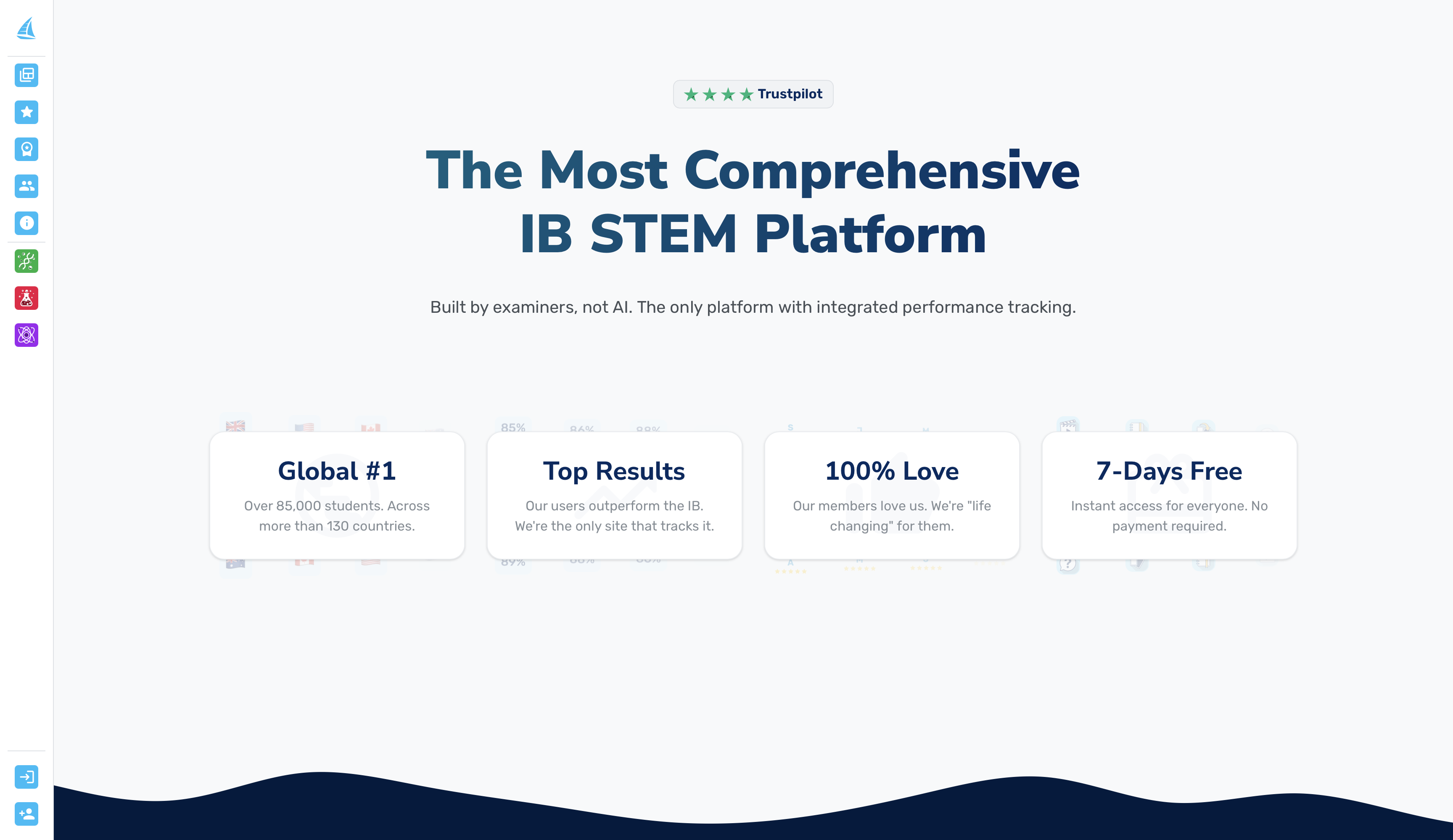
Students get detailed analytics that highlight which topics need more work, so no revision session is wasted. Parents can track progress and feel genuinely informed about where their child stands. Whether you are studying independently or working alongside a teacher, Tibertutor provides the structure that turns effort into results. Explore the IB student resources available, or find out more about supporting your child through IB sciences. View pricing plans and start with a free look at what the platform offers.
FAQ
What are the best free IB science resources?
IBResources.org offers an extensive collection of past papers and mark schemes at no cost. Knowt IB Hub provides free notes and flashcards across IB subjects, making it a strong option for students on a budget.
How many IB resources should a student use?
Two or three well-chosen platforms tend to be more effective than using many sources lightly. A notes resource, a question bank, and a past paper archive cover the core needs of most IB science students.
Do IB resources need to match the current syllabus?
Yes. IB syllabuses are updated periodically, and using outdated materials risks preparing for content or command terms that no longer appear in assessments. Always check that a platform reflects the current curriculum.
Are paid IB exam preparation tools worth the cost?
Paid platforms typically offer structured pathways and progress tracking that free tools do not. For students targeting top grades, the added structure and examiner-written content can make a meaningful difference in the months before exams.
Can parents use IB resources to support their child?
Platforms like Tibertutor include dedicated parent-facing resources with progress dashboards, making it straightforward for parents to stay informed and offer meaningful encouragement without needing deep subject knowledge themselves.