IB biology teaching resource categories: a practical guide
IB biology teaching resource categories are defined by three organising principles: syllabus alignment, instructional purpose, and resource type. Understanding this structure helps educators select the right materials quickly, avoid duplication, and build a coherent programme that meets the demands of the IB DP 2023 curriculum. Resources such as IB Professional’s digital coursebooks, subject briefs, and topic-coded revision bundles each occupy a distinct category. Knowing where each fits saves preparation time and gives students a more consistent learning experience.
1. IB biology teaching resource categories: the core framework
The most useful way to organise IB Biology resources is through a dual taxonomy: first by syllabus alignment, then by teaching purpose. This approach means you are never hunting for a resource that turns out to be aimed at the wrong level or the wrong moment in a lesson sequence.
The IB Biology curriculum is built around four broad themes and multiple levels of biological organisation, with practical work woven throughout rather than treated as an add-on. That structure demands a matching resource framework. A resource labelled only as “biology notes” tells you very little. A resource labelled “A1.1 Water, SL, concept delivery” tells you exactly where it belongs.

2. Syllabus-aligned categories: organising by topic codes and level
Syllabus alignment is the first and most precise axis for categorising IB Biology materials. The current subject brief, with first teaching from August/September 2023, specifies Standard Level and Higher Level distinctions across every topic. Resources must reflect those distinctions clearly.
Topic codes such as A1.1 (Water), B4.1 (Adaptation), and C1.1 (Enzymes) give educators a shared reference system. Teaching notes and revision bundles organised by these codes can bundle over 20 resources, including notes and PowerPoint slides, covering SL and HL content with clear integration. That level of specificity removes ambiguity when planning a unit.
Key benefits of syllabus-aligned categorisation include:
- Precise matching of resources to assessed content, reducing the risk of teaching off-syllabus material
- Clear separation of SL and HL materials, which matters particularly for mixed-level classes
- Easier identification of gaps in your resource bank when mapped against the four organising themes
- Faster lesson planning because resources are pre-sorted by topic rather than by publisher or format
Pro Tip: Map your existing resource bank against the four IB Biology themes (A, B, C, D) and their topic codes at the start of each academic year. Gaps become visible immediately, and you can prioritise new acquisitions before teaching reaches those topics.
3. Instructional support categories: planning, assessment, and practical work
The second axis is teaching purpose. Resources in this category answer the question: what is this material designed to do in the classroom? The four main instructional support categories are teacher planning tools, student learning activities, assessment materials, and practical work resources.
Separating teacher from student resources prevents educators from spending excessive time repurposing materials and significantly improves instructional efficiency. A teacher’s resource access card from IB Professional, for example, provides editable tests, lesson timings, differentiation guides, and practical work alternatives. These are not materials students need to see. Mixing them into a general resource folder creates confusion and wastes preparation time.
Student-facing resources occupy a separate sub-category: learning activities, concept explanations, exam-style questions, and self-study guides. Practical work resources form their own distinct group because the IB Biology curriculum spans closed to open inquiry and hands-on to simulation modes. A resource designed for an open inquiry investigation is categorically different from one designed for a closed, teacher-led practical.
Pro Tip: Label every resource in your shared department folder with both a topic code and a purpose tag (e.g., “B2.1_teacher_planning” or “C3.2_student_activity”). This two-tag system takes seconds to apply and saves hours over a full academic year.
4. Resource format categories: digital, print, and interactive
Format is the third organising axis, and it shapes how a resource is used rather than what it covers. The main format categories for IB Biology teaching tools are digital interactive coursebooks, teaching notes and slides, question banks, flashcards and activity packs, and simulation or modelling resources.
| Format | Primary use | Example |
|---|---|---|
| Digital interactive coursebook | Concept delivery and self-study | IB Professional digital coursebook with exam tips and TOK links |
| Teaching notes and slides | Direct classroom instruction | Topic-coded PowerPoint bundles for SL and HL |
| Question banks | Exam preparation and formative assessment | Syllabus-aligned exam-style question sets |
| Flashcards and activity packs | Revision and independent study | Vocabulary and concept recall tools |
| Simulation resources | Practical work alternatives | Data-based modelling for lab-limited settings |
Digital coursebooks often incorporate exam success features such as checklists, reflection prompts, and diagnostic questions. These complement printed teaching notes and slide resources, creating an integrated learning experience rather than a fragmented one. Editable formats matter too. A resource you can adapt for your specific class is worth considerably more than a fixed PDF.
5. How to match resource categories to teaching scenarios
Selecting the right category depends on your immediate teaching goal. The following sequence gives a practical decision framework.
- Content acquisition: Use syllabus-aligned teaching notes and digital coursebook chapters. Match the topic code to your current unit and confirm whether you need SL or HL material before opening anything else.
- Lesson delivery: Draw from teacher planning materials, including editable slides and lesson timing guides. IB Professional’s teacher access card provides downloadable lesson plans and specimen papers that reduce preparation time significantly.
- Practical work: Choose resources according to inquiry type. Closed practicals suit early topic introduction; open inquiry resources suit the internal assessment preparation phase. Where lab access is limited, simulation and sample-data resources fill the gap without compromising skill development.
- Exam readiness: Shift to question banks and revision bundles. Resources organised by topic code allow targeted practice on weak areas rather than generic revision. Tibertutor’s IB Biology exam strategies offer a useful complement here.
- Differentiation and EAL support: Use teacher-specific differentiation guides and adapted activity packs. These sit within the instructional support category and should be stored separately from standard student materials to avoid distributing the wrong version.
For a broader overview of how IB science courses are structured across Biology, Chemistry, and Physics, the subject distinctions matter when selecting cross-disciplinary resources.
Key takeaways
Effective IB Biology resource organisation requires a dual taxonomy: syllabus alignment by topic code and level, combined with categorisation by teaching purpose and format.
| Point | Details |
|---|---|
| Use a dual taxonomy | Categorise every resource by topic code and teaching purpose to prevent misuse and save preparation time. |
| Separate SL and HL materials | The 2023 subject brief specifies clear level distinctions; resources must reflect these to avoid off-syllabus teaching. |
| Treat practical work as its own category | Practical resources span closed to open inquiry and should not be grouped with general student activities. |
| Separate teacher and student resources | Mixing planning tools with student materials creates confusion and reduces instructional efficiency. |
| Match format to teaching goal | Digital coursebooks suit concept delivery; question banks suit exam preparation; simulations suit lab-limited settings. |
Why the dual taxonomy changed how I think about resource planning
When I first started working with IB Biology educators, the most common frustration was not a shortage of resources. It was an excess of poorly labelled ones. Teachers would open a folder of 40 files and spend 20 minutes finding the right practical guide for a specific topic. The problem was never the content. It was the absence of a consistent categorisation system.
The dual taxonomy approach, organising first by syllabus topic code and then by teaching purpose, resolves this almost entirely. Once a department commits to tagging resources with both a topic reference and a purpose label, the folder becomes searchable in a meaningful way. You stop asking “where did I put that?” and start asking “what do I need for B4.1 at HL for a student activity?” Those are very different questions, and only the second one gets answered quickly.
The area I see most often neglected is practical work. Practical work is integrated across the IB Biology curriculum, not supplemental to it. Yet many departments store practical resources in a single undifferentiated folder. Separating them by inquiry type, closed, guided, or open, and by delivery mode, hands-on or simulation, transforms how teachers plan the practical strand of the course.
My honest recommendation: spend one planning day at the start of the year auditing and re-tagging your resource bank. It is the highest-return investment a biology department can make.
— Oliver
Strengthen your resource bank with Tibertutor
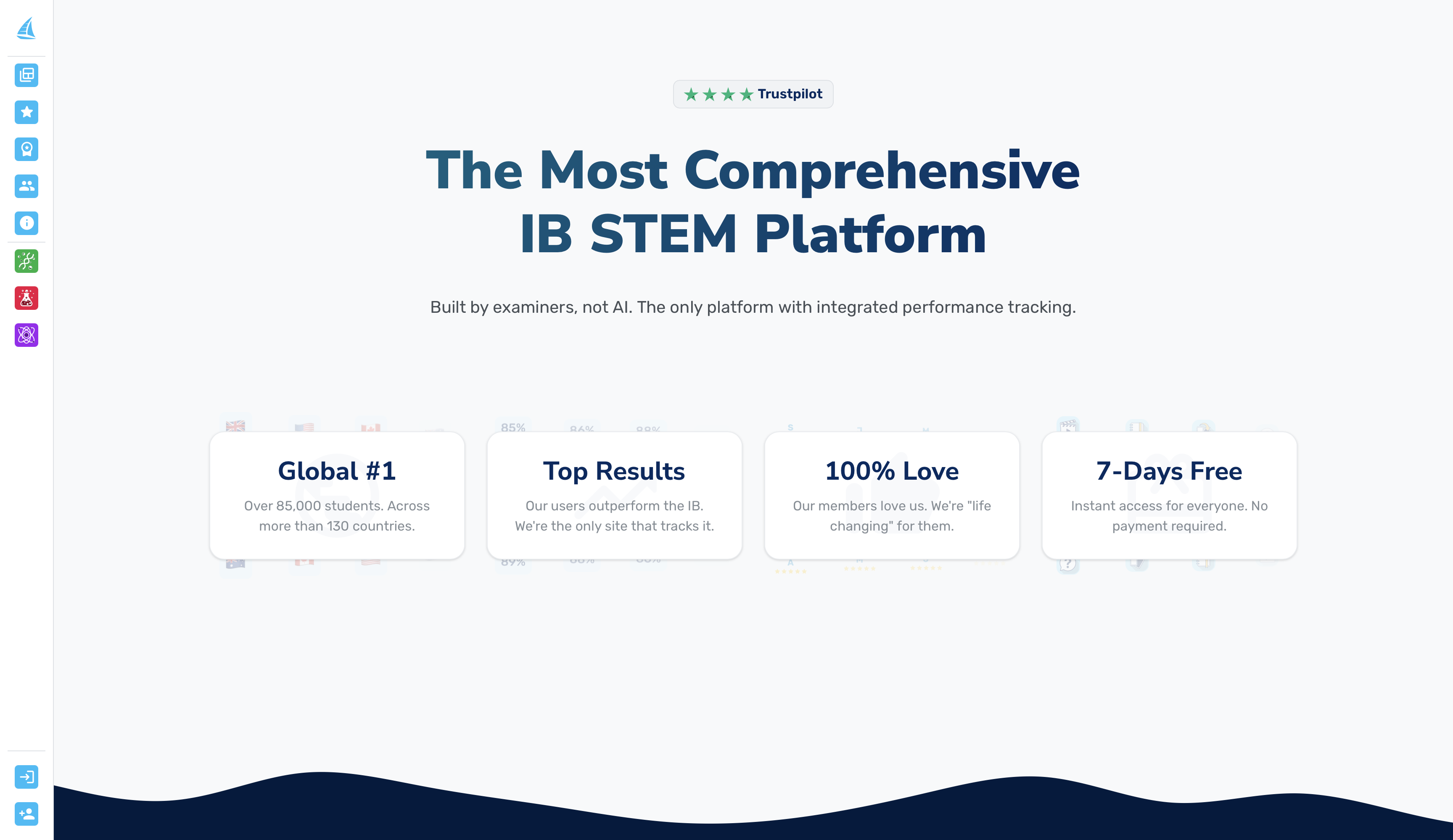
Tibertutor’s IB Science questionbank is built specifically to complement the resource categories described in this article. Every question is organised by IB syllabus topic code and level, so you can assign targeted practice that maps directly to your current teaching unit. The platform includes exam-style questions, detailed mark schemes, and progress analytics that show you exactly where each student needs more support. For teachers building a question bank category within their resource framework, Tibertutor removes the need to create assessment materials from scratch. Explore flexible pricing plans to find the right fit for your school or department.
FAQ
What are the main IB biology teaching resource categories?
IB Biology teaching resources are categorised by syllabus alignment (topic codes and SL/HL level), instructional purpose (planning, assessment, practical work, student activities), and resource format (digital coursebooks, slides, question banks, simulations).
Why does separating SL and HL resources matter?
The 2023 IB Biology subject brief specifies distinct content requirements for Standard Level and Higher Level. Using resources that conflate the two risks teaching off-syllabus material or under-preparing HL students for their additional assessed content.
How should practical work resources be categorised?
Practical work resources should be organised by inquiry type (closed, guided, or open) and delivery mode (hands-on or simulation). This reflects the IB Biology curriculum’s requirement that practical work spans the full range of inquiry modes rather than being treated as a single category.
What is the benefit of a dual taxonomy for resource organisation?
A dual taxonomy, categorising by both syllabus topic code and teaching purpose, clarifies whether a resource targets concept delivery, inquiry skill development, or exam preparation. This prevents misuse and saves significant preparation time across the academic year.
Which resource formats work best for exam preparation?
Question banks and revision bundles organised by topic code are the most effective formats for exam preparation. Digital coursebooks with embedded diagnostic questions and checklists also support structured revision when used alongside targeted practice sets.