IB educator professional development guide 2026
IB educator professional development is a structured, tiered learning process designed to deepen teaching expertise, align practice with IB philosophy, and improve student outcomes in science subjects. The IB organises this professional learning around workshop categories and formal IB Educator Certificates, making it far more than a series of one-off training days. Continuous professional development, known as CPD, sits at the heart of every effective IB school. This guide covers the main IB educator professional development types, delivery formats, and practical strategies to embed learning into your daily teaching.
What are the main types of IB professional development available?
The IB organises professional development workshops into three distinct categories based on educator experience and role. Category 1 targets educators new to the IB, covering foundational curriculum knowledge and teaching approaches. Category 2 is for practitioners who want to deepen their existing practice, focusing on pedagogy and assessment refinement. Category 3 supports experienced educators moving into leadership, curriculum design, and advanced exploration of IB principles.
Beyond workshops, the IB offers a more formal route through IB Educator Certificates (IBEC). These are university-level qualifications available at over 60 partner institutions in 17 countries. They provide sustained, research-based recognition of IB expertise that workshops alone cannot match. Completing an IBEC also meets part of the IB’s PD requirements for school authorisation and evaluation.
| Feature | IB Workshops | IB Educator Certificates (IBEC) |
|---|---|---|
| Purpose | Targeted skill and knowledge development | Formal, sustained IB expertise recognition |
| Duration | Typically 2.5 days (in-person) or four weeks (online) | Extended, university-level programme |
| Focus | Category-specific pedagogy and curriculum | Research-based IB theory and practice |
| Delivery | Online, in-person, or in-school | University partner institutions |
| Best for | All educators at any career stage | Educators seeking formal IB qualification |
- Category 1 suits newly appointed IB science teachers who need a firm grounding in the Diploma Programme curriculum.
- Category 2 works well for teachers preparing for their first IB evaluation cycle or refining assessment practices.
- Category 3 fits department heads and coordinators building school-wide IB capacity.
Pro Tip: If you are new to IB sciences, complete a Category 1 workshop before applying for an IBEC. The workshop gives you the classroom context that makes the certificate’s research content far more meaningful.
For educators interested in how IB biology teaching resources align with workshop categories, the connection between curriculum structure and PD pathways is worth exploring early.
How can IB educators embed professional development into daily practice?
Continuous professional development rooted in reflective practice has a greater impact on IB teaching quality than isolated workshop attendance. Reflection turns a training event into a lasting change in classroom behaviour. Without it, even excellent workshops fade within weeks.
Effective IB schools embed internal peer-learning, goal-setting, and portfolios into their culture as an ongoing habit rather than a sporadic event. This organisational approach sustains teaching quality improvements across the whole school. Individual educators benefit most when they treat their own growth as a professional responsibility, not just a school requirement.
“The most effective professional development approach is viewing it as a continuous process of reflective practice rather than a destination. Reflective portfolios and action research link training directly to classroom improvements, making learning visible and measurable.”
Practical ways to embed CPD into your IB science teaching include:
- Reflective journalling. Record what you tried after each workshop, what worked, and what you would change. Even brief weekly notes build a powerful evidence base over time.
- Peer observation. Arrange structured lesson observations with a colleague, focusing on a specific IB assessment objective. Debrief within 48 hours while the detail is fresh.
- Action research. Choose one teaching challenge, such as improving student performance on data-based questions in IB Biology, and systematically test a new approach over a term.
- Portfolio documentation. Collect lesson plans, student work samples, and reflection notes into a portfolio that maps your learning to classroom outcomes.
Pro Tip: Link every CPD activity to a specific IB science learning objective. When you can show that a workshop changed how your students approach Paper 3 questions, your professional development becomes evidence, not just attendance.
Exploring differentiated instruction strategies alongside your CPD planning helps connect professional learning directly to classroom practice.

What formats and resources does the IB offer for flexible access?
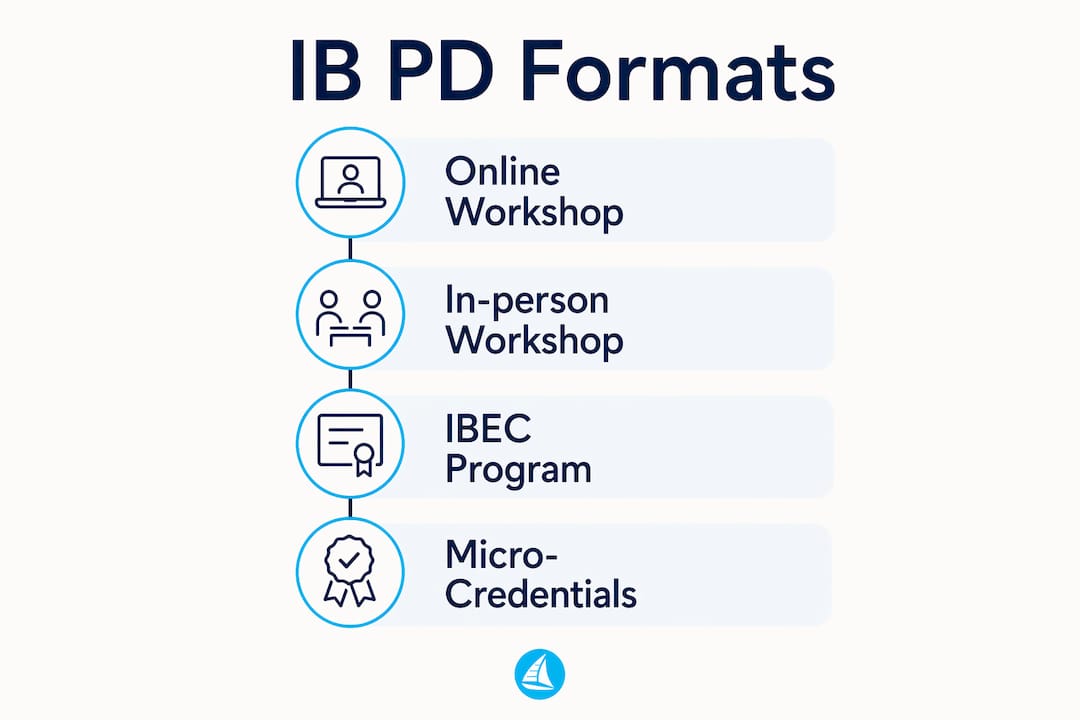
IB professional development is offered through multiple delivery formats, including online learning, regional in-person events, and in-school workshops. This flexibility addresses the reality that IB science teachers rarely have the same schedule or access to training centres. The IB designed its PD offer as a lifelong learning process, not a one-time qualification.
- Online workshops. These typically span four weeks with self-paced content, allowing you to study around your timetable. They suit educators in schools with limited travel budgets or those in remote locations.
- In-person regional workshops. Usually 2.5 days, these offer direct interaction with IB-trained facilitators and peer educators from different schools. The face-to-face format accelerates collaborative learning.
- In-school workshops. Delivered at your own institution, these allow whole-department participation and can be tailored to your school’s specific IB context.
- IB Micro-credentials. A pilot programme that allows educators to meet some IB professional learning requirements in specific roles and subject areas. Micro-credentials are accepted for teacher role requirements, though not for all specialised subject workshops.
- My IB community resources. The IB’s online portal provides self-paced modules, subject-specific communities, and curriculum support materials accessible at any time.
| Format | Duration | Best suited for |
|---|---|---|
| Online workshop | Four weeks | Flexible schedules, remote educators |
| In-person regional | 2.5 days | Collaborative learning, networking |
| In-school workshop | Variable | Whole-department development |
| Micro-credential | Self-paced | Targeted role or subject requirements |
For a broader view of IB science support resources available alongside formal PD, it helps to map your learning tools alongside your development plan.
What are the common challenges and best practices in IB professional development?
The most common pitfall in IB CPD is treating it as a checkbox exercise. Attending a workshop and filing the certificate achieves little if the learning never reaches the classroom. Experienced educators maintain reflective journals and portfolios that map training directly to teaching outcomes.
“Documented reflective learning that links training to classroom outcomes is the critical difference between professional development that transforms teaching and professional development that simply satisfies administrative requirements.”
Best practices for IB educators pursuing professional growth include:
- Align PD with school goals. Choose workshops and certificates that connect to your school’s IB authorisation cycle or current strategic priorities.
- Apply learning within two weeks. The sooner you trial a new approach after a workshop, the more likely it is to stick.
- Share learning with colleagues. A ten-minute department briefing after a workshop multiplies its impact across the team.
- Review progress termly. Set three professional goals at the start of each term and assess them honestly at the end.
Aligning your development with IB standards and practices for specialised qualifications helps ensure your CPD choices carry genuine professional weight.
Key takeaways
Effective IB educator professional development requires combining structured IB workshops, formal IBEC qualifications, and continuous reflective practice embedded within daily teaching.
| Point | Details |
|---|---|
| Workshop categories guide your path | Choose Category 1, 2, or 3 based on your experience level and current role. |
| IBEC offers formal recognition | University-level certificates at over 60 institutions provide sustained IB expertise. |
| Reflective practice multiplies impact | Linking training to classroom outcomes through portfolios makes CPD measurable. |
| Flexible formats remove barriers | Online, in-person, and in-school options suit different schedules and locations. |
| Avoid the checkbox trap | Apply learning within two weeks and document outcomes to maximise every CPD investment. |
What I have learned about IB professional development after years in the classroom
The most honest thing I can say about IB CPD is this: the educators who grow the most are not the ones who attend the most workshops. They are the ones who do something with what they learn before the next one arrives.
I have seen teachers complete Category 3 workshops and return to their classrooms unchanged, because the learning never connected to a real teaching problem they were trying to solve. I have also seen a newly qualified IB Biology teacher transform her Paper 1 results after a single Category 1 workshop, because she spent the following fortnight redesigning her question bank with the IB command terms front of mind.
The combination of formal certificates and reflective daily practice is where the real growth happens. An IBEC gives you the theoretical depth. Reflective journalling gives you the evidence that it worked. Neither is sufficient on its own.
Balancing professional growth with daily teaching demands is genuinely difficult. My practical advice is to protect one hour per week for CPD reflection, even if that means treating it as a fixed lesson in your timetable. That single habit, sustained over a year, produces more growth than a fortnight of intensive training every summer.
— Oliver
Supporting your students alongside your own professional growth
Your professional development directly shapes what happens in your classroom. As you refine your IB science teaching, your students need resources that match the quality and rigour you are building towards.
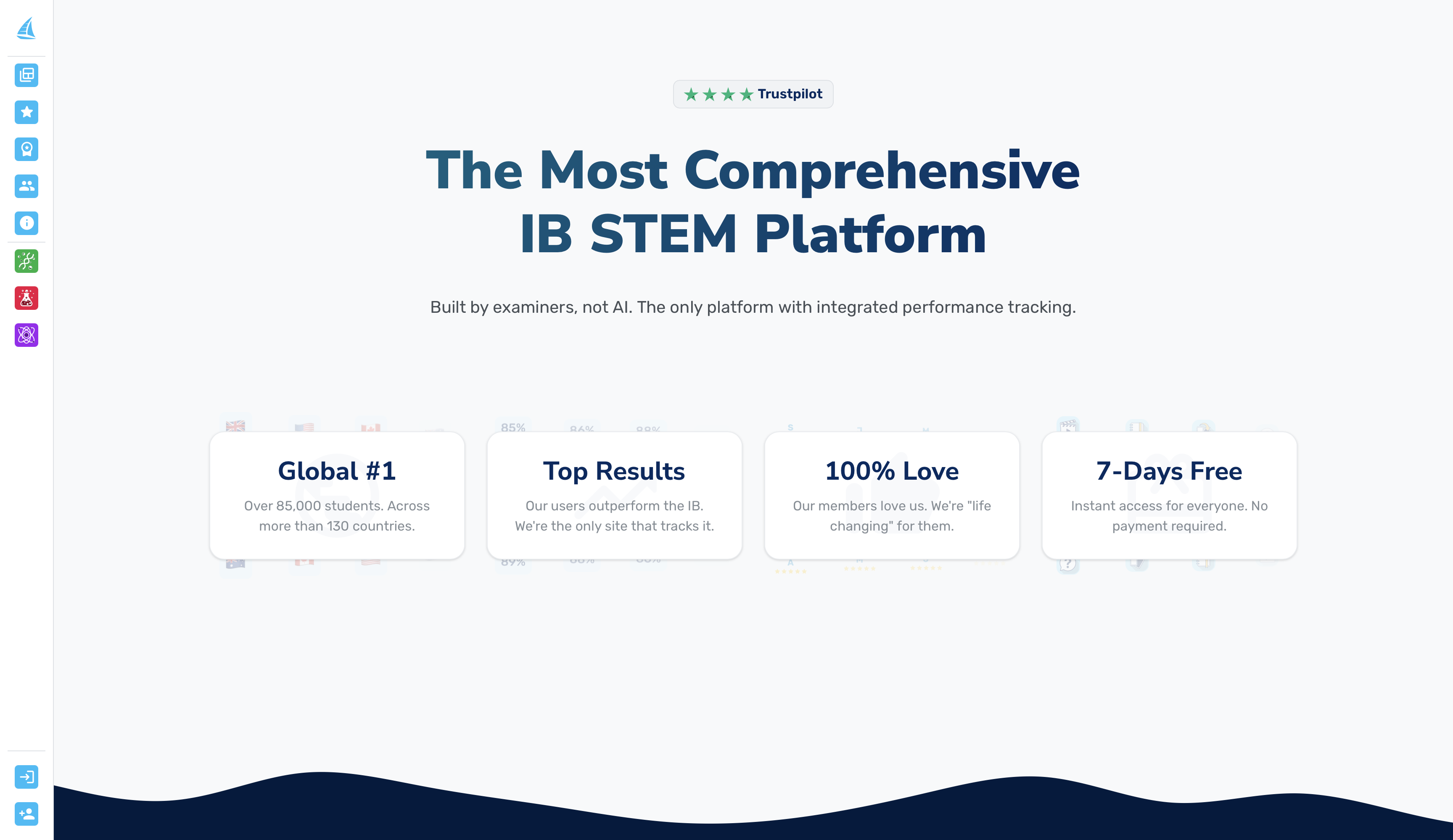
Tibertutor provides IB science educators with exam-style questions, topic tests, and full IB Biology mock exams built by experienced examiners. These resources align directly with the IB Diploma Programme syllabus, giving you ready-made assessment tools that complement your CPD goals. Tibertutor also offers IB Biology exam tests and detailed analytics so you can track student progress and identify gaps with confidence. When your teaching improves, your students deserve resources that keep pace.
FAQ
What are the IB workshop categories?
The IB organises workshops into three categories: Category 1 for educators new to the IB, Category 2 for deepening existing practice, and Category 3 for leadership and advanced exploration.
What is an IB Educator Certificate (IBEC)?
An IBEC is a university-level qualification available at over 60 partner institutions in 17 countries, offering formal recognition of IB expertise beyond standard workshop attendance.
Do IB Micro-credentials count towards PD requirements?
IB Micro-credentials are accepted for teacher role requirements in the current pilot programme, but they do not replace all specialised subject workshop requirements.
How long do IB workshops take?
In-person IB workshops are typically 2.5 days. Online workshops usually span four weeks with self-paced content, giving educators flexibility around their teaching timetable.
How do I make professional development stick in my IB science teaching?
Link every CPD activity to a specific classroom outcome, document your reflections in a portfolio, and apply new approaches within two weeks of completing any training.