IB exam guide for science students: 2026 edition
The IB exam is the final assessment for the International Baccalaureate Diploma Programme, combining written external examinations with teacher-marked internal assessments to produce a student’s overall grade. For science students studying Biology, Chemistry, or Physics, this combination is especially significant. Practical investigations and lab work contribute directly to final scores alongside written papers. Understanding how the examination works, when it happens, and how to prepare gives students and families a real advantage.
What is the IB exam schedule and format in 2026?
The 2026 IB exam period lasts 18–21 active days, running from late april through to mid-may, with papers scheduled monday to friday. That is a concentrated stretch of high-stakes assessment, and knowing the shape of it helps students plan their revision without panic.

IB assigns every school to one of three exam zones: A, B, or C. These zones standardise start times globally to protect exam security and fairness. Students cannot change their assigned zone, so local start times are fixed and non-negotiable.
The exam timetable is designed to prevent paper conflicts, with at least 24 hours between papers in the same subject. Week three of the exam period is particularly demanding for science students, as core science and mathematics papers often cluster together. Families should note this in advance and plan for extra support during that week.
From 2026, the IB has begun a phased transition to digital exams. Paper exams remain available while schools prepare for the shift. Students should confirm with their school whether they will sit paper or digital papers, as preparation habits differ slightly between the two formats.
| Exam feature | Detail |
|---|---|
| Exam period length | 18–21 active days, late april to mid-may |
| Exam days | Monday to Friday only |
| Exam zones | Zones A, B, and C; assigned by school, non-changeable |
| Paper spacing | Minimum 24 hours between papers of the same subject |
| Digital exams | Phased rollout from 2026; paper exams still available |
Pro Tip: Check your school’s assigned exam zone early in the year. Your local start time affects your morning routine and how much revision time you have on exam days.
How are IB science subjects assessed?
IB Diploma Programme assessment combines external written exams with internal assessments marked by teachers, both contributing meaningfully to a student’s final grade. Many students underestimate the internal assessment. That is a costly mistake.
In science subjects, the internal assessment takes the form of a practical investigation. Students design, carry out, and write up an experiment independently. The internal assessment carries significant weight in the final grade, and top performers treat it with the same seriousness as the written papers. For a detailed breakdown of what each science IA involves, the IB science IA types guide on Tibertutor covers all three sciences clearly.
External written papers test a range of skills. The IB assessment framework emphasises analysis, evaluation, and problem-solving alongside factual knowledge. Science papers typically include:
- Data-response questions: Students interpret graphs, tables, and experimental results.
- Structured questions: Short and extended answers requiring application of concepts.
- Essay questions: Found in some Higher Level papers, requiring sustained argument.
- Multiple-choice sections: Present in Biology, Chemistry, and Physics Standard Level and Higher Level papers.
The IB uses criterion-referenced assessment, meaning grades reflect whether a student meets defined academic standards, not how they rank against peers. This is genuinely reassuring. A student’s grade does not fall because another student performed brilliantly.
Pro Tip: Do not leave your internal assessment until the final term. Students who complete a strong draft early have more time to focus on written paper revision when it matters most.
What study strategies work best for IB science exams?
Effective IB exam preparation for science students rests on three foundations: understanding the syllabus, practising the right question types, and managing time across a long exam period. Revision without structure produces anxiety, not results.
-
Build your schedule around fixed dates. The exam timetable cannot be rescheduled except in extraordinary circumstances approved by the IB. Treat every exam date as immovable and work backwards from it. Tibertutor’s guide on building an IB study schedule for science subjects is a practical starting point.
-
Practise data-response questions weekly. Understanding each paper’s structure helps students allocate time effectively during the exam. Data-response questions reward students who read graphs carefully and write concise, evidence-based answers. Practise these under timed conditions from at least three months before the exam.
-
Alternate theory revision with question practice. Reading notes alone does not build exam technique. After reviewing a topic, attempt past-paper questions on that topic immediately. This approach reveals gaps in understanding far more efficiently than re-reading.
-
Plan recovery time during week three. Science and mathematics papers cluster in the final week of the exam period. Students who schedule short recovery periods between papers, including proper sleep and light physical activity, perform more consistently than those who revise through the night.
“The students who do best in IB science exams are not always the ones who know the most. They are the ones who know how to show what they know, clearly and under pressure.”
How can families support IB science students during exam preparation?
Families play a genuine role in a student’s exam performance, even without knowing the science content themselves. The most effective support is practical and calm.
-
Learn the exam timetable together. Knowing which papers fall in week three helps families plan meals, transport, and quiet time at home. A student who does not have to think about logistics can focus entirely on revision.
-
Help create a realistic study schedule. Students often overestimate how much they can cover in a day. Families can gently encourage shorter, focused sessions over long, unfocused ones. Two hours of quality revision outperforms six hours of distracted reading.
-
Recognise signs of stress early. Disrupted sleep, withdrawal from family, and loss of appetite are common signals that a student is struggling. Acknowledging these signs without adding pressure makes a significant difference.
-
Provide resources without pressure. Pointing a student towards structured tools, such as the IB science question bank on Tibertutor, gives them something concrete to work with. Avoid framing resources as a sign that they are falling behind.
-
Celebrate internal assessment milestones. Completing a draft IA is a real achievement. Families who recognise this help students maintain confidence through a long and demanding process. For parents wanting a fuller picture of what support looks like, Tibertutor’s resources for IB parents offer clear, practical guidance.
Key takeaways
Consistent, structured preparation that treats internal assessments and written papers with equal seriousness is the single most reliable path to strong IB science exam results.
| Point | Details |
|---|---|
| Exam period timing | The 2026 IB exam runs for 18–21 days from late april to mid-may, Monday to Friday. |
| Exam zones are fixed | Schools are assigned to Zone A, B, or C; students cannot change their local start times. |
| Internal assessments matter | Science IAs carry significant weight; completing a strong draft early frees revision time later. |
| Criterion-referenced grading | Grades reflect meeting academic standards, not ranking against other students globally. |
| Digital exams are arriving | From 2026, some papers may be sat digitally; confirm your school’s format well in advance. |
What I have learned from years of IB science coaching
The most common mistake I see is students treating the internal assessment as a box to tick before the “real” revision begins. That mindset costs marks. The IA is not a distraction from exam preparation. It is part of it. Students who engage seriously with their investigation develop exactly the analytical and evaluative skills that written papers reward.
The second mistake is ignoring the exam zone schedule until it is too late to adjust routines. Your assigned zone determines your local start time. A student sitting a 7:30am paper who has been revising until midnight will not perform at their best. Build your sleep schedule around your actual exam times, not an imagined version of them.
Finally, rote memorisation does not work in IB science. The papers are designed to test application and reasoning. Students who practise IB-style exam questions regularly, and who review their answers critically, build the kind of flexible understanding that earns top marks. Confidence in the exam room comes from having seen the question before, not from having read the textbook twice.
— Oliver
Tibertutor’s IB science tools for your 2026 exam
Tibertutor is built specifically for IB science students preparing for Biology, Chemistry, and Physics exams. Every resource on the platform is created by examiners and experienced educators, so the content reflects exactly what the IB rewards.
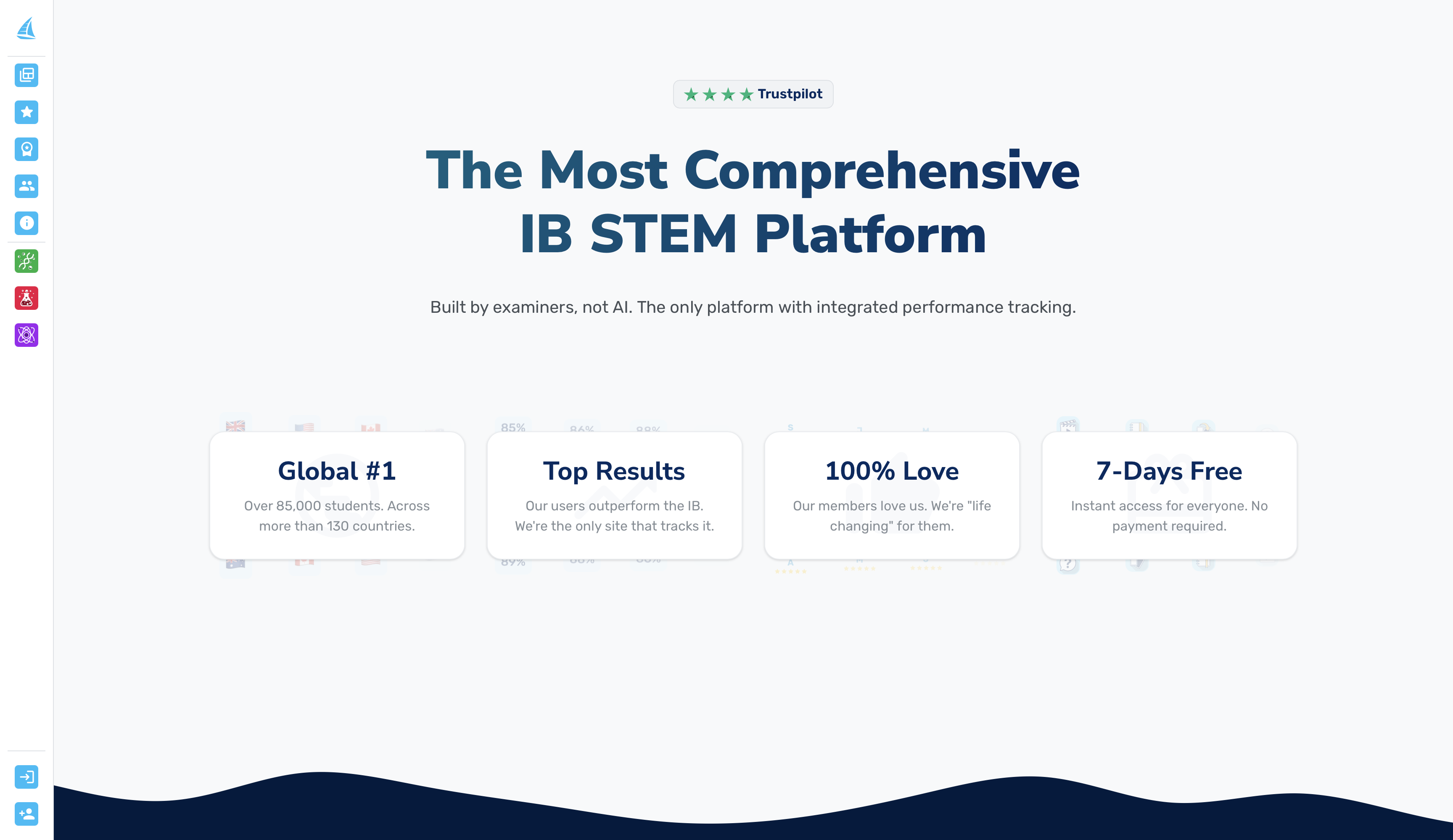
The IB Science Questionbank gives students access to thousands of exam-style questions organised by topic, paper type, and difficulty. Animated videos, cram sheets, flashcards, and mock exams sit alongside detailed progress tracking so students and families can see where effort is needed. Students aiming for top scores use Tibertutor to practise consistently, not just in the final weeks. Explore the full range of student resources and find the tools that fit your revision plan.
FAQ
What is the IB exam period in 2026?
The 2026 IB exam period runs for 18–21 active days from late april through to mid-may, with papers held monday to friday only.
Can IB exam dates be changed?
Rescheduling is strictly prohibited except in extraordinary circumstances approved by the IB. Students must plan their revision around the published timetable.
How much does the internal assessment count in IB science?
The internal assessment carries significant weight in the final grade alongside external written papers. Treating it seriously from the start is one of the most effective things a science student can do.
What question types appear in IB science written papers?
IB science papers include data-response questions, structured short and extended answers, and multiple-choice sections. Higher Level papers in some subjects also include essay questions.
Is the IB graded on a curve against other students?
No. The IB uses criterion-referenced assessment, meaning grades are based on meeting defined academic standards, not on how a student ranks within the global cohort.