IB science differentiated instruction guide for educators
Differentiated instruction in IB science is defined as the deliberate tailoring of curriculum content, learning processes, and assessment tasks to meet the varied cognitive needs of students within IB science classrooms. A 2025 mixed-methods study confirmed that DI produces statistically significant achievement gains over traditional curricula, with students responding positively to personalised learning. The updated IB Diploma Programme science guides now embed Approaches to Teaching and Learning (ATL) skills and concept-based learning as core frameworks, making structured differentiation not optional but central to effective IB science teaching strategies. This guide gives you the research, methods, and practical tools to make it work.
What are the essential elements of IB science differentiated instruction?
Formative assessment and teacher self-efficacy are the two strongest predictors of effective differentiation. A 2026 study found that formative assessment and self-efficacy outweigh subject knowledge and class size as drivers of successful differentiation in science classrooms. That finding matters because it shifts the focus from what you teach to how confidently and responsively you teach it.
Strong IB science curriculum adaptations begin with three non-negotiables:
- Curriculum fluency: You must know the updated IB science subject guides well enough to identify where concept-based learning creates natural entry points for students at different levels.
- Formative assessment habits: Exit tickets, concept maps, and quick diagnostic questions give you the real-time data needed to adjust instruction before a lesson ends.
- ATL skill integration: ATL skills enable diverse cognitive entry points, turning scientific inquiry into a genuinely differentiated process rather than a one-size-fits-all activity.
Concept-based learning is particularly powerful here. The revised IB DP science guides use structural concepts deliberately, so that concept-based learning connects content, context, and big-picture ideas across cognitive levels. A student who struggles with the mechanics of enzyme kinetics can still engage meaningfully with the concept of biological regulation.
Pro Tip: Map your unit plan against the IB subject guide’s conceptual understandings before writing a single lesson objective. This reveals where scaffolding is genuinely needed and where students can self-direct.
How can technology enhance differentiated instruction in IB science?
Technology is not a shortcut to differentiation. Used well, it is one of the most effective tools for tailoring content and deepening engagement across ability levels. Qualitative research from seven experienced IB teachers confirms that digital tools are critical for personalising content, increasing motivation, and fostering genuine engagement in differentiated classrooms.
Practical digital approaches that work in IB science include:
- Tiered digital resources: Assign different versions of the same task through a learning management system, so students work at the right level without public comparison.
- Animated instructional videos: Short, topic-specific videos let students pause, rewatch, and process at their own pace, which is particularly useful for abstract concepts in Chemistry and Physics.
- AI-supported personalisation: Connected AI tools can adapt content pathways based on individual performance, reducing the planning burden on teachers significantly.
- Progress analytics: Platforms that track student performance by topic allow you to identify gaps before they compound.
The barriers are real, though. Teachers consistently identify unequal device access and limited digital skills as significant obstacles. The practical fix is to design technology-enhanced tasks with a low-tech fallback, so no student is excluded when infrastructure fails.
Pro Tip: Before adopting any digital tool, ask one question: does this give me better data about my students, or does it just look engaging? Data wins every time.
What step-by-step methods work for implementing differentiated instruction?
Universal Design for Learning (UDL) gives IB science educators a clear planning framework. UDL-aligned classrooms embed formative assessment into learning activities, allowing teachers to observe and adjust instruction dynamically rather than waiting for summative results. The shift from reactive to proactive planning is what separates effective differentiation from well-intentioned guesswork.
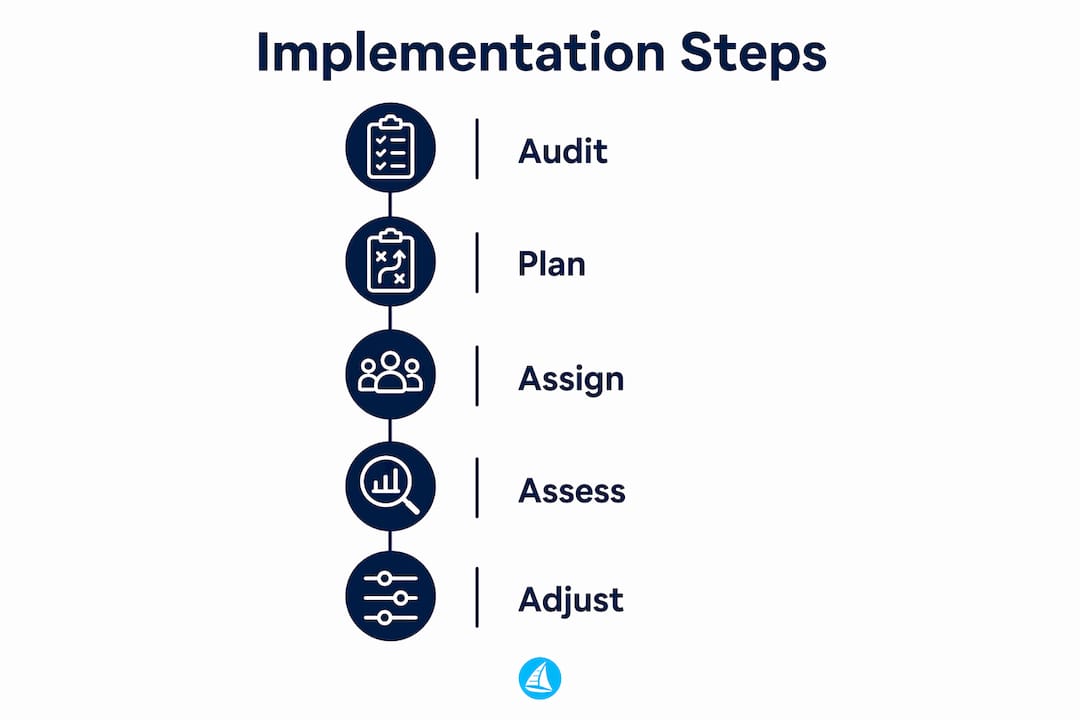
A practical implementation sequence looks like this:
- Audit your learners. Use a short diagnostic task at the start of each unit to map prior knowledge. This is your baseline for every differentiation decision that follows.
- Design flexible pathways. Create three versions of core tasks: scaffolded, standard, and extended. Align each version to the same IB assessment criterion so grading remains consistent.
- Structure small groups intentionally. Rotate group composition based on formative data, not fixed ability labels. Guided inquiry in science works best when group membership reflects current understanding, not past performance.
- Embed checkpoints. Place a formative checkpoint at the midpoint of every lesson. A two-minute concept check tells you whether to adjust, extend, or reteach before the lesson ends.
- Adjust in real time. Use checkpoint data to redirect students immediately. This is where teacher self-efficacy matters most: confident teachers act on data; hesitant ones wait for the next test.
The table below summarises how each step maps to a UDL principle and an IB science context.
| Implementation step | UDL principle | IB science application |
|---|---|---|
| Diagnostic audit | Multiple means of engagement | Entry-level concept question or lab observation task |
| Flexible task design | Multiple means of representation | Tiered worksheets aligned to assessment criteria |
| Intentional grouping | Multiple means of action | Guided inquiry rotations by current understanding |
| Mid-lesson checkpoint | Formative evidence collection | Exit ticket or quick whiteboard response |
| Real-time adjustment | Responsive instruction | Reteach, extend, or redirect based on checkpoint data |
Explore the range of IB science assessment types to understand how internal assessments can themselves become differentiation tools when designed with flexible entry points.
What challenges do IB science educators face with differentiation?
Small class sizes do not automatically make differentiation easier. Research analysing IB Diploma Programme international schools found that smaller classes create their own complications, including insufficient student numbers for effective group strategies and greater reliance on data-driven planning. A class of eight students with wildly different prior knowledge is harder to differentiate for than a class of twenty-five with a predictable spread.
The most common challenges and their evidence-based responses:
- Mixed-ability complexity: Use tiered tasks rather than separate curricula. Every student works toward the same IB learning outcomes; the scaffold differs, not the destination.
- Limited resources: Prioritise differentiation in the units with the highest assessment weighting. You cannot differentiate everything equally, so choose where it matters most.
- Time pressure: Build a shared departmental bank of differentiated tasks. Collaborative planning reduces individual workload and improves consistency across the school.
- Data gaps: If you lack diagnostic data, a five-question pre-unit quiz takes ten minutes to design and gives you everything you need to group students purposefully.
The underlying principle is that data-driven planning is not an administrative burden. It is the mechanism that makes differentiation precise rather than approximate. Browse the IB resources for science students to find materials that support mixed-ability planning without requiring you to build everything from scratch.
Key takeaways
Effective differentiated instruction in IB science depends on formative assessment, teacher self-efficacy, and deliberate alignment with UDL and ATL frameworks, not class size or subject knowledge alone.
| Point | Details |
|---|---|
| Formative assessment is the foundation | Use diagnostic tasks and mid-lesson checkpoints to drive every differentiation decision. |
| ATL skills create entry points | Embedding ATL into daily inquiry gives students at all levels a genuine way into scientific thinking. |
| UDL structures flexible pathways | Design tiered tasks aligned to IB criteria so all students work toward the same outcomes. |
| Technology needs a fallback plan | Digital tools enhance personalisation, but always design a low-tech alternative for infrastructure failures. |
| Small classes still need data | Class size does not simplify differentiation; data-driven grouping does. |
What I have learned from watching differentiation succeed and fail
The most common mistake I see is treating differentiation as a planning exercise rather than a teaching habit. Educators spend hours designing tiered worksheets, then deliver them in a way that signals to students exactly which group they are in. That undermines the whole point.
The IB science classrooms where differentiation genuinely works share one characteristic: the teacher responds to what students do, not to what they planned for. ATL skills are woven into the lesson naturally, not announced as a separate activity. Guided inquiry feels like science, not like a differentiation strategy. The planning is invisible because the responsiveness is visible.
My honest advice: invest your professional development time in formative assessment techniques before anything else. Digital tools, concept-based frameworks, and UDL principles all amplify good teaching. They cannot replace the moment when a teacher reads a room and adjusts. That skill is built through practice, reflection, and a willingness to act on uncomfortable data.
— Oliver
How Tibertutor supports differentiated learning in IB science
Tibertutor is built by IB examiners and experienced educators who understand exactly what differentiated practice looks like at the exam level. The platform gives educators and students access to topic-specific IB Biology practice tests and IB Chemistry exam tests, each designed to reveal precise gaps rather than just overall scores.
Progress analytics show which topics need attention, making it straightforward to assign targeted practice that matches each student’s current level. For educators implementing differentiation strategies, Tibertutor’s resources provide the exam-aligned content layer that turns good teaching into measurable results. Visit Tibertutor to see how the platform supports diverse learners across IB Biology, Chemistry, and Physics.
FAQ
What is differentiated instruction in IB science?
Differentiated instruction in IB science is the deliberate tailoring of content, process, and assessment to meet varied student learning needs within the IB curriculum framework. It is grounded in formative assessment and aligned with ATL skills and concept-based learning.
Does class size affect differentiation in IB science?
Smaller classes do not automatically make differentiation easier. Research shows that small IB science classes create their own challenges, including limited group strategy options and greater dependence on data-driven planning.
How does UDL apply to IB science teaching?
Universal Design for Learning (UDL) in IB science means embedding formative assessment into lessons, designing flexible task pathways, and adjusting instruction in real time based on student evidence rather than waiting for summative results.
What role do ATL skills play in differentiation?
ATL skills provide diverse cognitive entry points into scientific inquiry, allowing students at different levels to engage meaningfully with the same content. Integrating ATL into daily lessons is a core feature of updated IB science curriculum adaptations.
How can technology support differentiated instruction in IB science?
Digital tools personalise content delivery, increase motivation, and provide performance data that informs grouping and task design. Teachers should always design a low-tech fallback to manage barriers such as unequal device access.