
Types of IB science support resources: 2026 guide
IB science support resources are specialised materials designed to help students, parents, and educators master the Diploma Programme Sciences curriculum efficiently. These resources span Biology, Chemistry, Physics, Computer Science, and Environmental Systems and Societies. With new DP Sciences courses first taught in 2023 and assessed from 2025, the types of IB science support resources available have expanded considerably. Choosing the right combination, whether for self-study, exam preparation, or classroom delivery, makes a measurable difference to outcomes.
1. Types of IB science support resources: online learning platforms
Online platforms are the most structured category of IB science revision tools. Pamoja Education delivers fully certified DP science courses online, adhering to IB quality standards. This makes Pamoja particularly well suited to homeschoolers and remote learners who need a complete, IB-endorsed course rather than supplementary materials alone.
ManageBac takes a different approach. Its platform separates learning into distinct modes: Theory Videos and Flashcards for building understanding, and an Exam Question Bank mapped to the new DP Sciences courses. This separation matters because students who mix passive reading with active retrieval practice consistently outperform those who rely on a single method.
- Structured courses (Pamoja): best for students needing a full curriculum pathway, including those choosing an IB science online platform as homeschoolers
- Modular platforms (ManageBac): best for targeted revision alongside school-based learning
- Hybrid tools (Tibertutor): best for exam-focused practice with analytics, animated videos, and progress tracking built in
Pro Tip: When choosing an IB online science resource, check whether the platform explicitly states alignment with the 2023 first-taught syllabus. Older platforms may still carry pre-2023 content without flagging it.
2. Concept-based learning resources

Concept-based learning is the pedagogical framework at the heart of the updated DP Sciences curriculum. Teaching guides and concept posters by educators like Gary Goodwin are designed to make the links between content, context, and concepts visible to students. These are not decorative classroom additions. They are functional tools.
Displaying concept posters in a science classroom and referring to them regularly enables students to connect diverse topics under shared conceptual threads. This approach builds both retention and deeper comprehension over time, because students are not memorising isolated facts but understanding how ideas relate.
Concept-based learning maintains horizontal and vertical links between topics, improving retention and comprehension over time.
For teachers, the IB’s Nano PD series and subject-specific workshops provide professional development directly tied to concept teaching. For students working independently, downloadable concept maps and teaching guides serve as self-study anchors that prevent surface-level learning.
Pro Tip: If you are a parent wondering how to support your IB science child at home, ask their teacher for a copy of the concept poster for their current unit. Pinning it somewhere visible at home reinforces classroom learning without requiring any additional effort.
3. Assessment-aligned resources for IB science
Assessment-aligned resources are the category most directly tied to exam performance. The new DP Sciences assessment structure consolidates external exams into Paper 1 (multiple choice and themes) and Paper 2 (data questions and extended response). Resources that do not reflect this structure are actively unhelpful, regardless of their content quality.
Internal Assessment support is equally specific. The updated IA criteria include a 3,000-word limit and revised evaluation standards. Students need scaffolding materials written for these criteria, not older versions. For a detailed breakdown of how IB science grading works alongside these assessments, the IB science grading guide from Tibertutor is worth reading alongside any IA preparation resource.
The most effective assessment resources include:
- Official past papers organised by Paper 1 and Paper 2 components
- Worked solutions with video walkthroughs explaining mark-scheme logic
- IA-writing scaffolds built around the current 3,000-word and criteria framework
- Mock exams with timed conditions and performance feedback
- Study scheduling tools that map revision to assessment dates
Pro Tip: Practise Paper 1 and Paper 2 separately before combining them in a mock exam. Each paper tests a different cognitive skill set, and mixing them too early can mask specific weaknesses.
4. Teacher-focused supplementary materials
Teachers have a dedicated category of IB science resources built specifically for curriculum delivery and professional growth. The IB’s official teaching resources hub provides professional development in multiple formats: online modules, in-person workshops, and regional events. The Nano PD series is particularly practical, offering short, focused development sessions that fit around teaching schedules.
Access to the My IB community platform gives teachers peer networking alongside curated subject pages. ManageBac supplements this with subject-specific lesson plans, concept posters, and revision guides updated for the 2023 courses. The combination of IB-official development and platform-based classroom tools gives teachers a layered support structure.
- IB Teaching Resources Hub: professional development, Nano PD, and My IB community access
- ManageBac subject pages: lesson plans, concept posters, and updated revision guides
- Tibertutor analytics: progress tracking and performance data to identify student weaknesses before exams
Teachers who engage with continuous professional development aligned to DP Sciences updates are better positioned to guide students through the assessment changes. This directly improves student outcomes, which is why professional development belongs in any serious discussion of IB science resources.
5. Self-study resources for IB biology, chemistry, and physics
Self-study resources form the backbone of independent learning for IB science students. For IB biology self-study resources specifically, the most effective formats combine detailed written notes with retrieval practice tools like flashcards and topic tests. Tibertutor’s top picks for IB science students covers the strongest options across all three sciences for 2026.
Support resources separate study into theory-focused content using videos and flashcards, and revision focused on exam-style practice and past papers. This distinction is not just organisational. It reflects how memory consolidation works: initial learning requires different conditions from retrieval practice, and conflating the two reduces the effectiveness of both.
For chemistry and physics, video-based explanations are particularly valuable for topics involving mathematical reasoning or visual models. Tibertutor’s animated instructional videos are built with this in mind, covering syllabus content with exam-relevant framing rather than general scientific explanation.
6. How to choose the right IB science support resources
Choosing IB online science resources well requires matching the resource to a specific purpose. Resource currency is vital; outdated IA or exam prep materials risk ineffective learning due to curriculum changes from 2023 onwards.
Use these criteria when evaluating any resource:
- Curriculum alignment: does it explicitly reference the 2023 first-taught, 2025-assessed syllabus?
- Format fit: does the student learn better through video, text, or interactive practice?
- Assessment coverage: does it address both Paper 1 and Paper 2 formats, plus IA requirements?
- Budget: free resources from the IB website cover official past papers; paid platforms like Tibertutor add analytics and structured practice
- Accessibility: for homeschoolers or remote learners, full online courses like Pamoja provide the most complete pathway
Pro Tip: Mix at least three resource types: one for concept building, one for exam practice, and one for IA guidance. Relying on a single resource, however good, leaves gaps that only become visible under exam conditions.
Key takeaways
The most effective IB science support resources combine curriculum-aligned concept materials, updated assessment practice, and structured self-study tools mapped to the 2023 DP Sciences syllabus.
| Point | Details |
|---|---|
| Curriculum alignment is non-negotiable | Only use resources explicitly updated for the 2023 first-taught, 2025-assessed DP Sciences courses. |
| Separate study from revision | Use theory videos and flashcards for learning; past papers and mock exams for revision. |
| Assessment structure has changed | Resources must reflect Paper 1 and Paper 2 formats and the updated IA criteria with a 3,000-word limit. |
| Teachers need dedicated resources too | Professional development through the IB Teaching Resources Hub and Nano PD directly improves student outcomes. |
| Mix resource types deliberately | Combine concept tools, exam practice, and IA scaffolds for the most complete preparation. |
Why resource choice matters more than resource quantity
In my experience working with IB science students and educators, the most common mistake is accumulating resources rather than selecting them. A student with five misaligned revision guides is worse off than one with two well-chosen, up-to-date tools. The 2023 curriculum changes are significant enough that pre-2023 materials can actively mislead students about assessment expectations, particularly for the IA.
I have seen students spend weeks preparing Internal Assessments using older criteria, only to discover the evaluation framework had changed. That is not a minor setback. It is months of work that needs to be restructured. The same applies to exam practice: drilling Paper 3 questions for a course that no longer has a Paper 3 builds false confidence.
My honest recommendation is to start with the official IB syllabus guide, then select one concept-based resource, one exam practice platform, and one IA-specific scaffold. For students aiming at top scores, understanding why IB science exams are hard is as important as the resources themselves. Preparedness comes from clarity, not volume.
— Oliver
How Tibertutor supports your IB science preparation
Tibertutor is built specifically for IB science students, parents, and teachers who want exam-focused, curriculum-aligned support. Every resource on the platform reflects the 2023 DP Sciences updates, from the IB Science Questionbank to the animated videos, cram sheets, and mock exams.
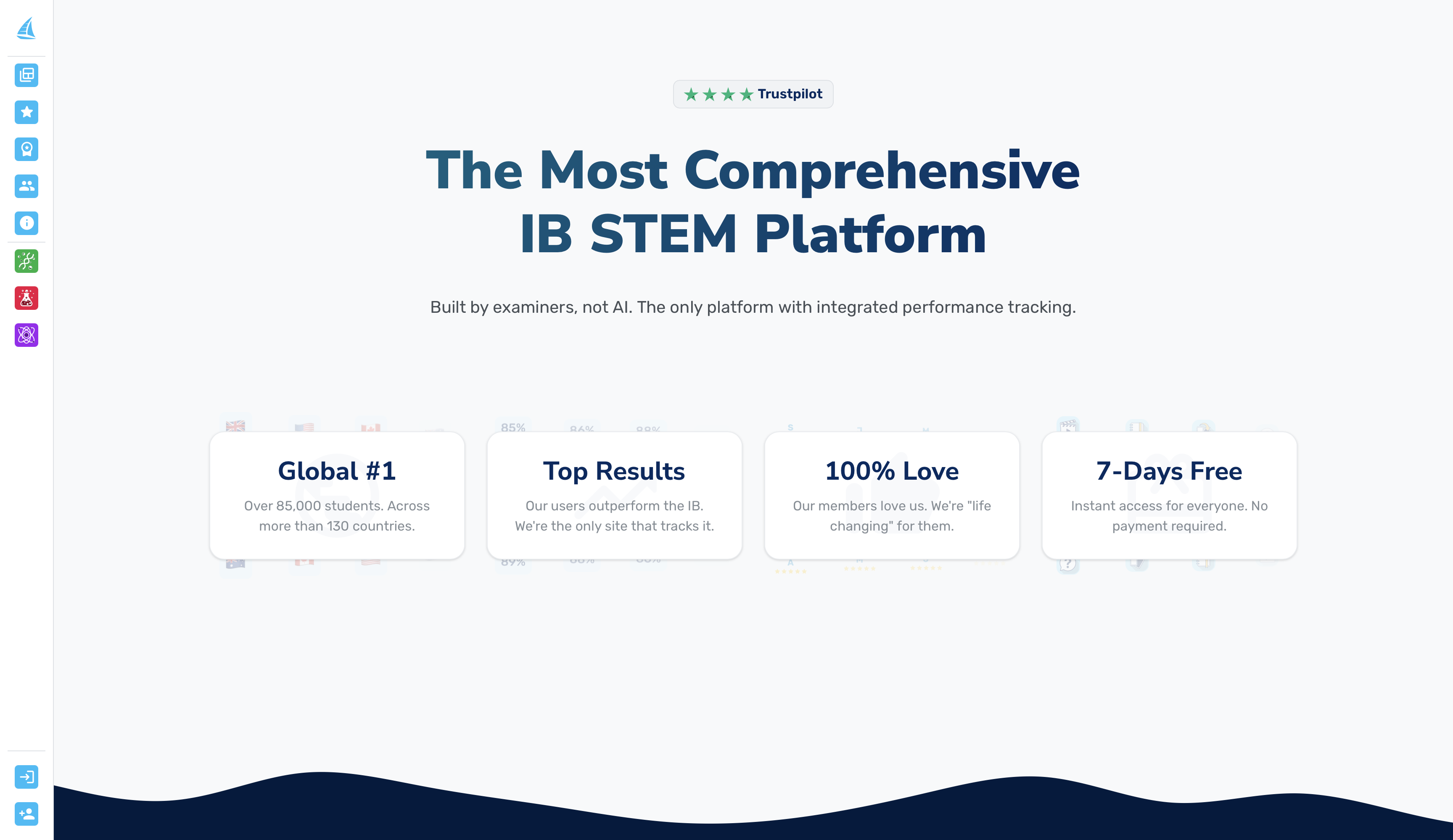
Students get exam-style questions, detailed notes, flashcards, and progress analytics that show exactly where to focus next. Parents get visibility into their child’s preparation without needing to interpret the IB syllabus themselves. Teachers get supplementary materials that slot directly into classroom delivery. Whether you are preparing for Paper 1, working through an IA, or supporting a student at home, Tibertutor gives you the tools to build genuine confidence. Explore the resources for IB students and see how structured, expert-built support changes the preparation experience.
FAQ
What are the main types of IB science support resources?
The main types are online learning platforms, concept-based learning materials, assessment-aligned practice tools, teacher professional development resources, and self-study aids such as flashcards, notes, and video explanations. Each type serves a distinct purpose in the learning and revision process.
How do I know if an IB science resource is up to date?
Check whether the resource explicitly references the 2023 first-taught, 2025-assessed DP Sciences syllabus. Resources that do not mention this update may still carry pre-2023 content, which reflects a different assessment structure and IA criteria.
What resources help with the IB science Internal Assessment?
IA-specific scaffolds written for the current 3,000-word limit and updated evaluation criteria are the most targeted option. These should be paired with worked examples and, where possible, video walkthroughs that explain mark-scheme expectations for the new criteria.
Which IB science resources suit homeschoolers best?
Pamoja Education offers fully certified online DP science courses endorsed by the IB, making it the strongest option for homeschoolers needing a complete curriculum pathway. Modular platforms like Tibertutor complement this with exam practice and progress tracking.
How can parents support their child with IB science?
Parents can support their child by helping them access curriculum-aligned resources, encouraging a structured study schedule, and using platforms with progress tracking to understand where their child needs additional focus. Tibertutor’s parent-focused resources are designed specifically for this purpose.