
Track IB Revision Progress With a One Page 48 Hour Study Cycle
The single best way to track IB revision progress is a one-page subject mastery tracker built on three micro-metrics: confidence, evidence, and next action. Update it daily with a five-minute quick check, then reassess weekly against real evidence such as timed past papers or examiner-authored mock questions. Anything else, a wall of highlighted notes or a vague “revised Topic 4” tick, tells you nothing about whether you can actually answer an exam question on it.
TL;DR:
- Regularly update confidence and evidence scores daily to ensure the tracker accurately reflects current mastery and avoid relying on vague notes.
- Focus weekly reassessments on rows with the lowest confidence scores relative to their evidence, using targeted 48-hour cycles to improve them.
- Use syllabus-mapped, examiner-authored questions as the primary evidence source to align revision with exam demands and track actual progress.
- Set realistic milestones based on upcoming exam dates and avoid expecting rapid improvements in all topics equally, especially in hard or weak areas.
- Limit the number of priorities each week to up to three rows to prevent overload and ensure consistent focus on the most impactful weaknesses.
Table of Contents
- What effective IB revision tracking actually looks like
- How to build a one-page mastery tracker for a subject
- What to record: confidence, evidence and next actions
- Tracking coursework: rows for IA, EE and TOK
- Turn a tracker row into a targeted 48-hour study cycle
- How Tiber Tutor’s integrated resources and analytics make tracking actionable
- Setting realistic goals and milestones inside the tracker
- Reading the data: adjusting strategy from what the tracker shows
- Bringing outside resources into the tracker without cluttering it
- Common tracking challenges and how to fix them
- Author perspective: start simple, iterate quickly
- How Tiber Tutor turns tracking into exam-ready progress
- Sources
- FAQ
What effective IB revision tracking actually looks like
A tracker earns its place only if it changes what you do next. If updating it never alters your study plan, it’s a diary, not a tracking system. Educators who study revision habits make the same point: tracking only matters when it feeds forward into action, not when it just records what already happened.
Three micro-metrics do the real work. Confidence tells you how you feel about a topic. Evidence tells you what you can prove. The next action turns the gap between those two into something you’ll actually do this week. Miss any one of them and the tracker stops being predictive, it becomes a mood board.
Rhythm matters as much as content. A short one-page mastery tracker works best with daily quick checks, a proper weekly reassessment, and a deeper “clean” pass in the fortnight before mocks.
- Update confidence and evidence daily, in a short amount of time
- Reassess every row once a week, no exceptions
- Run a full deep clean before every mock exam series
- Favour syllabus-mapped, examiner-authored questions as your evidence source
Pro Tip: If a topic hasn’t moved in confidence for two straight weekly reassessments, stop revising it the same way. Change the method, not just the schedule.
How to build a one-page mastery tracker for a subject
You can build a working tracker for one subject in about an hour. Here’s the sequence that keeps it usable rather than beautiful, but abandoned by week two.
- Pull the syllabus. Map the official topic list into six to twelve rows, grouped by unit rather than by lesson.
- Add three columns per row. Confidence (1 to 5), latest evidence (a percentage or raw score), and one next action with a time estimate attached.
- Tag assessment links. Note which paper (Paper 1, 2, or 3), which IA section, or which EE reference each row feeds into.
- Flag your top three. Star or colour the three rows needing attention this week; everything else stays visible but quiet.
- Keep the format light. A spreadsheet or single document beats an elaborate app you’ll abandon under exam pressure.
| Column | What goes in it | Example |
|---|---|---|
| Topic | Syllabus subtopic | Enzyme kinetics |
| Confidence (1–5) | Gut-check score, revised weekly | 2 |
| Evidence | Latest timed score or marked result | 48% on Paper 2 extract |
| Next action | Specific, timeboxed task | Redo Q3 to Q5, 20 minutes, tomorrow |
| Assessment link | Where it’s tested | Paper 2, IA data analysis |
This structure is the backbone behind the subject mastery tracker template, and it works because every row answers “what do I do next” in under ten seconds.
What to record: confidence, evidence and next actions
Vague scoring wrecks trackers. “I feel okay about this” means nothing three weeks later. Anchor every confidence score to a concrete description:
- 1 — Couldn’t attempt a Paper 2 question on this without notes open.
- 3 — Can answer a standard question but freeze on anything with an unfamiliar context or a multi-step calculation.
- 5 — Solved a past-paper question under timed conditions and matched the mark scheme without help.
Evidence should always be something you can point to: a timed past-paper percentage, a marked question set with an actual score, or written feedback from an IA supervisor. “I read the notes again” is not evidence.
Next actions need a deadline and a size. “Revise osmosis” fails. “Redo 2023 Paper 1 Q7 to Q9, 20 minutes, tomorrow” survives contact with a busy week.
Optimistic bias creeps in fast: students tend to rate confidence higher than their evidence supports, especially right after a lesson feels like it clicked. The fix is mechanical, never let a confidence score above 3 stand without a matching evidence entry from the last seven days.
Tracking coursework: rows for IA, EE and TOK
Coursework has a habit of vanishing from view once topic revision ramps up, which is exactly when deadlines catch students out. Give each project its own row with the same discipline you apply to science topics.
- IA row: current stage (data collection, analysis, write-up), required evidence (raw data, supervisor comments), and a deadline for the next draft.
- EE row: research status, a checklist of primary sources still needed, outline completion, and the single next deliverable due.
- TOK row: links back to relevant subject topics, plus sample practice questions logged as evidence of developing arguments.
Each row needs one to three weekly micro-actions, not a grand plan. “Email supervisor about methodology feedback by Wednesday” moves an IA forward more than a vague intention to “work on the IA this weekend” ever will.
Turn a tracker row into a targeted 48-hour study cycle
Each week, pull your top three rows, the ones with the lowest confidence relative to how much they’re worth in the exam, and run them through a tight two-day cycle rather than a scattered week of “general revision.”
- Day one: diagnose and rebuild. Identify exactly where the evidence broke down (a specific question type, a calculation step, a command term you keep misreading), then work through explanation and guided examples.
- Day two: test and log. Attempt fresh, timed questions on the same subtopic, mark them honestly, and update both the evidence and confidence fields immediately.
- Decide: promote or repeat. If the new evidence clears your threshold, move the row to maintenance. If not, it re-enters the cycle with a narrower next action.
This mirrors how identifying weak topics quickly and linking them to specific past-paper questions shortens the distance between diagnosis and improvement. When a topic survives two full 48-hour cycles without improving, that’s the signal to request feedback from a tutor or examiner-trained resource rather than repeating the same approach a third time.
Pro Tip: Log tutor or examiner feedback as evidence the moment you get it. Feedback that never enters the tracker has a way of evaporating by the next reassessment.
How Tiber Tutor’s integrated resources and analytics make tracking actionable
Tiber Tutor was built by IB examiners specifically to shorten the gap between “I studied” and “I can prove it.” Every question bank is syllabus-mapped, so each answer you submit slots directly into a tracker row without you having to guess where it belongs. That’s the core value of examiner-authored exam-style questions, the evidence they generate is already aligned to the exact assessment objectives your tracker needs to reference.
The built-in analytics dashboards remove most of the manual bookkeeping: topic-level accuracy, time-per-question, and trend lines update automatically as you work through topic tests and full mock exams. For a student running a weekly reassessment across six subjects, that’s hours saved compared with manually marking and logging every attempt by hand, evidence that most other IB resource sites simply don’t generate at this level of polish or interlinking.
Setting realistic goals and milestones inside the tracker
Ambitious trackers die fast when every row demands Confidence 5 by Friday. Realistic milestones respect how mastery actually builds, in uneven steps, not a straight climb.
Set milestones per row, not per subject. A goal like “move Confidence from 2 to 3 on enzyme kinetics by next Friday” is achievable and measurable. “Master biology this month” is neither.
Stagger difficulty across the week. Pick one or two stretch topics, the ones you’re avoiding, alongside two or three maintenance topics you’re close to mastering. All-stretch weeks burn out fast; all-maintenance weeks feel productive but don’t move your grade.
Tie milestones to the calendar that actually matters: mock exam dates, IA deadlines, and the real exam session. A milestone with no date attached rarely gets hit. If your first Chemistry mock is six weeks away, that gives you roughly three full 48-hour remediation cycles per weak topic before the score counts for anything.
Expect regression, and don’t treat it as failure. A confidence score that drops from 4 to 3 after a harder question set isn’t a setback, it’s more accurate information than you had before. Trackers that only allow upward movement quietly train students to avoid difficult evidence, which defeats the entire purpose.
Finally, review milestones themselves every few weeks, not just the topics. If you’re consistently hitting targets a week early, raise the bar. If you’re consistently missing them, the milestone was unrealistic, not you.
Reading the data: adjusting strategy from what the tracker shows
A tracker only pays off once you start reading patterns across rows, not just single entries. Three signals matter most.

Confidence and evidence disagreeing. When confidence sits at 4 but evidence sits at 55%, that’s a red flag for exam-day surprises: the topic feels comfortable but the marks aren’t there yet. This gap usually means practice has been untimed or too easy, switch to full past-paper conditions immediately.
Clusters of stalled rows. If three or four topics across different units all stall at Confidence 2 for multiple weeks, the problem often isn’t the topics themselves, it’s the study method. Passive rereading rarely shifts evidence scores; active recall and timed practice do.
Assessment-link concentration. If most of your low-confidence rows all feed into Paper 2 rather than Paper 1, that points to a skills gap (extended response, calculation stamina) rather than a knowledge gap, and the fix is different: timed practice under exam conditions, not more content review.
Reading across the rows reveals every weak topic involves multi-step calculations with unit conversions. The fix isn’t six separate revision sessions, it’s one focused 48-hour cycle on unit conversion technique, applied across all four topics at once.
Bringing outside resources into the tracker without cluttering it
Most students already use notes, textbooks, YouTube explainers, and revision guides. The tracker doesn’t replace those, it decides which ones earn a next action.
Treat every external resource as a source of either evidence or explanation, never both. A cram sheet or summary video is explanation, useful before a next action, not evidence of mastery. Only a timed, marked attempt counts as evidence. Confusing the two is how students end up with high confidence and low actual proof.
When you add a new resource, link it to a specific row rather than a whole subject. “Watched thermodynamics explainer, redo Q3 to Q5 tomorrow” is trackable. “Used some videos to revise” isn’t.
Consolidate before mocks. In the two weeks before a mock series, convert scattered resource use into cram sheets tied directly to your lowest-confidence rows, short, high-density summaries built from what the tracker already flagged as weak.
Avoid resource sprawl. Bookmarking ten revision sites for one subject creates decision fatigue, not mastery. Two or three trusted, syllabus-aligned sources, cross-referenced against your tracker’s assessment-link column, beat a scattered collection every time.

Common tracking challenges and how to fix them
The tracker becomes a chore. If updates take more than five minutes daily, the format is too heavy. Strip it back to the three micro-metrics and nothing else until the habit sticks.
Confidence drifts from reality. Students consistently overrate topics they enjoy and underrate ones they find tedious, regardless of actual performance. The fix is mechanical: no confidence score above 3 without evidence logged in the past week.
Coursework gets crowded out. IA and EE rows sit untouched for weeks while topic revision dominates. Give coursework rows a fixed weekly slot, even ten minutes, so they never fall to zero attention.
Too many rows, no priorities. A tracker with thirty active “urgent” rows isn’t prioritised at all. Cap weekly focus at three rows; everything else stays visible but waits.
Evidence collection feels slow. Manually creating timed practice sets, marking them, and logging scores eats revision time. Platforms with syllabus-mapped question banks and automatic analytics remove most of that friction, which matters most in the final weeks before exams when time is the scarcest resource of all.
Author perspective: start simple, iterate quickly
Most students overbuild their first tracker, colour codes, ten metrics, weekly graphs, and abandon it within a fortnight. Speed of update beats completeness every time; a tracker you actually touch daily outperforms a perfect one gathering dust by half-term.
The two rookie mistakes I see constantly: inventing extra metrics nobody needs, and logging confidence without evidence to back it. Fix both by keeping to three fields and refusing to trust a score you can’t justify.
For exam season specifically, run daily five-minute checks and two proper weekly reassessments, no more. Consistency beats intensity almost every time.
— Oliver
How Tiber Tutor turns tracking into exam-ready progress
Building a tracker is only half the job, filling it with reliable evidence is the other half, and that’s where most students lose momentum. Tiber Tutor closes that gap directly: every question bank is written by IB examiners, mapped to the current syllabus, and paired with analytics dashboards that update your topic-level accuracy automatically, no manual marking required.
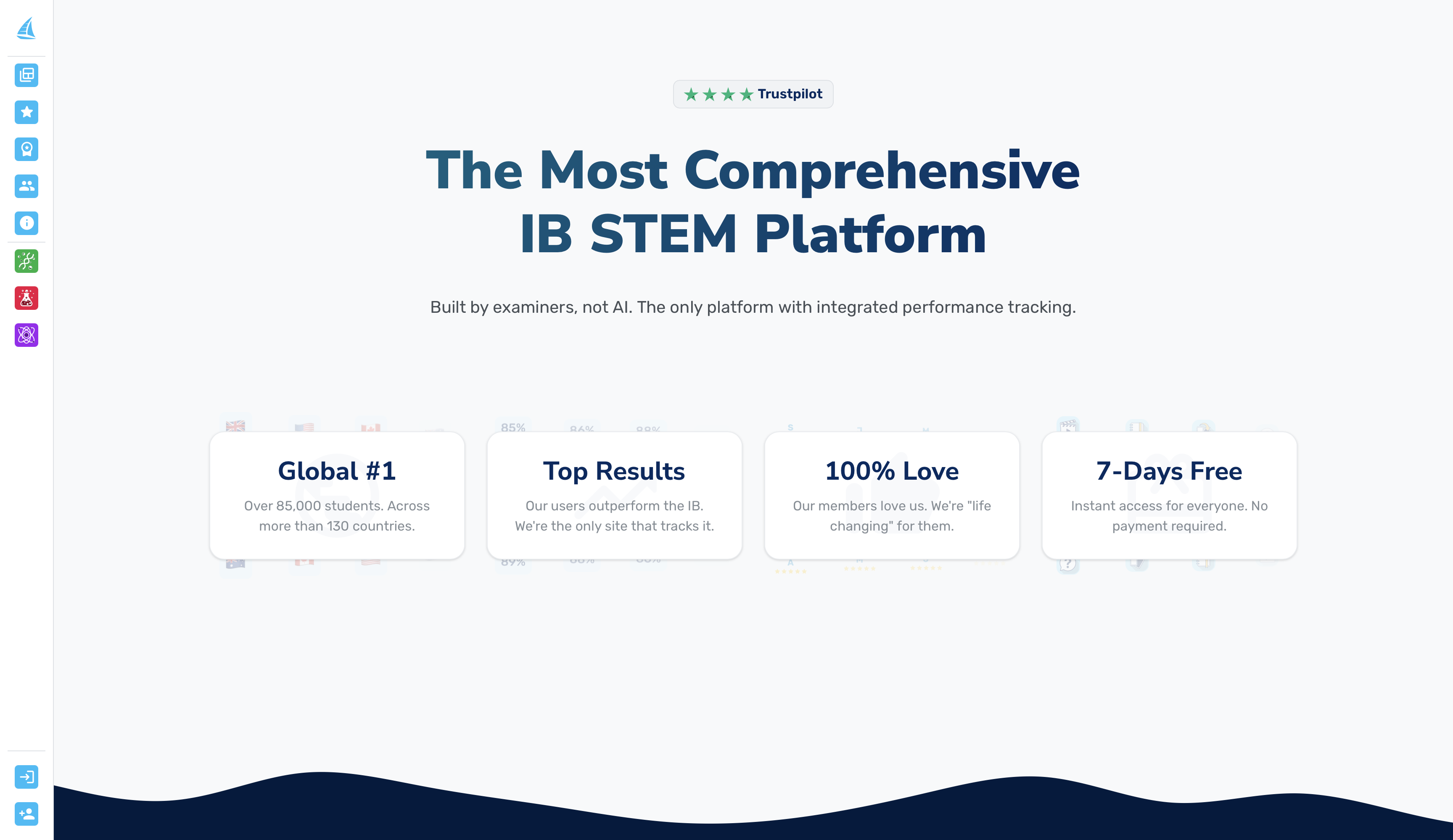
If you’re building or refreshing a subject tracker this week, the fastest way to generate real evidence is to sit a full IB Biology mock exam or run a targeted topic test in Chemistry or Physics, then log the score straight into your lowest-confidence rows. Tiber Tutor’s syllabus monitoring and student-led answer review mean you’ll see exactly which command terms and question types are costing you marks, evidence no generic revision guide can give you at the same depth. Start with a free trial, pick your weakest subject, and let the first mock result set your top three priorities for the week.
FAQ
Is 70% a grade 7 in IB?
Grade boundaries vary by subject and exam session, so there’s no fixed percentage that guarantees a 7. Check your specific subject’s grade boundaries through your school or the IBO rather than assuming a universal cutoff.
How can I track my learning progress?
Use a one-page tracker with three fields per topic, confidence, recent evidence, and a specific next action, updated daily and reassessed weekly against timed practice results.
How do I check my IB results?
IB results are released to schools and students through the official IB candidate results portal on set dates each session; your school coordinator will provide the login details.
What is the best way to track student progress?
The most reliable method pairs a mastery tracker with syllabus-mapped, examiner-authored practice, so every logged score maps directly to a specific assessment objective rather than a vague sense of “revised.” Platforms like Tiber Tutor build this mapping in automatically, which is why the analytics update as you practise rather than requiring manual logging.