IB Biology D1.1 Notes
This page contains our IB Biology notes for D1.1. By reading each one of these notes, you will fully cover the content for IB Biology 'Further DNA replication'.
Further DNA replication
In the HL syllabus, you need to understand the process of DNA replication in more detail. The process is as follows:
- DNA gyrase relieves kinks in the coiled DNA and unwinds the helix.
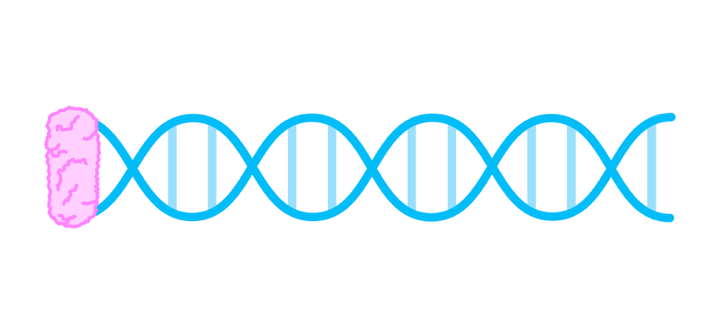
- DNA helicase then separates the DNA strands by breaking hydrogen bonds between the complementary base pairs.
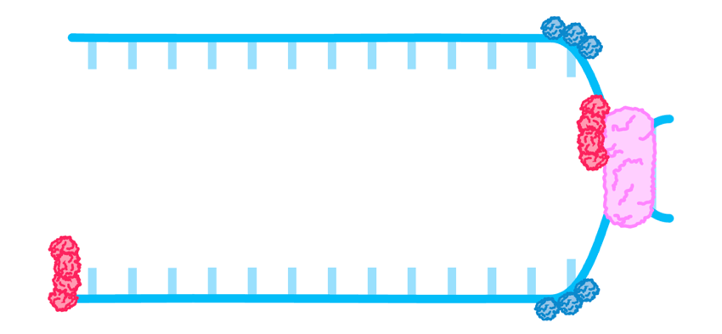
- Single stranded binding proteins keep the strands apart.
- The existing strands are used as templates as DNA primase lays down RNA primer.
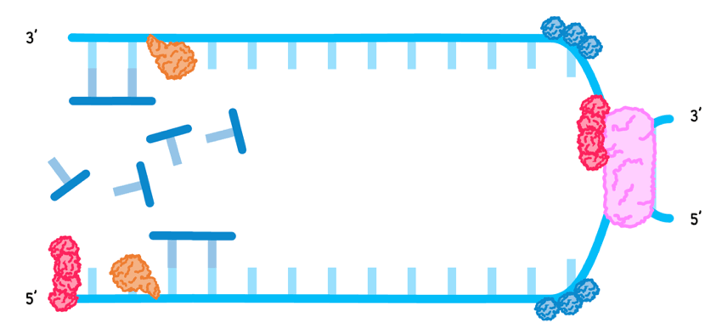
DNA polymerase III then binds to the RNA primer and links free nucleotides, known as nucleotide triphosphates, using complementary base pairing, in a 5’ to 3’ direction. This occurs differently on the strands:
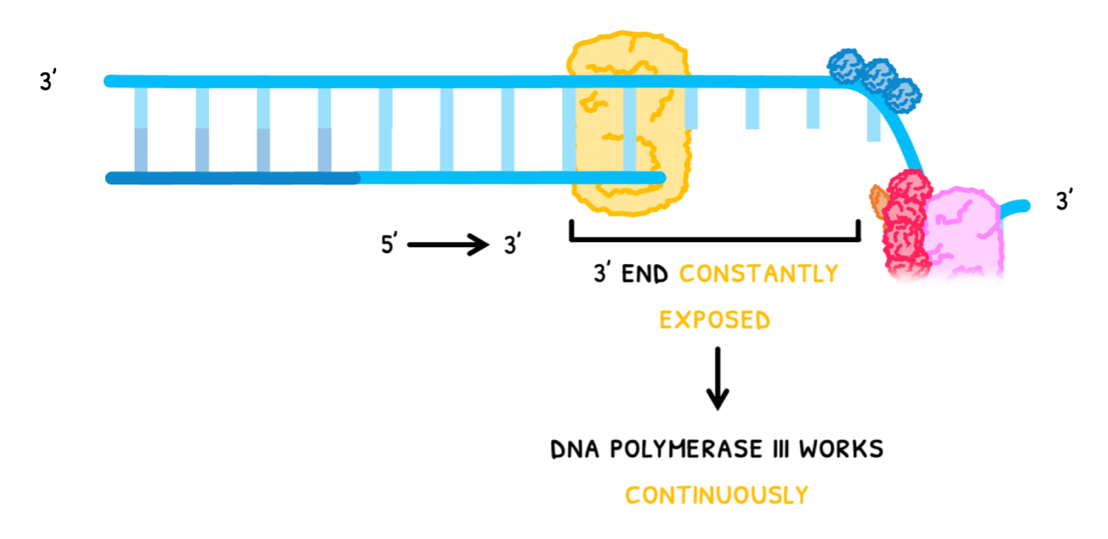
In one strand, the 3’ end is constantly exposed, so DNA polymerase III can work continuously. This is known as the leading strand, and it produces a single long strand of nitrogenous bases.
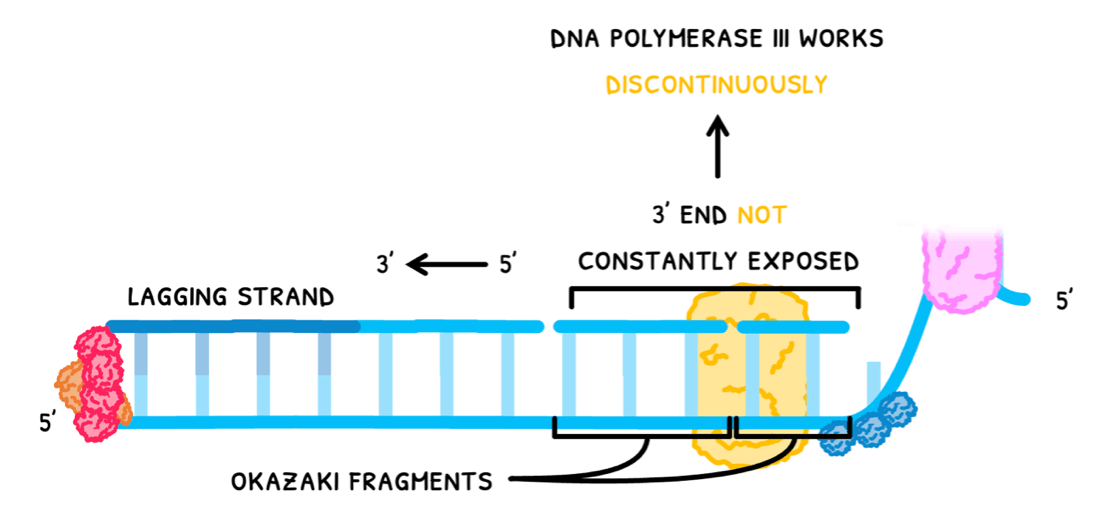
In the other strand, the 3’ end is not constantly exposed, so DNA polymerase III works backwards in short segments. This is known as the lagging strand, and it produces multiple short strands of nitrogenous bases, known as Okazaki fragments.
- In both strands DNA polymerase I then replaces the RNA primer with DNA.
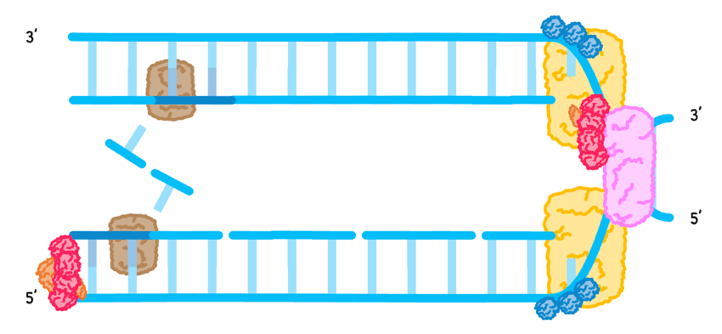
- On the lagging strand, DNA ligase then joins the Okazaki fragments together to form a single continuous strand, before working on both template strands join them to their replicated strand.
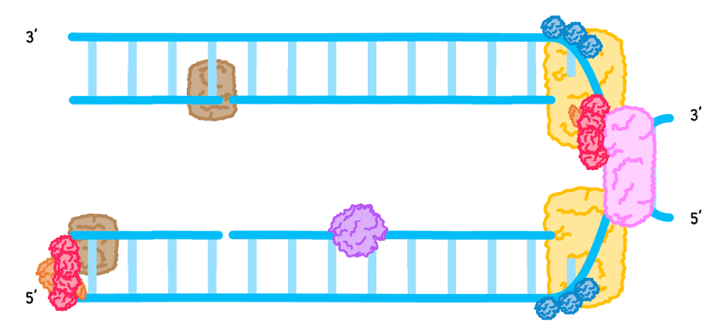
This results in the formation of two complete DNA strands, each containing one template strand, hence the term semi-conservative.
tibertutor.com
Next Up
You have completed the sub-topic D1.1 notes, covering "Further DNA replication" for IB Biology - continue with related resources below or explore the full IB Biology course from the IBO.
Other Sub-topic D1.1 resources