IB Biology B3.2 Notes
This page contains our IB Biology notes for B3.2. By reading each one of these notes, you will fully cover the content for IB Biology 'Transport'.
Chapters
The Circulatory system
Remember from Topic B2.3 that the surface area-to-volume ratio limits cell size due to supply and waste removal restrictions. To circumvent this issue, organisms use a transport system to provide cells with oxygen and glucose for metabolism, while taking away metabolic waste products.
You need to be aware of this transport system in mammals and plants, primarily focusing on their vasculature.
In humans, this transport system is the circulatory system – centered around a heart pumping blood through a series of vessels. You are expected to know the structure of these vessels. As you likely know, there are three types of vessels:
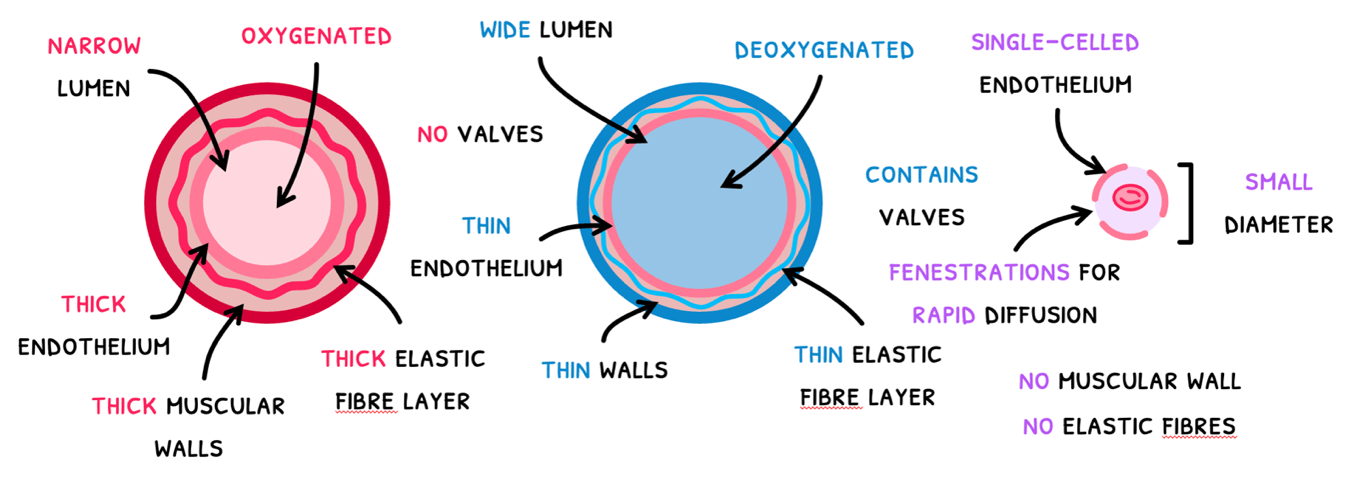
- Arteries – vessels that carry high pressure blood away from the heart. To withstand and maintain these high pressures, they possess a narrow lumen and thick layers.
- Veins – vessels that carry low pressure blood to the heart. To maintain blood blow at these low pressures, they possess a wide lumen and thin layers with valves to prevent backflow.
- Capillaries – small vessels that connect arteries to veins and transport blood to individual cells. To allow substances to easily diffuse in and out, they have a thin endothelium with fenestrations.
Although arteries typically carry oxygenated blood and veins carry deoxygenated blood, remember that this is not always the case due to the double circulatory system.
tibertutor.com
Next Up
You have completed the sub-topic B3.2 notes, covering "Transport" for IB Biology - continue with related resources below or explore the full IB Biology course from the IBO.
Other Sub-topic B3.2 resources