Best biology resources for IB students: 2026 guide
Biology resources are the collections of materials, tools, and platforms that support learning and understanding of biological concepts. For IB Biology students, choosing the right resources is the difference between surface recall and genuine conceptual mastery. The IB Biology course demands that you apply principles to unfamiliar scenarios, not simply memorise facts. Platforms like HHMI BioInteractive and OpenStax, alongside exam-focused tools such as Tibertutor, set the standard for what quality study materials look like in 2026.
1. What types of biology resources best support IB Biology students?
The strongest biology study materials fall into four clear categories. Each serves a different purpose, and the most prepared students use all four together.
- Open Educational Resources (OER): Free, peer-reviewed textbooks and lab manuals from portals like OER Commons and OpenStax give you comprehensive content without cost. These are particularly useful for building foundational understanding of each topic.
- Digital interactive platforms: Websites offering videos, simulations, and guided activities help you visualise processes that are difficult to grasp from text alone. Cell division, enzyme kinetics, and gene expression all benefit from animation.
- Conceptual study guides: Structured notes and frameworks that connect ideas across biological scales, from molecules to ecosystems, support the kind of integrated thinking IB examiners reward.
- Practice materials: Past exam papers and question banks are non-negotiable. Exam-style question practice trains you to apply knowledge under timed conditions, which is a skill in itself.
Pro Tip: Do not treat these categories as separate. Read a textbook section, watch a short animation on the same topic, then attempt two or three exam-style questions before moving on.
2. How free online biology textbooks enhance understanding
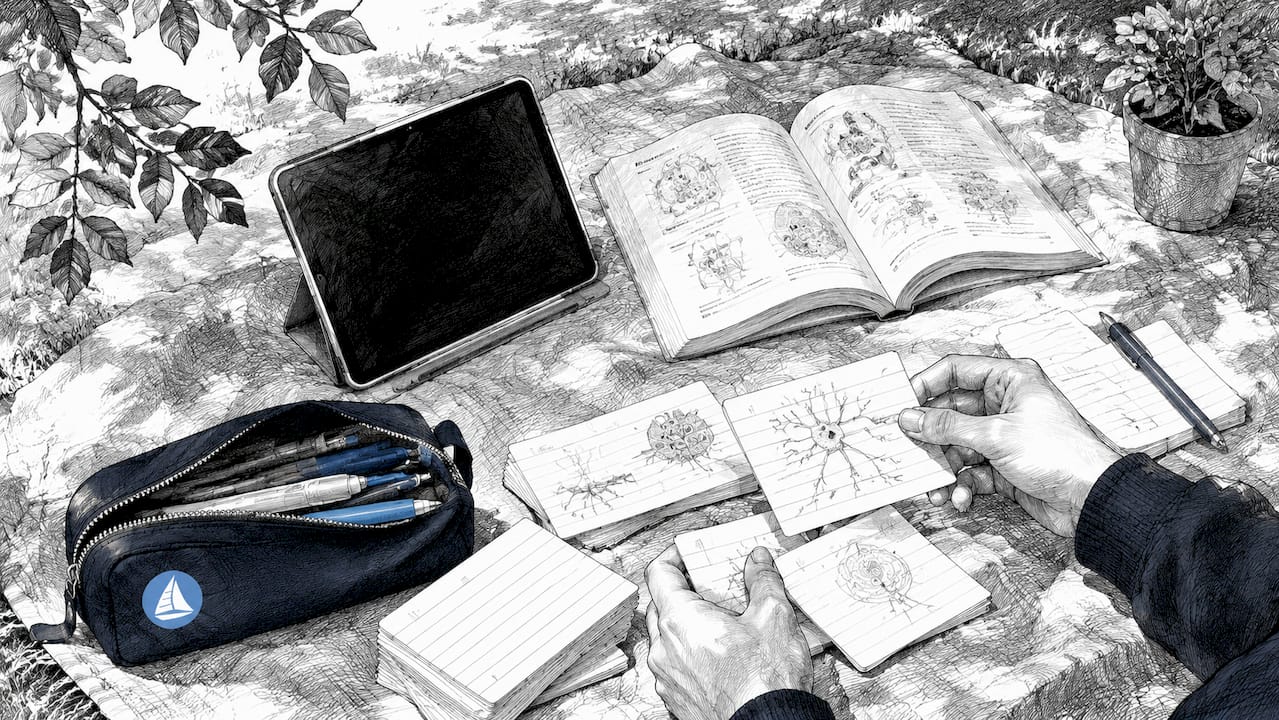
Free online biology textbooks are among the most underused tools available to IB students. OpenStax Biology 2e is a peer-reviewed, fully digital textbook covering the full scope of standard biology courses for science students. Its searchable format means you can quickly locate every mention of a concept, such as the sodium-potassium pump, and see how it connects to membrane potential, nerve impulses, and homeostasis in one sitting.
Built-in assessment questions at the end of each chapter let you check understanding immediately. This is far more efficient than reading passively and hoping the content sticks. Searchable digital formats significantly improve exam preparation by enabling students to map relationships between concepts rapidly.
OpenStax also publishes Concepts of Biology, which suits students who need a slightly less technical entry point before tackling the full IB syllabus depth. Both texts are free to access online.
Pro Tip: Use the search function in OpenStax to find every instance of a key term across chapters. This reveals how topics connect, which is exactly what IB synthesis questions test.
3. Which interactive biology activities and videos are most effective?
Interactive media closes the gap between reading about a process and actually understanding it. HHMI BioInteractive hosts over 220 activity resources and 185 video resources designed to engage students in exploring biological concepts. That breadth covers everything from biochemistry and cell biology through to ecology and evolution.
The most effective interactive resources share three features. They present a concept visually, they require the student to make a prediction or decision at key points, and they provide immediate feedback. Virtual labs that simulate gel electrophoresis or population genetics do all three. They also allow repeated attempts without the cost or time of a physical lab session.
Addressing misconceptions directly with targeted resources improves conceptual clarity and learning outcomes. The UC Berkeley Understanding Evolution project, for example, explicitly corrects common errors in how students think about natural selection, such as the idea that organisms evolve intentionally. Catching these errors early prevents them from undermining exam answers later.
Educators can incorporate HHMI BioInteractive videos as lesson starters or post-lesson consolidation tasks. A ten-minute animation before a class discussion primes students to engage more deeply with the material.
4. What strategies make the best use of biology study materials for exam success?
The most effective exam preparation strategy combines conceptual understanding with regular timed practice. IB Biology exam success requires applying principles to novel scenarios rather than recalling isolated facts. Students who explain concepts in their own words and connect them across biological scales consistently perform better.
- Prioritise understanding over memorisation. When you can explain why the sodium-potassium pump uses ATP, rather than just stating that it does, you can answer any question the examiner frames around it.
- Connect scales. Biology runs from molecular interactions to ecosystem dynamics. Practise linking a concept at one scale to its consequences at another. Photosynthesis connects biochemistry, cell structure, and global carbon cycles.
- Use searchable resources to map topic relationships. Before a revision session, search a key term across your digital textbook and notes. Identify three topics it connects to, then revise all three together.
- Combine notes with timed past paper practice. Regular timed practice combined with theoretical study is critical for applying knowledge and achieving high exam scores. Aim for at least one timed question set per topic before your mock exams.
- Target misconceptions deliberately. After each practice paper, identify any question where your reasoning was flawed, not just your answer. Use a targeted resource to correct the underlying mental model.
Pro Tip: Write a one-paragraph summary of each topic in your own words after studying it. If you cannot write the summary without looking at your notes, you are not ready to answer exam questions on that topic.
5. How to select the right mix of biology educational tools
Choosing the right combination of resources depends on your learning preferences, your current syllabus position, and how much time you have before your exams. There is no single correct answer, but there are clear principles.
- Match format to preference. Visual learners benefit most from animations and virtual labs. Students who process information through reading gain more from structured textbooks and detailed notes. Most students benefit from both, used at different stages of a topic.
- Prioritise syllabus relevance. A resource is only useful if it maps to your IB Biology syllabus. Check that any textbook or guide covers the current IB specification before committing time to it. The complete IB Biology guide for 2026 is a reliable reference point.
- Balance free and curated resources. Free OER materials provide excellent foundational content. Curated, exam-focused tools add the practice and feedback layer that free resources often lack.
- Involve parents and educators. Parents can support by helping students schedule consistent revision time and by identifying when a student is struggling with a particular topic. Educators can guide resource selection based on where the class needs the most reinforcement.
The IB Biology teaching resource categories guide offers a practical framework for educators planning how to integrate different resource types across a teaching unit.
Key takeaways
The strongest IB Biology preparation combines free open-access materials, interactive digital tools, and regular exam-style practice, because no single resource type builds all the skills the IB exam tests.
| Point | Details |
|---|---|
| Use multiple resource types | Combine textbooks, videos, and practice questions for full conceptual coverage. |
| Prioritise conceptual understanding | Students who explain concepts in their own words consistently outperform those who memorise. |
| Leverage free OER content | OpenStax and HHMI BioInteractive provide high-quality, peer-reviewed materials at no cost. |
| Practise under timed conditions | Regular timed past paper practice is essential for applying knowledge in exam settings. |
| Target misconceptions early | Use resources that explicitly correct common errors before they appear in exam answers. |
Why I think most students underestimate the power of free resources
Students and parents often assume that the most expensive or most widely advertised resource is the best one. In my experience, that assumption leads to a lot of wasted money and, more importantly, wasted time.
The free materials available through HHMI BioInteractive and OpenStax are genuinely excellent. They are peer-reviewed, regularly updated, and built by scientists and educators who care about accuracy. The gap is not in the quality of free content. The gap is in how students use it.
What I have seen work consistently is this: students who treat free resources as their content foundation, and then layer structured exam practice on top, make the most progress. The content knowledge comes from open textbooks and interactive videos. The exam skill comes from practising questions that mirror what the IB actually asks.
The other thing I would flag is the misconception problem. Most students do not know they have a misconception until they get a question wrong and cannot understand why. Resources like the UC Berkeley Understanding Evolution project exist precisely to surface and correct these errors. Using them proactively, rather than reactively, saves significant revision time in the final weeks before exams.
Start with what is free, use it well, and add targeted exam practice. That combination builds both confidence and results.
— Oliver
Tibertutor: exam-focused practice for IB Biology students
Tibertutor is built specifically for IB science students who want more than content coverage. It provides a structured IB Science Questionbank with exam-style questions written by experienced IB examiners, alongside animated videos, detailed notes, flashcards, and mock exams.
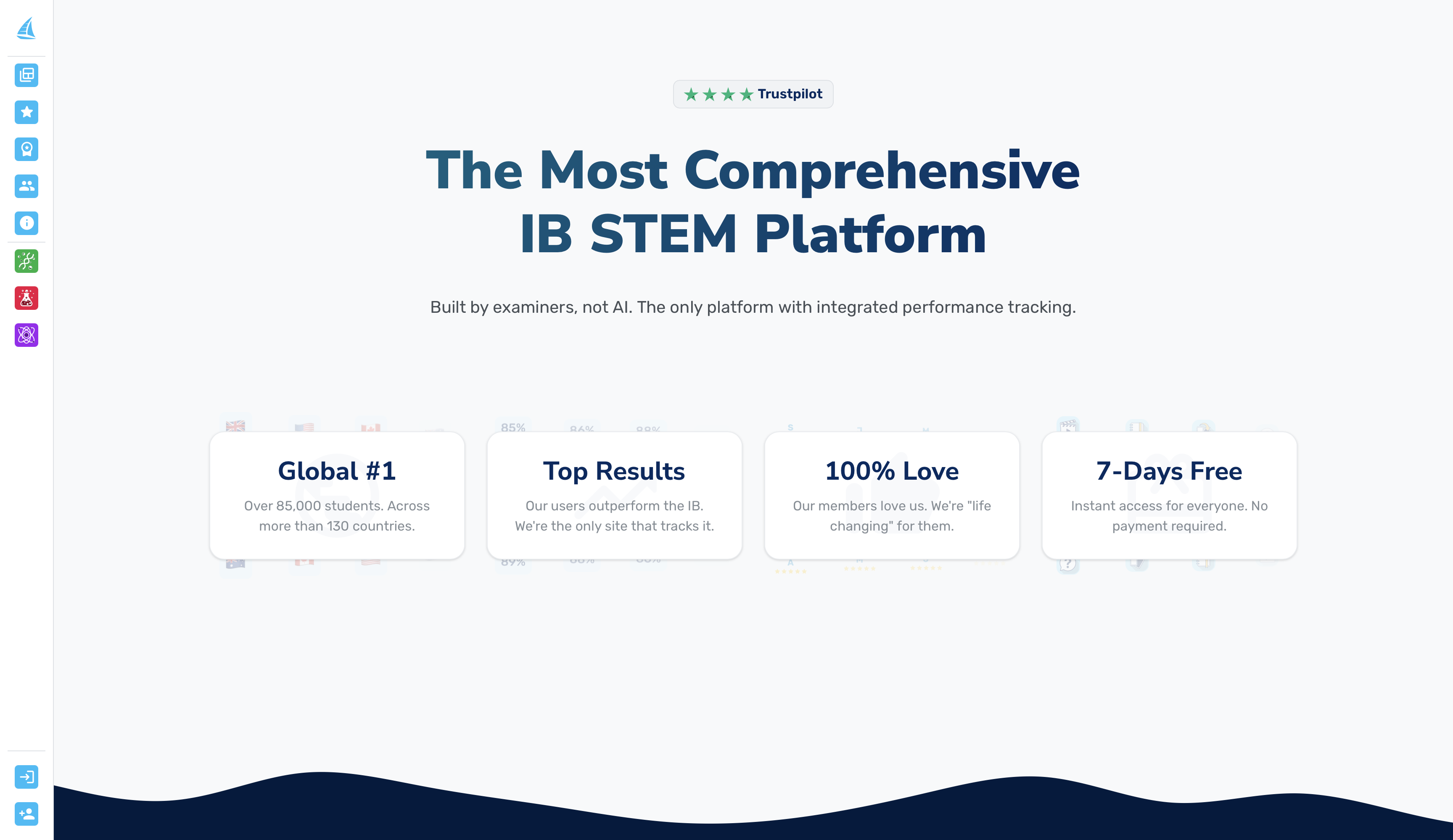
Where free resources give you the content foundation, Tibertutor adds the practice and feedback layer. Its progress tracking and analytics show you exactly which topics need more attention, so your revision time goes where it matters most. Students, educators, and parents can all access tailored support through the platform. Whether you are preparing for your first mock or your final IB exams, Tibertutor gives you the structure and the practice to walk in with confidence.
FAQ
What are the best free biology resources for IB students?
HHMI BioInteractive and OpenStax are the strongest free options. HHMI BioInteractive offers over 220 activities and 185 videos, while OpenStax provides peer-reviewed digital textbooks at no cost.
How do I use biology resources effectively for exam preparation?
Combine conceptual study from textbooks and videos with regular timed practice using past exam papers. Students who connect concepts across biological scales and practise applying them to new scenarios perform best in IB exams.
Are online biology textbooks reliable for IB Biology revision?
Yes, provided they are peer-reviewed. OpenStax Biology 2e is a widely used, peer-reviewed digital textbook that covers the scope of standard biology courses and includes built-in assessment questions.
How can parents support their child’s biology revision?
Parents can help by structuring consistent revision schedules and identifying topics where their child needs additional support. Platforms like Tibertutor offer dedicated resources for IB parents to help guide that process.
Why does IB Biology require more than memorisation?
The IB Biology exam tests the ability to apply principles to unfamiliar scenarios. Students who understand the reasoning behind biological processes, rather than just the facts, are better equipped to answer the application and synthesis questions that carry the most marks.