Mock exams for IB science self-study: real benefits
Yes, properly run mock exams significantly improve readiness and exam technique for IB science self-study. The key word is deliberately: a timed paper you sit, mark honestly, and analyse beats ten hours of passive note-reading every time. The testing effect, a well-established finding in learning science, shows that retrieving information under pressure strengthens long-term recall far more than re-reading does.
Two things you can do right now:
- Schedule one timed past paper this week under real exam conditions (no notes, strict timing, phone off).
- Start an error log — a simple document where you record every question you dropped marks on and why.
Key takeaways
Properly run, staged mock exams are the single most effective self-study tool available to IB science students, provided each paper is followed by honest marking, error logging, and targeted revision.
| Point | Details |
|---|---|
| Stage your mocks deliberately | Move from mini-mocks in Year 1 to 2–4 full papers in Year 2, with review time between each. |
| Always analyse after sitting | Log command-term losses, calculation errors, and recurring misconceptions before moving on. |
| Match real exam conditions | Print the paper, use correct timings and allowed materials, and remove all distractions. |
| Use examiner mark schemes | Self-marking against official rubrics is the only way to know what the real exam rewards. |
| Tibertutor accelerates the loop | Examiner-created mocks, automated analytics, and a custom test builder convert mock data into measurable progress faster than any other IB platform. |
Table of Contents
- What are the real self-study benefits of IB science mock exams?
- Why do mock exams work? The learning science explained
- When should you start mocks, and how many do you need?
- How do you run a proper mock at home for IB sciences?
- How do you turn mock results into a focused revision plan?
- What mistakes do students most often make with mock exams?
- How does Tibertutor help you convert mock runs into score improvements?
- What one student’s mock journey actually looked like
- Tibertutor: the platform built for mock-driven IB science progress
- Sources
- FAQ
What are the real self-study benefits of IB science mock exams?
The gains from mock exams fall into four clear categories, and each one compounds the others.
Reduced anxiety and stronger confidence. Sitting a timed paper in silence feels uncomfortable the first time. By the third or fourth, it feels familiar. That familiarity is not trivial: mock exams simulate exam conditions and reduce the novelty stress that costs students marks in the real sitting. You walk into the exam hall having already done this before.

Time management and pacing. IB science papers are long. Chemistry Paper 2 at HL, for example, demands sustained calculation work across multiple extended-response questions. Without timed rehearsal, most students discover too late that they are spending eight minutes on a four-mark question. Mocks expose that pattern when it can still be fixed.
Diagnostic clarity. A mock paper tells you exactly where your marks are going. Command-term errors (writing a description when the question says evaluate), calculation slips, and data-interpretation gaps all show up in the mark scheme comparison. That specificity is something a revision timetable alone cannot give you.
Skill transfer across IB sciences. Biology, Chemistry, and Physics each demand distinct skills: data analysis in Biology, multi-step calculations in Chemistry and Physics, and practical write-up technique for internal assessments across all three. Timed practice builds those domain-specific skills in a way that reading notes simply does not.
- Mocks reveal which command terms you consistently misread.
- They build the stamina needed for back-to-back papers on exam day.
- They generate data you can act on, rather than a vague sense of readiness.
- They practise the skill of question selection under pressure.
Pro Tip: *Treat your mock score as a data point, not a grade.
Why do mock exams work? The learning science explained
The short answer is retrieval practice. When you pull information out of memory under pressure, rather than simply re-reading it, the memory trace becomes stronger and more durable. This is the testing effect, and it is one of the most replicated findings in cognitive psychology.
Active recall and past-paper practice produce larger gains than passive revision methods. High-scoring IB students use past papers not merely to test themselves but to learn what examiners reward: the precise phrasing, the level of detail, the structure of a six-mark response. That is a fundamentally different use of a mock paper, and it is why the same student can score differently on two papers of equal difficulty depending on how they reviewed the first one.
Spaced practice amplifies this further. Running a mock, reviewing it, then returning to the same topic two weeks later in a topic test creates the spacing effect: the slight difficulty of recalling something after a gap strengthens retention more than massed practice does. Interleaving subjects or topic areas within a single study session adds another layer, because switching between Chemistry calculations and Biology data questions forces your brain to retrieve the right framework each time rather than running on autopilot.
The IBO’s subject guides and assessment frameworks define the objectives and command terms that examiners use. Aligning your mock practice with those frameworks means every paper you sit is rehearsing the exact cognitive moves the final exam will demand.
One practical implication: after every mock, schedule a focused review session within 48 hours. That is when the errors are fresh, the mark scheme contrast is sharpest, and the learning is deepest.
When should you start mocks, and how many do you need?
A staged approach prevents burnout and gives you time to act on each round of feedback. Think of it as three phases across the two-year Diploma Programme.
- Year 1 (months 1–12): mini-mocks and micro-assessments. Frequent low-stakes quizzes and monthly mini-mocks build retrieval strength and surface misconceptions before you attempt a full paper. A mini-mock might be a single paper section timed strictly, or a set of 15 exam-style questions on one topic. The goal is habit, not performance.
- 9–12 months before exams: diagnostic full mock. Sit one complete past paper per subject under real conditions. This sets your baseline, reveals pacing problems, and tells you which topics need the most work before your main revision push.
- 4–6 months before exams: calibration mock(s). After targeted revision on your weakest areas, sit one or two more full papers to measure progress. These are the mocks that most directly inform your revision priorities for the final stretch.
- Final 6–8 weeks: polish mocks. One or two full papers close to the exam period, focused on technique and stamina rather than new content. Many successful students use several full mocks in the final year, supported by the mini-mocks and topic tests from Year 1.
Spacing matters as much as quantity. Two mocks with proper review between them outperform five mocks sat back-to-back with no analysis.
How do you run a proper mock at home for IB sciences?
Authenticity is what makes a home mock useful. The closer the conditions match the real exam, the more the practice transfers. Here is a practical checklist, with science-specific additions.
- Print the full paper. Working on screen is not the same as writing by hand under time pressure. Use the IBO’s past paper resources or a platform with examiner-aligned papers.
- Match official timings exactly. No extra minutes. Set a timer and stop when it ends.
- Use only allowed materials. For Chemistry and Physics, that means the IB data booklet and an approved calculator. For Biology, no notes. Practising with the right tools builds the right habits.
- Arrange a quiet room. Phone in another room, notifications off. Treat it as the real thing.
- Write by hand. Your hand needs to be as practised as your brain.
Subject-specific additions:
- Chemistry and Physics: dedicate separate timed sessions to calculation-only sections. Multi-step problems under time pressure are a distinct skill. Timed rehearsal for calculations and data interpretation is one of the highest-return activities for these subjects.
- Biology: practise data-analysis questions from Section B papers. Focus on graph interpretation, identifying trends, and writing conclusions that reference the data explicitly.
- All sciences: rehearse IA write-up skills under realistic time constraints. A timed practice of a results section or evaluation paragraph builds the fluency you need.
For marking, use the official examiner mark scheme and annotate every question you dropped marks on. A brief teacher or tutor check-in on your marked paper, even once per mock cycle, adds significant value. The staged approach Tibertutor recommends for science students follows exactly this sequence: micro-checks, then timed sections, then full papers.
Pro Tip: Once per term, simulate a full exam-day by sitting two papers back-to-back with a 20-minute break between them. It builds the stamina and mental recovery skills that single-paper practice cannot replicate.
How do you turn mock results into a focused revision plan?
A mock paper without analysis is just a stressful afternoon. The value is entirely in what you do with the data afterwards.
- Mark honestly. Use the mark scheme without adjusting your answers first. Award marks only for what you actually wrote.
- Log every error. Record the question, the topic, the command term, and the reason you lost the mark. Was it a conceptual gap, a calculation slip, a misread command term, or a time pressure error?
- Identify patterns. Three errors in equilibrium calculations is a pattern. One error in a topic you revised last week is noise. Prioritise patterns.
- Schedule targeted micro-sessions. A 40-minute focused session on one error type is more effective than a three-hour general revision block. Set a specific goal: “I will practise five equilibrium calculation questions and mark them before Thursday.”
- Re-test. Two weeks later, attempt similar questions under timed conditions. If the error pattern has reduced, the revision worked. If not, adjust the approach.
The data points worth tracking across mocks include: command-term losses (how often you describe when asked to explain), calculation error rate per topic, time lost per section, and recurring misconceptions. Converting mock marks into a feedback loop of error log, micro-goals, and re-testing is what separates students who improve between mocks from those who plateau.
Platform analytics accelerate this loop considerably. Digital marking and progress analytics surface patterns across multiple attempts automatically, so you spend less time counting errors and more time fixing them.
What mistakes do students most often make with mock exams?
Knowing the pitfalls is half the battle. These are the four most common ones, and each has a straightforward fix.
- Skipping the analysis. Sitting a mock and then moving on without reviewing it is the single biggest waste of practice time. The paper is only useful once you have compared your answers to the mark scheme and logged the gaps. No analysis means no improvement.
- Practising under non-exam conditions. Open notes, a phone nearby, pausing mid-paper to check something — these habits feel productive but do not transfer to the real exam. The practical steps that make home mocks effective are simple: print the paper, set the timer, remove distractions.
- Cramming mocks without recovery time. Three full papers in a week with no review between them produces diminishing returns and genuine fatigue. Space your mocks and protect the review time between them. That gap is where the learning happens.
- Starting full papers too early. A full mock before you have covered the syllabus is demoralising and misleading. Begin with topic-level mini-mocks and timed sections, then escalate to full papers once your content knowledge is solid enough to make the feedback meaningful.
For subject-specific pitfalls in IB science exams, the most common include misreading command terms, losing marks on data-based questions through imprecise language, and underestimating the time demands of extended-response questions.
How does Tibertutor help you convert mock runs into score improvements?
Tibertutor is built specifically for IB science students, and its mock exam resources are created by actual IB examiners. That distinction matters: the mark schemes, question styles, and command-term usage reflect what real examiners reward, not a generic approximation of it.
The platform’s features that directly support the mock-to-improvement loop include:
- Examiner-written mark schemes aligned with current IB assessment objectives, so your self-marking is as accurate as possible.
- Custom test builder, which lets you isolate the exact topics or question types your error log flags as weak points.
- Automated analytics dashboard, which tracks performance across attempts, surfaces recurring error patterns, and shows progress over time in a way no spreadsheet can match.
- IA exemplars and topic tests that complement full mock practice with targeted, lower-stakes retrieval.
- Syllabus monitoring, so every resource you use is mapped to the current IB specification.
Mock papers and analytics at Tibertutor are designed to convert each mock run into a concrete next step. After a mock, the analytics dashboard shows you which topics cost the most marks, which command terms you consistently misread, and how your performance compares across attempts. From that report, building a two-week micro-plan is straightforward: pick the top two error patterns, schedule four targeted sessions per pattern, and re-test at the end of the fortnight.
No other IB platform combines examiner-created content, interlinked topic tests, full mock papers, and this level of performance tracking in one place. The resources are polished, the content is current, and the analytics give you the kind of feedback that used to require a private tutor.
What one student’s mock journey actually looked like
The pattern that comes up repeatedly among students who improve significantly between their first and final mock is not talent. It is process.
The error log reveals two dominant patterns: multi-step equilibrium calculations and misuse of the command term deduce. Rather than revising broadly, they spend the next three weeks on those two areas specifically: five timed calculation sets per week and a deliberate study of mark scheme responses to deduce questions across five past papers.
By the calibration mock six weeks later, the calculation error rate has halved and the command-term losses have nearly disappeared. That is not a coincidence. It is what using past papers as learning tools rather than purely as tests actually looks like in practice.
The resilience benefit is real too. Students who have sat three or four mocks before the final exam report feeling significantly calmer on the day, not because the exam is easier, but because the format is no longer unfamiliar. That psychological readiness is one of the quieter but most consistent benefits of a staged mock approach.
Tibertutor: the platform built for mock-driven IB science progress
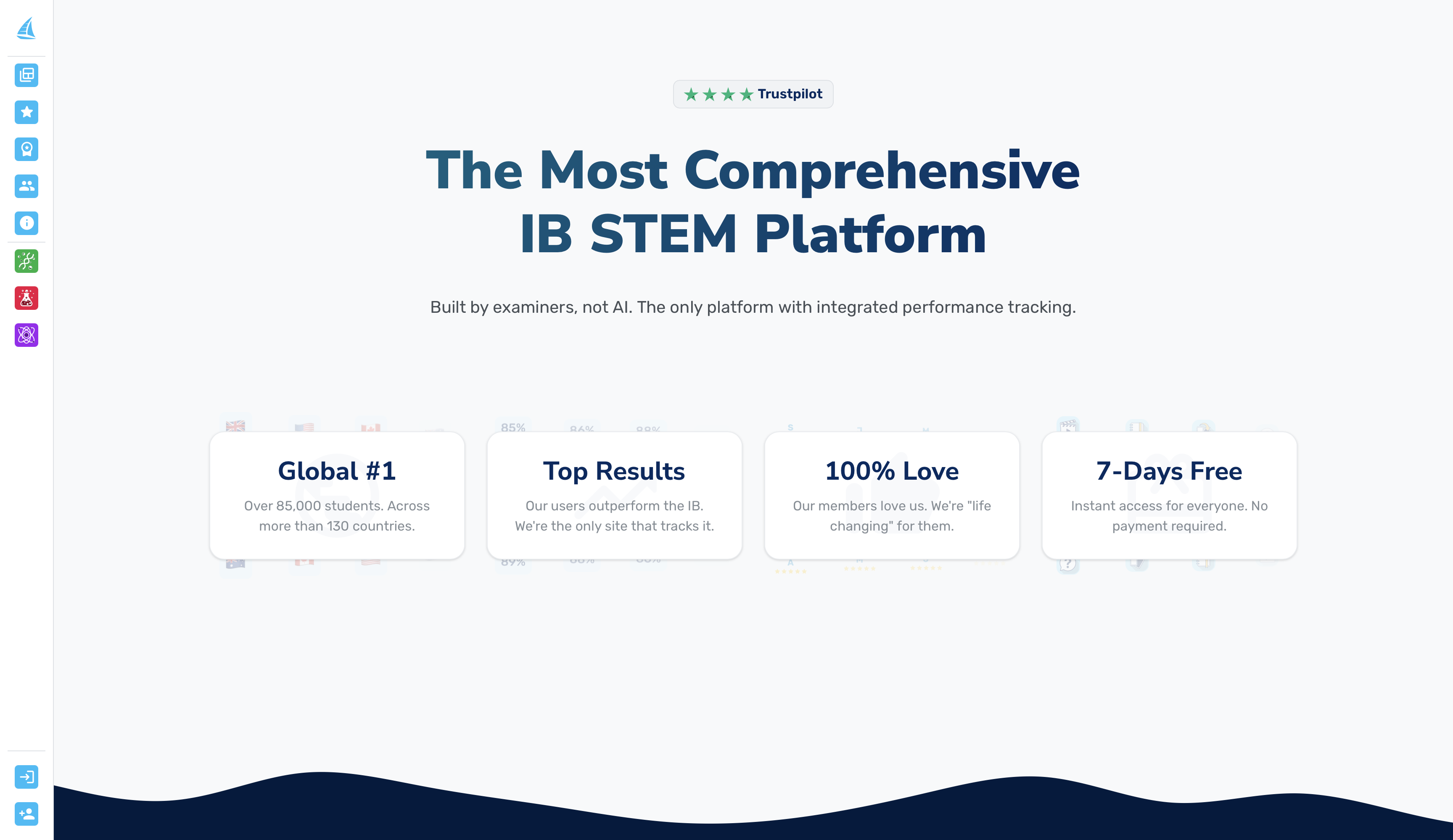
Tibertutor gives IB Biology, Chemistry, and Physics students everything they need to run, mark, and learn from mock exams in one place. Every question, mark scheme, and analytics report is created or reviewed by IB examiners, which means the feedback you get reflects exactly what the real exam rewards. The IB Biology and IB Chemistry exam-style test banks let you move from a full mock straight into targeted topic practice without switching platforms or hunting for resources.
The analytics dashboard does the error-pattern work for you, so a two-week micro-plan takes minutes to build rather than hours. Subscriptions are available monthly, for six months, annually, or for the full 24-month course, and all plans start with a free 7-day trial. For the quality and breadth of examiner-created content on offer, it represents outstanding value for any IB science student serious about their final score. Start your free trial at Tibertutor and run your first mock this week.
Sources
- IBO — International Baccalaureate®
- IB DP When to Start Series: When to start mock exam preparation in IB DP - Sparkl
- IB DP comparisons: private tutoring vs self‑study - Sparkl
FAQ
Should you study for IB mock exams?
Yes. Treating mocks as low-stakes rehearsals rather than high-stakes tests is the right mindset, but that does not mean going in unprepared. Targeted revision of your weakest topics before each mock makes the feedback far more useful.
Can you self-study effectively for IB science exams?
Self-study works well for IB sciences when it is structured around active recall, timed past-paper practice, and honest self-marking against examiner mark schemes. A hybrid approach, mainly self-study with occasional examiner-led feedback, tends to give the strongest returns.
How many mock exams should you do for IB science?
Most successful students complete 2–4 full mock papers per subject in their final year, supported by mini-mocks and topic tests throughout Year 1. Quality and review time between mocks matter more than raw quantity.
What should you do after a low mock score?
Log every error by type (conceptual gap, calculation slip, command-term misread, time pressure), identify the two or three dominant patterns, and schedule targeted micro-sessions on those areas before your next mock. A low score with a clear error log is more useful than a high score you never analyse.
Do IB mock exams affect your predicted grade?
School-run mock exams often inform teacher predicted grades, which are submitted to the IBO and can affect university offers. Self-study mocks do not feed directly into predicted grades, but they build the performance that does.