IB science subject combinations benefits: your 2026 guide
Choosing the right IB science subject combinations is the single most important academic decision you will make in the Diploma Programme. The benefits of IB science courses extend well beyond the classroom: the right combination signals academic readiness to university admissions teams, satisfies course prerequisites, and sets you up for a strong total diploma score. Students who align their IB science subject selection with both their university goals and personal strengths consistently outperform those who choose subjects based on prestige alone.
1. Which IB science combinations support university pathways?
The right science combination opens specific university doors. Medicine requires Chemistry HL and commonly Biology HL, while Engineering typically demands Physics HL and Mathematics AA HL. Getting this wrong at the selection stage can close off entire degree programmes before you even apply.
University admissions teams also read your subject pattern as a signal of academic skill. HL Physics signals mathematical maturity, while HL Chemistry signals lab technique and data rigour. Your subject choices tell a story before your personal statement does.

| University pathway | Recommended HL sciences | Why it matters |
|---|---|---|
| Medicine | Chemistry + Biology | Prerequisite at most medical schools globally |
| Engineering | Physics + Mathematics AA | Demonstrates quantitative and modelling ability |
| Environmental Science | Biology + Chemistry | Covers ecological and chemical foundations |
| Biochemistry | Chemistry + Biology | Directly mirrors degree content |
| Physics or Astrophysics | Physics + Mathematics AA | Required for advanced theoretical study |
Pro Tip: Research the entry requirements for your top three universities before finalising your subject choices. Requirements vary between institutions, and finding out late can cost you an offer.
2. How to balance HL sciences for a strong diploma score
Taking three heavy HL sciences is one of the most common and costly mistakes IB students make. Pairing two HL sciences with a less intensive third HL subject leads to better overall outcomes. A student scoring 7, 7, 7 across three well-chosen HL subjects will almost always outperform a student scoring 5, 5, 5 across three demanding sciences.
The IB Diploma scores out of 45 points. Every point matters for competitive university admissions, especially for programmes at Russell Group or Ivy League institutions. Protecting your total score is as important as meeting subject prerequisites.
Consider these principles when balancing your HL workload:
- Prioritise prerequisites first. Meet the science HL requirements for your target university pathway before adding a third science.
- Choose your third HL wisely. A subject where you can reliably score a 6 or 7 adds more value than a prestigious subject where you struggle.
- Avoid four HL subjects. Taking four HL subjects increases workload risk and typically reduces total points.
- Think about your Extended Essay. Choosing a science for your EE adds extra depth to your academic profile without requiring an additional HL.
Pro Tip: If you are torn between two HL options, ask your teacher which subject you are more likely to score highly in. Honest feedback at this stage is worth more than any online ranking.
3. Matching science subjects to your intellectual strengths
The IB science combination advantages you gain are greatest when your subject choices align with how you naturally think and learn. Forcing yourself into a subject that conflicts with your learning style leads to burnout, not achievement.
Each of the three main IB sciences rewards a different type of thinker:
- Biology HL suits students who excel at memorisation and structured written responses. The content is broad and detailed, covering topics from cell biology to ecology.
- Chemistry HL rewards students who balance logical reasoning with quantitative problem-solving. Chemistry HL is balanced in logic and quantitative reasoning, making it accessible to a wide range of learners.
- Physics HL demands strong mathematical modelling capability. Students who enjoy applying equations to real-world scenarios thrive here.
Matching your subject to your strengths does more than improve your grade. It builds genuine confidence and curiosity, which carries through to your Internal Assessment and university interviews. You can explore the differences between each science in more detail to help you decide.
4. How practical considerations shape your science choices
The importance of science in IB is not just academic. Practical factors at your school directly affect what grades you can realistically achieve. Resource availability affects achievable grades in HL sciences, and choosing a subject without strong teacher support or lab access puts you at a disadvantage from day one.
Before you finalise your choices, work through these practical checks:
- Assess teacher quality. A strong, experienced teacher in Chemistry HL is worth more than a prestigious subject with a less experienced one.
- Check lab access. Biology and Chemistry IAs require consistent lab time. Confirm your school can support this before committing.
- Estimate your weekly time commitment. HL sciences each demand significant independent study time. Two HL sciences plus a manageable third is a realistic workload for most students.
- Consider your support infrastructure. Choosing where you can reliably score 6–7 is more strategic than chasing subject prestige. Tibertutor’s IB science resources can supplement weaker school provision.
Students with limited lab access or less experienced teachers should factor this into their decision. Online platforms and quality revision resources can close some gaps, but they cannot replace hands-on practical experience entirely.
5. How mixed combinations broaden your university options
A purely science-focused HL combination is not always the strongest choice. Combining a science HL with a humanities HL often makes an applicant more attractive to universities by demonstrating a balanced, well-rounded skillset. This is especially true for programmes like Environmental Policy, Public Health, or Business with a science focus.
Mixing science HL subjects with a humanities HL such as Economics signals versatility. It tells admissions teams you can think analytically across disciplines. Broad academic profiles are valued not just by universities but by employers further down the line.
- A Biology + Chemistry + Economics HL combination suits students considering medicine, public health, or health economics.
- A Physics + Mathematics AA + Geography HL combination works well for environmental engineering or urban planning pathways.
- Keeping one humanities HL also protects your options if your career interests shift during the Diploma years.
Avoid overly narrow specialisation unless you are completely certain about your intended career path. The IB Diploma is designed to produce well-rounded thinkers, and your subject choices should reflect that. If you are considering UK university admissions, a balanced combination is particularly well regarded by British institutions.
Key takeaways
The most effective IB science subject combinations align university prerequisites with personal strengths and a manageable HL workload to maximise both eligibility and total diploma score.
| Point | Details |
|---|---|
| Match combinations to university prerequisites | Medicine needs Chemistry + Biology HL; Engineering needs Physics + Mathematics AA HL. |
| Protect your total diploma score | Two HL sciences plus one manageable HL subject outperforms three difficult sciences. |
| Align subjects with your learning style | Biology suits memorisers; Chemistry suits logical thinkers; Physics suits mathematical modellers. |
| Factor in practical school resources | Teacher quality and lab access directly affect the grades you can realistically achieve. |
| Mixed combinations keep options open | Adding a humanities HL broadens university appeal and signals well-rounded academic ability. |
My honest view on choosing IB science combinations
Students and parents often focus on which science sounds most impressive. That instinct is understandable, but it leads to poor choices more often than not.
The students I have seen thrive in the IB are those who researched their university prerequisites early, chose subjects that matched their genuine strengths, and protected their overall diploma score rather than chasing prestige. A 7 in Chemistry HL and a 6 in Biology HL is a far stronger application than a 4 in Physics HL because it “looks good.”
Your Internal Assessments and Extended Essay also matter enormously. They demonstrate research skills that admissions officers value alongside your exam grades. Choosing subjects where you can produce genuinely strong IA work is part of the strategic picture.
My advice is simple. Research your target universities first. Be honest about your strengths. Then build a combination that gives you the best chance of a high total score while meeting the prerequisites you need. That is the approach that works.
— Oliver
Tibertutor’s exam practice for your science combination
Once you have chosen your IB science subjects, consistent exam practice is what turns good choices into great results. Tibertutor is built by IB examiners and experienced educators, and its resources are used by students across the globe to prepare for Biology, Chemistry, and Physics exams with confidence.
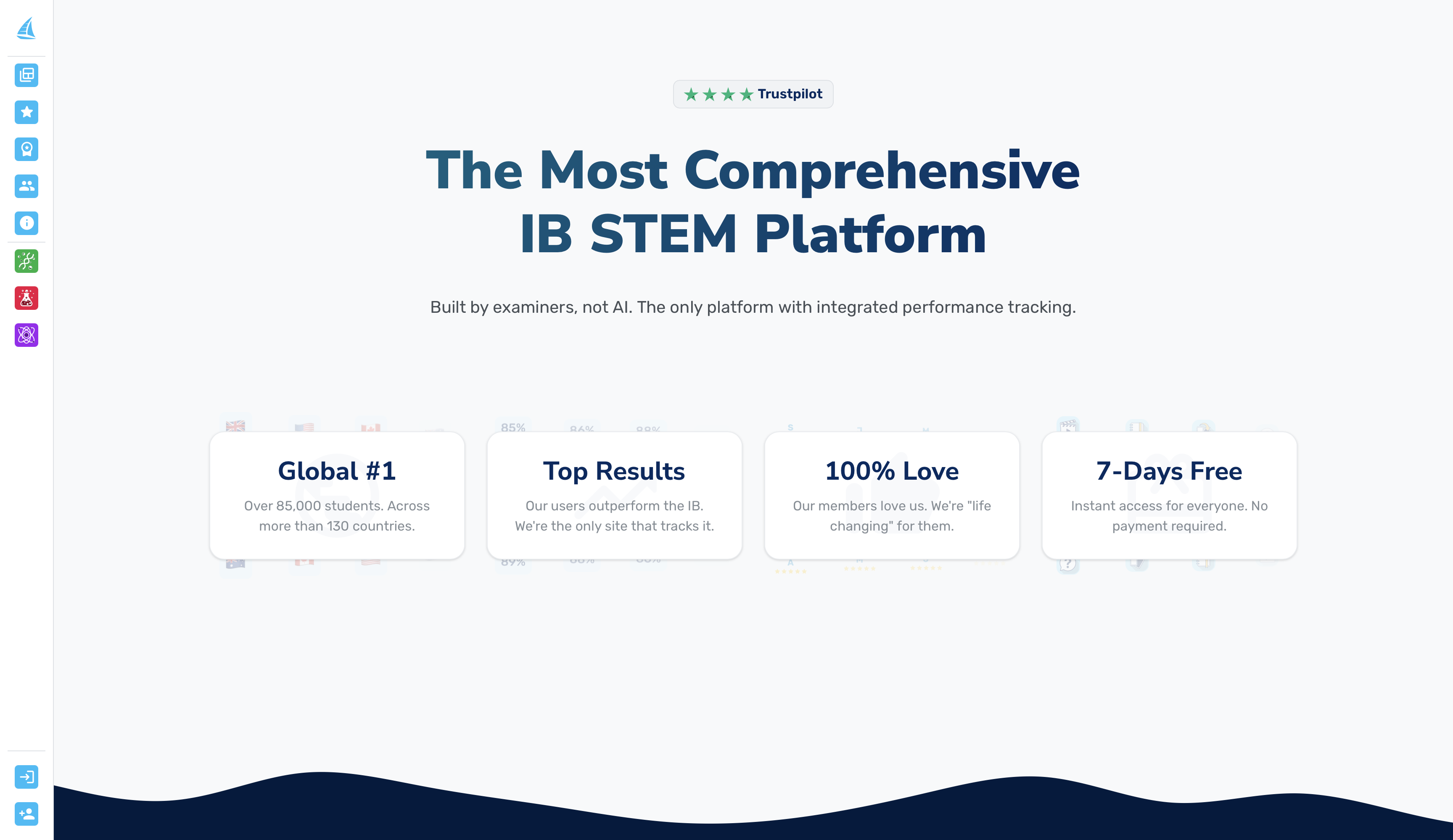
Tibertutor’s IB Biology exam tests and IB Chemistry exam tests give you targeted, exam-style practice that mirrors the real paper. Progress tracking and detailed analytics show you exactly where to focus your revision. Whether you are aiming for a 6 or pushing for a 7, structured practice with Tibertutor builds the readiness and confidence your combination deserves.
FAQ
What IB science subjects do medical schools require?
Most medical schools require Chemistry HL and commonly Biology HL as part of the IB Diploma. Confirming requirements with your target institutions early is the safest approach.
Can I take three HL sciences in the IB?
You can, but it is rarely advisable. Taking three demanding HL sciences typically reduces your total diploma score. Two HL sciences paired with a less intensive third HL subject produces better outcomes for most students.
How do IB science subjects affect university admissions?
University admissions teams read your HL subject choices as signals of specific academic skills. HL Physics signals mathematical ability, while HL Chemistry signals data rigour and lab competence.
Should I choose IB science subjects based on my strengths or my career goals?
Both matter, and the best choices satisfy both criteria. Meeting university prerequisites is non-negotiable, but selecting subjects where you can score highly protects your overall diploma grade and your application.
Does mixing science and humanities HL subjects help university applications?
Yes. Combining a science HL with a humanities HL demonstrates versatility and broadens your university options, particularly for interdisciplinary programmes in public health, environmental policy, or business.