What is a learning management system? A clear guide
A learning management system (LMS) is a digital platform that organises, delivers, and tracks learning — providing a single hub for courses, assessments, and reporting. Widely adopted since the late 1990s, an LMS removes the administrative burden from educators and training leads, replacing scattered spreadsheets and paper records with one place where everything connects. The core benefits are immediate:
- Scale — deliver the same high-quality content to hundreds of learners simultaneously
- Centralised resources — notes, videos, question banks, and mark schemes in one place
- Progress tracking — real-time data on who has done what, and how well
- Automation — grading, reminders, and reporting handled without manual effort
In the UK, LMS platforms must also comply with UK GDPR, which governs how student data is stored and processed. For schools following the International Baccalaureate (IB) curriculum, the stakes are even higher: a generic LMS rarely aligns with IBO syllabus requirements. That is where a purpose-built platform like Tibertutor changes the picture entirely, offering examiner-created content, syllabus monitoring, and performance analytics designed specifically for IB sciences and Maths.
Table of Contents
- What features does a learning management system include?
- How does a learning management system work?
- Who uses an LMS, and what problems does it solve?
- What are the common pitfalls when adopting an LMS?
- What types of LMS are used in UK schools and organisations?
- How Tibertutor works as an IB-focused, curriculum-integrated LMS
- How to choose an LMS for a UK school or organisation
- Key takeaways
- Why syllabus-aligned LMS platforms matter more than most people realise
- Tibertutor: the IB science platform built for exam success
- Useful sources
- FAQ
What features does a learning management system include?
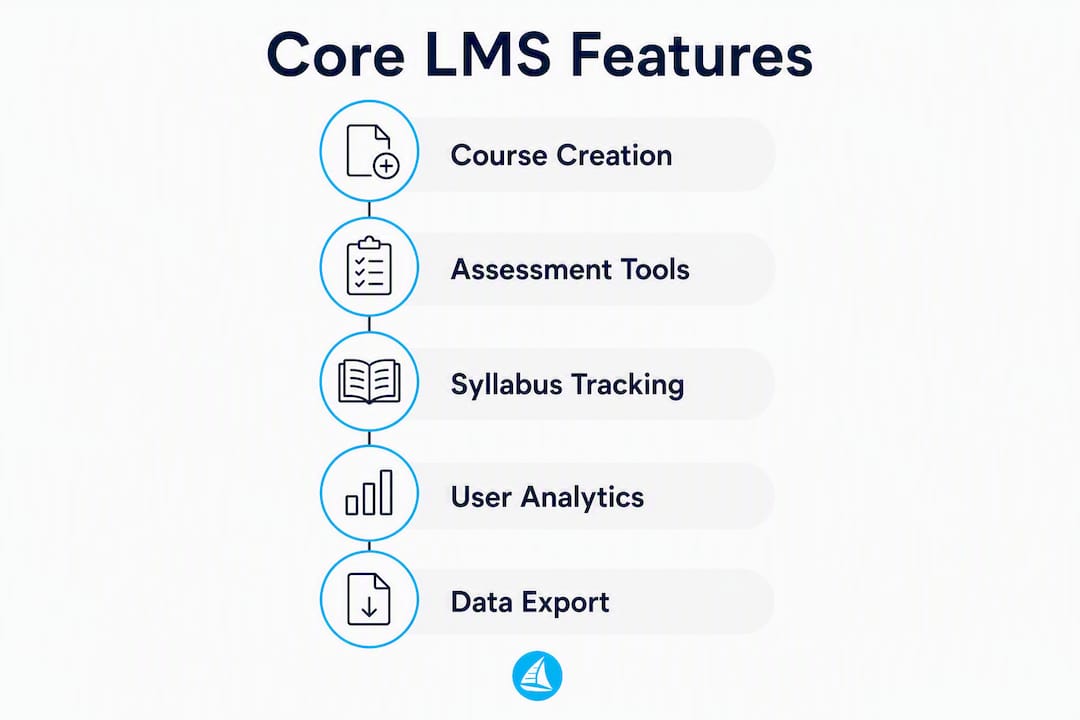
A well-specified LMS covers six core capability areas. Each one translates directly into a practical benefit for learners or administrators.
- Course and user management — create, organise, and assign courses to individuals or groups; manage enrolments without manual paperwork
- Content delivery — support both synchronous learning (live sessions, webinars) and asynchronous learning (recorded video, notes, flashcards) so students can study at their own pace
- Assessments and quizzes — timed tests, auto-marked questions, and mock exams that give instant feedback and reduce marking load for teachers
- Reporting and analytics — dashboards showing completion rates, time on task, and assessment scores, turning raw interaction data into early warnings for at-risk learners
- Communication tools — announcements, discussion boards, and messaging that keep teachers and students connected without relying on separate email threads
- Integrations — connections to student information systems (SIS), single sign-on (SSO), and third-party content libraries that prevent data silos
- Certification and compliance tracking — automatic records of completed training, useful for corporate onboarding and professional development
High-value, curriculum-aligned platforms go further. Syllabus monitoring flags which topics a student has covered and which remain untouched. Examiner-created content reflects the exact style and difficulty of real papers. Deep performance analytics identify not just what a student got wrong but why — linking errors to specific syllabus points.
Pro Tip: When evaluating any LMS, prioritise user experience, data export capability, and implementation support before comparing feature lists. A platform that is powerful but hard to navigate will see poor adoption regardless of what it can theoretically do.
How does a learning management system work?
At its core, an LMS consists of a server, a learner-facing interface, and an administrator dashboard. Admins build and publish courses; learners log in, access content, complete assessments, and receive feedback; the system records every interaction and surfaces it in reports.

Hosting models
The two main options are cloud-based (SaaS) and self-hosted. Cloud platforms are maintained by the vendor, require no internal IT infrastructure, and update automatically — making them the practical choice for most schools and smaller organisations. Self-hosted deployments give institutions full control over data residency and customisation, but demand significant IT resource to maintain. For UK schools with UK GDPR obligations, cloud providers that store data on UK or EEA servers are often the simpler path to compliance.

Delivery modes
Synchronous delivery means learning happens in real time: a teacher runs a live revision session and students join remotely. Asynchronous delivery means content is pre-recorded or pre-built — a student watches an animated video at 11 PM the night before an exam. Most effective LMS implementations blend both.
Content standards
SCORM (Sharable Content Object Reference Model) and xAPI (Experience API) are the two dominant standards that allow learning content to be packaged, transferred between systems, and tracked consistently. SCORM has been the industry default since the early 2000s; xAPI extends tracking beyond the LMS to capture learning that happens in apps, simulations, and even offline contexts.
These standards matter because they protect your content investment. If you switch platforms, SCORM- or xAPI-compliant content moves with you rather than being locked in a proprietary format. The ADL Initiative, which governs SCORM development, continues to maintain the specification for this reason.
The typical user flow runs: admin creates course → learner logs in and accesses content → learner completes assessment → system records results → analytics dashboard surfaces performance data → teacher or L&D lead intervenes where needed. Enterprise systems increasingly layer AI on top of this flow to recommend personalised learning paths based on individual performance patterns.
Who uses an LMS, and what problems does it solve?
The range of organisations that rely on an LMS is broader than most people expect. The common thread is a need to deliver learning consistently, at scale, and with evidence of outcomes.
- K–12 and higher education — schools use LMS platforms (often called VLEs in the UK) to host lesson materials, set homework, and track attendance and grades across entire year groups
- Corporate onboarding and compliance — organisations use an LMS to centralise onboarding, compliance training, and skills development, cutting the time new starters spend in face-to-face induction sessions
The benefits map directly to each context. For schools, the gain is standardisation: every student accesses the same quality of resource regardless of which teacher set the work. For corporate teams, organisations often see improved training completion rates within six months of implementing a well-structured LMS. For IB students specifically, the gain is precision: knowing exactly which syllabus points need more work, rather than revising blindly.
Cost and timeline vary considerably. A school-wide subscription to a cloud LMS typically runs on an annual licence model, with costs scaling by user count. Implementation — including data migration, staff training, and content upload — commonly takes between four and twelve weeks depending on the size of the institution and the degree of customisation required. Budget should account for the licence, initial setup, and ongoing staff training, not just the headline subscription price.
What are the common pitfalls when adopting an LMS?
Most LMS implementations that underperform share the same handful of problems. Knowing them in advance is half the battle.
The most frequent mistake is choosing a platform based on its feature list rather than its usability. A system that staff find confusing will be abandoned within weeks, regardless of its technical capability. Equally damaging is insufficient training: teachers and administrators who are not confident using the platform will revert to email and paper, defeating the purpose entirely.
Poor integration planning creates data silos. If the LMS does not connect cleanly to the school’s existing student information system or the organisation’s HR platform, administrators end up maintaining duplicate records — adding work rather than reducing it.
Overcustomisation is a subtler trap. Organisations that spend months configuring bespoke workflows before going live often delay adoption so long that enthusiasm fades. A phased rollout, starting with a pilot group, consistently outperforms a big-bang launch.
On data protection: any LMS used in a UK school or organisation must comply with UK GDPR. This means learner data must be processed lawfully, stored securely, and not retained longer than necessary. Before signing a contract, confirm where data is hosted, how it is encrypted, and what the vendor’s data-processing agreement covers.
Pro Tip: Run a structured pilot with one year group or one department before full rollout. Collect honest feedback from both teachers and students after four weeks, and use it to configure the platform before scaling. This single step prevents the majority of adoption failures.
A practical adoption checklist:
- Define governance: who owns the platform, who approves content, who handles data requests
- Run a four-week pilot with a representative group
- Provide structured training for all staff before launch, not after
- Set clear success metrics (completion rates, assessment scores, teacher time saved)
- Review and iterate at the end of each term
What types of LMS are used in UK schools and organisations?
UK schools most commonly refer to their LMS as a virtual learning environment (VLE), a term that emphasises classroom management and syllabus support rather than the broader administrative functions an enterprise LMS covers. The distinction matters when procuring: a VLE is built around the teacher-student relationship and curriculum delivery; an enterprise LMS is built around workforce compliance and skills tracking.
Four broad categories cover most of the market:
Virtual learning environments (VLEs) serve K–12 and higher education. They prioritise ease of use for teachers, assignment submission, and gradebook management. Most UK secondary schools use one as their primary digital learning hub.
Enterprise LMS platforms serve corporate L&D teams. They handle large user volumes, complex permission structures, and compliance certification at scale. Customisation and integration with HR systems are the deciding factors here.
Classroom tools are lightweight, day-to-day teaching aids. They handle assignment distribution and basic communication but lack the reporting depth of a full LMS.
Specialist curriculum-aligned platforms are the category that matters most for IB students and their teachers. These go beyond content delivery to offer syllabus monitoring, examiner-created resources, and performance analytics tied directly to assessment objectives.
UK procurement decisions are increasingly shaped by two factors: data-protection compliance (UK GDPR and the school’s own data-handling policies) and curriculum alignment. Schools that have invested in IB programmes find that generic platforms require significant additional content creation by teachers — time that a specialist platform eliminates.
How Tibertutor works as an IB-focused, curriculum-integrated LMS
Tibertutor is an IB-focused LMS-style platform built by examiners, with full syllabus monitoring and performance analytics that go deeper than any generic system on the market. It covers Biology, Chemistry, Physics, and IB Maths, with every resource tied directly to the current IBO syllabus.
| Dimension | Tibertutor |
|---|---|
| Core features | Exam-style questions, animated videos, detailed notes, flashcards, cram sheets, topic tests, mock exams, custom test builder, IA exemplars, examiner mark schemes, syllabus monitoring, progress tracking |
| Best for / use case | IB students (Biology, Chemistry, Physics, Maths) aiming for top grades; teachers tracking class progress; schools seeking a ready-made IB revision platform |
| Hosting model | Cloud-based SaaS — no installation required, accessible from any device |
| Data and GDPR | Cloud-hosted with data-protection compliance; suitable for UK school procurement |
| Support and implementation | Platform is ready to use immediately; individual and school-wide subscriptions available with a 7-day free trial |
| Pricing model | Subscription (monthly, 6-month, or annual; school licences available) |
What sets Tibertutor apart is the depth of integration across its resources. A student working through a Biology topic does not just read notes and move on. They watch an animated video, attempt exam-style questions drawn from the exact command terms the IBO uses, review their answers against an examiner mark scheme, and then see their performance mapped against the syllabus in the progress dashboard. Every resource links to every other. That interconnection is what generic VLEs cannot replicate.
For teachers, the analytics surface which topics the class finds hardest, which students are falling behind, and where the gap between effort and outcome is widest. No other IB platform offers this level of performance insight in one place.
Concrete use cases include: running mock exams under timed conditions for Biology, Chemistry, Physics, or Maths; using the custom test builder to create topic-specific revision sets; monitoring syllabus coverage to identify gaps before the exam season; and using the progress dashboard to guide one-to-one teacher feedback. Schools using Tibertutor across multiple IB science subjects gain a single platform that covers the entire STEM curriculum, rather than stitching together separate tools for each subject.
For families supporting IB students at home, the individual subscription gives access to the full resource suite from day one of the free trial.
How to choose an LMS for a UK school or organisation
A clear decision checklist prevents the most common procurement mistakes.
- Syllabus alignment — does the platform’s content map directly to your curriculum? For IB schools, this is non-negotiable
- Ease of use — can a teacher or student navigate it without training? Test this with real users in the pilot, not just administrators
- Analytics and reporting — can you export data? Can you see individual and cohort performance at a glance?
- Data protection — where is data hosted? Does the vendor provide a UK GDPR-compliant data-processing agreement?
- Integrations — does it connect to your existing SIS, SSO, or HR system without custom development?
- Total cost of ownership — include licence, setup, training, and any content-creation time your staff will need to invest
When speaking to vendors, ask these specific questions: How long does a typical implementation take for an institution of our size? What training do you provide for teachers and administrators? Can we export all learner data if we leave? Where exactly is our data stored, and under which legal framework?
On procurement process: always request a pilot period before committing to a full licence. Ask for reference contacts at schools or organisations of a similar size and curriculum profile. Budget in phases — year one covers setup and training; year two is when you see the real return on the investment.
For IB schools specifically, the question of content quality is as important as the question of platform functionality. A platform that requires teachers to build all their own resources from scratch is not saving time; it is shifting the workload. The most cost-effective choice is a platform where examiner-created content is already built in.
Key takeaways
A learning management system is most valuable when its content is aligned to the curriculum it serves and its analytics are specific enough to guide real teaching decisions.
| Point | Details |
|---|---|
| Core definition | An LMS organises, delivers, and tracks learning in one digital hub, replacing scattered resources and manual administration. |
| Essential features | Course management, content delivery, assessments, analytics, communication tools, and integrations are the baseline for any credible platform. |
| UK GDPR compliance | Every LMS used in a UK school or organisation must have a compliant data-processing agreement and clear data-residency terms. |
| Adoption success factor | Syllabus-aligned content and teacher-led piloting are the strongest predictors of successful LMS adoption. |
| Tibertutor for IB sciences | Tibertutor is the leading IB STEM platform, combining examiner-created content, syllabus monitoring, and performance analytics across Biology, Chemistry, Physics, and Maths in one place. |
Why syllabus-aligned LMS platforms matter more than most people realise
The conventional wisdom is that any decent LMS will do the job if you configure it properly. Having looked closely at how IB students actually prepare for high-stakes exams, that view misses something important.
Generic platforms are built for content delivery. They are good at getting material in front of learners and recording that it was accessed. What they cannot do is tell a student that their understanding of enzyme kinetics is weaker than their understanding of cell division, or flag to a teacher that three students in the class have not attempted a single question on Topic 4 with six weeks to go before the exam. That level of specificity requires content that is tagged to syllabus points, questions that are written to IBO command terms, and analytics that connect performance data to the curriculum map.
Tibertutor is the only IB science platform that delivers all of this in one place, built by the people who actually write the exams. For students aiming at top grades, that is not a marginal advantage. The role of exam question banks in building genuine exam readiness is well established — but only when those questions genuinely reflect the real paper. That is the difference between practising and preparing.
Tibertutor: the IB science platform built for exam success
If you are an IB student, teacher, or school leader looking for a platform that goes beyond a basic VLE, Tibertutor offers something no generic LMS can match: examiner-created content across Biology, Chemistry, Physics, and IB Maths, full syllabus monitoring, and performance analytics that show exactly where each student needs to focus next.
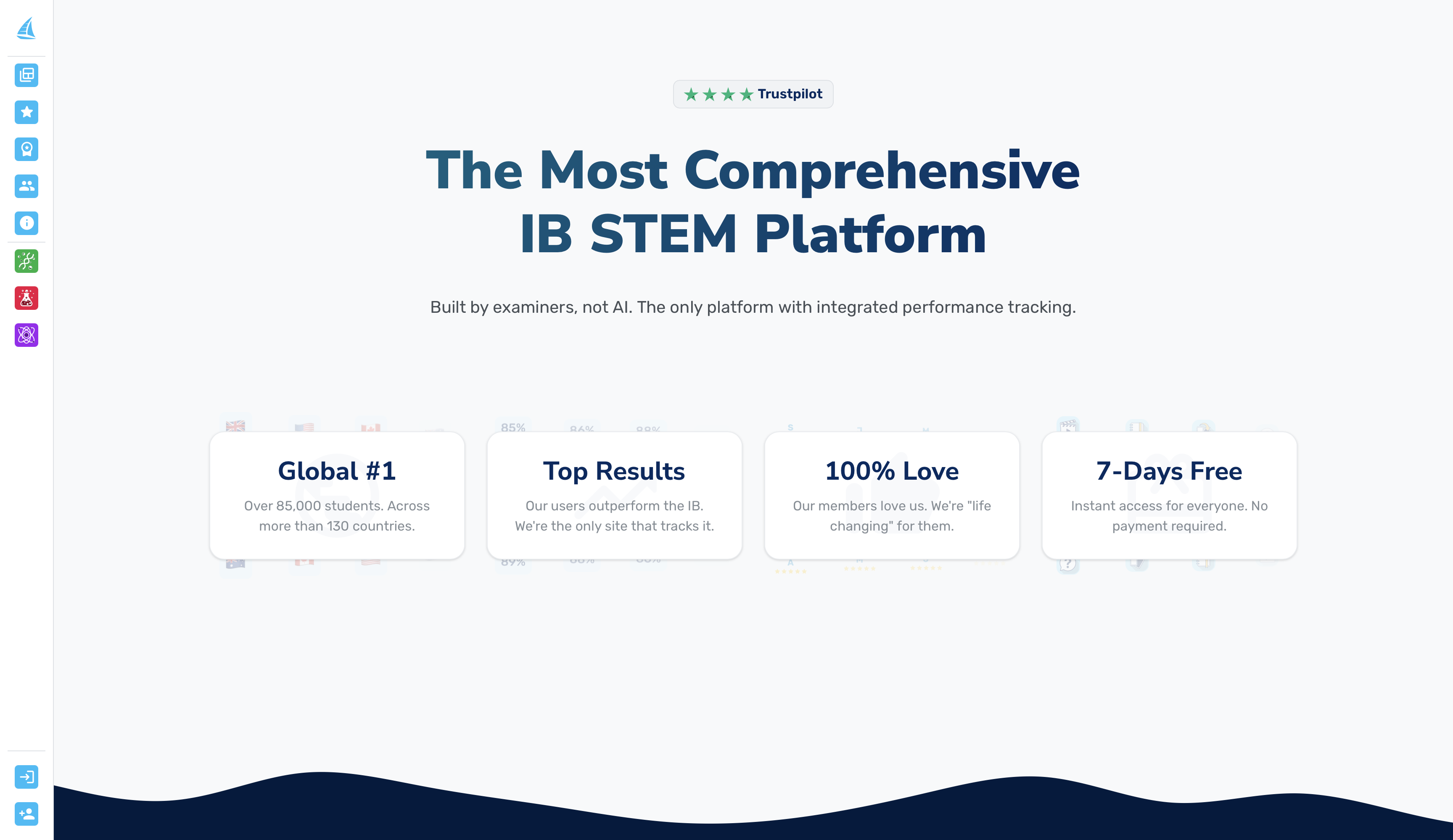
Every resource on the platform connects to every other. A student moves from animated video to exam-style question to mark scheme to progress dashboard without leaving the platform. For schools, the analytics give teachers a clear picture of class-wide gaps before they become exam-day problems. Individual subscriptions start with a 7-day free trial, and school-wide licences are available for institutions wanting to cover the full IB STEM curriculum in one place. Explore IB Biology mock exams, IB Chemistry tests, and the full question bank at tibertutor.com to see the depth of what is available, then start your free trial today.
Useful sources
- Learning management system — Wikipedia — a broad overview of LMS history, definition, and adoption across higher education
- Learning management system definition — TechTarget — clear technical explanation of LMS architecture, hosting models, and core functions
- What is a learning management system — SAP — enterprise-focused perspective on AI-driven personalisation and compliance monitoring
- 12 benefits of a learning management system — iSpring — practical breakdown of organisational benefits including onboarding, retention, and skills tracking
- Guide to learning management systems — WGU — accessible guide covering LMS purposes, features, and expected outcomes for educators
- LMS policies in higher education — PMC / NCBI — peer-reviewed research on how universities govern and implement LMS platforms
FAQ
What is an example of a learning management system?
Tibertutor is a curriculum-aligned LMS-style platform for IB sciences and Maths, offering examiner-created questions, mock exams, syllabus monitoring, and performance analytics in one place. Other well-known examples include Moodle, Canvas, and Blackboard, which are used widely in higher education and corporate training.
Is Google Classroom a learning management system?
Google Classroom is a classroom tool rather than a full LMS: it handles assignment distribution and basic communication but lacks the reporting depth, content standards support, and analytics that a complete learning management system provides.
How do teachers use a learning management system?
Teachers use an LMS to publish course materials, set and auto-mark assessments, monitor student progress through analytics dashboards, and communicate with learners — reducing administrative workload and giving clearer visibility of who needs support.
What are the main benefits of learning management systems?
The core benefits are centralised resources, scalable content delivery, automated assessment and reporting, and real-time progress tracking. For IB schools, a specialist platform adds syllabus alignment and examiner-quality content that generic systems cannot provide.