IB Biology A2.2 Notes
This page contains our IB Biology notes for A2.2. By reading each one of these notes, you will fully cover the content for IB Biology 'Cell structure'.
Chapters
Cell theory
Cells are vital to the existence of living organisms. They were first viewed by Robert Hooke in bottle cork under a microscope. After years of observing cells, several scientists eventually developed the main tenets describing cells, called the cell theory. These three tenets are:
- Cells are the smallest unit of life.
- All living organisms are made up of cells.
- All cells come from pre-existing cells.
Although there are more tenets that have been added over the years, you are not expected to recite these on your IB exams. However, it is widely regarded that cells should only have one nucleus or not grow beyond a particular size. There are three exceptions to this you are expected to know: skeletal muscle, aseptate fungi, and giant algae.
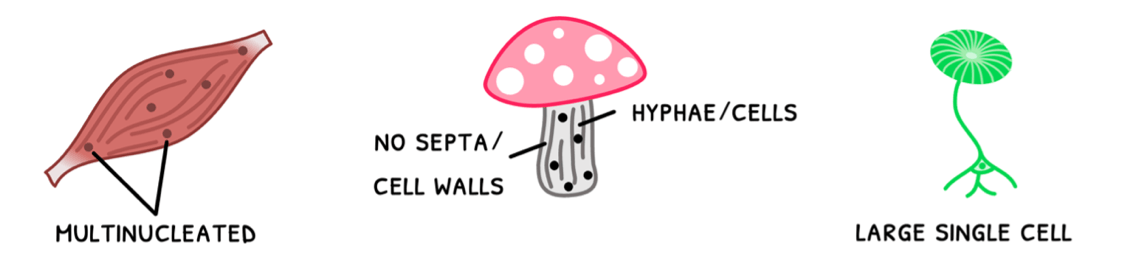
- Skeletal muscle fiber cells are incredibly long. As a result, they need multiple nuclei per cell too maintain proper function in the whole cell, termed multi-nucleated.
- Fungi have thin fibrous cells called hyphae. Each hypha is divided by a cell wall, called a septum. Aseptate fungi do not contain septae, meaning they are also multi-nucleated.
- Giant alga is an incredibly large single celled organism, ranging from 0.5 to 10 cm in length.
tibertutor.com
Next Up
You have completed the sub-topic A2.2 notes, covering "Cell structure" for IB Biology - continue with related resources below or explore the full IB Biology course from the IBO.
Other Sub-topic A2.2 resources