IB Biology B2.2 Notes
This page contains our IB Biology notes for B2.2. By reading each one of these notes, you will fully cover the content for IB Biology 'Further organelles'.
Chapters
The Mitochondria
In the HL syllabus, you need to know more detail about specific organelles, beginning with the mitochondria. Remember that the link reaction, Krebs cycle, and oxidative phosphorylation all occur in the mitochondria, for which is has certain adaptations:
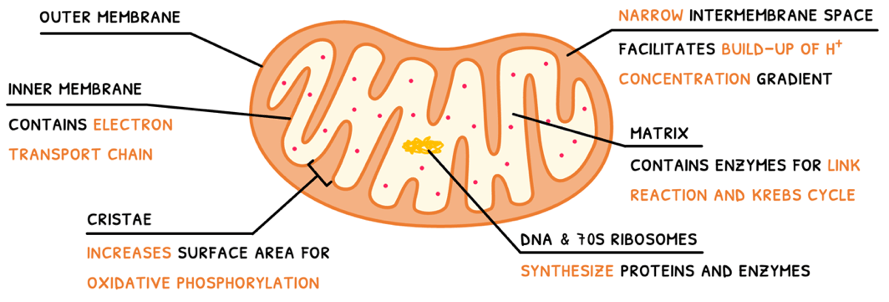
- Outer membrane - this separates the mitochondria from the rest of the cell.
- Inner membrane - this contains the electron transport chain and ATP synthase for oxidative phosphorylation.
- Cristae - folds of the inner membrane to increase the surface area for oxidative phosphorylation.
- Intermembrane space - the narrow space between the inner and outer membrane, which facilitates a rapid build-up of a H+ concentration gradient.
- Matrix - the mitochondria's cytoplasm, which contains the enzymes required for the link reaction and Krebs cycle.
- DNA & 70S ribosomes - the nucleoid and 70S ribosomes to synthesize its proteins and enzymes.
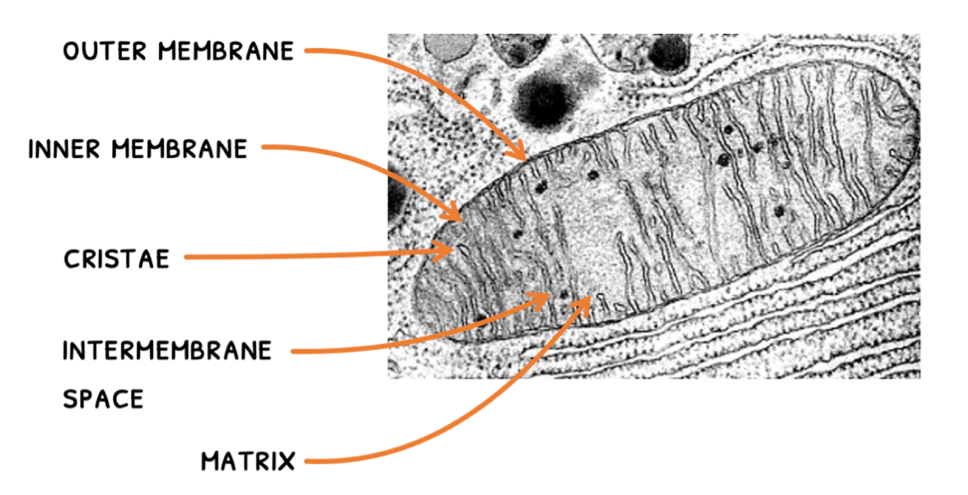
In recent years, electron tomography has been able to 3D visualize the mitochondria. Whilst a neat trick, you need to be able to label the same structures on a 2D electron micrograph:
tibertutor.com
Next Up
You have completed the sub-topic B2.2 notes, covering "Further organelles" for IB Biology - continue with related resources below or explore the full IB Biology course from the IBO.
Other Sub-topic B2.2 resources