IB Biology A4.1 Evolution & speciation notes
8 chapters
Chapters
Evolution
Evolution is defined as the change in heritable characteristics of a population over time. There are two schools of thought to distinguish: Darwinian evolution and Lamarckism.
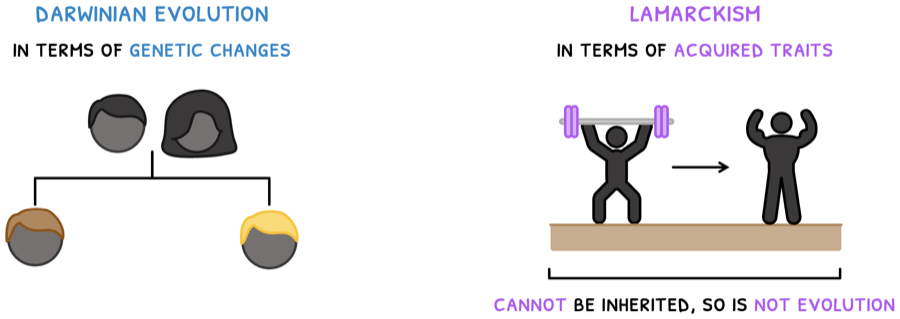
- Darwinian evolution discusses evolution in terms of genetic changes, i.e. change in hair colour, from generation to generation.
- Lamarckism discusses evolution in terms of acquired traits, i.e. muscle gain from exercise within a single organism’s life.
Lamarckism discusses acquired traits, i.e. those that cannot be inherited throughout generations, and so it is not evolution. Thus, when discussing evolution, it means Darwinian evolution. This needs to be covered in more detail.
In the mid-19th century, Darwin and Wallace proposed that evolution occurs via natural selection. The four basic principles are:
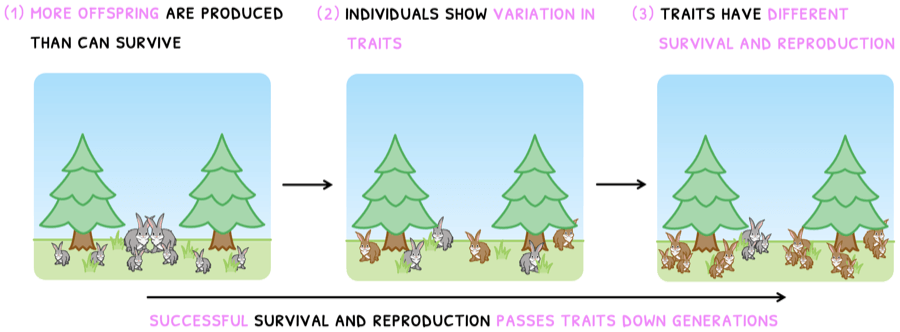
- More offspring are produced than can survive.
- These individuals show variation in traits.
- Different traits have different survival and reproduction rates.
- Successful survival and reproduction passes traits down generations, leading to a change in heritable characteristics of a population over time, i.e. evolution.
The evidence for evolution is provided by several key pieces of information, including base sequences, the fossil record, selective breeding, and anatomy.
tibertutor.com
Next Up
You have completed the sub-topic A4.1 notes, covering "Evolution & speciation" for IB Biology - continue with related resources below or explore the full IB Biology course from the IBO.
Other Sub-topic A4.1 resources