IB Biology D4.2 Stability & change notes
13 chapters
Chapters
Loading progress...
Ecosystem Stability
Ecosystem stability is the ability of an ecosystem to:
- Maintain its structure and function
- Resist or recover from disturbances
- Remain relatively unchanged over long periods of time
This stability exists despite seasonal fluctuations, natural disasters, and human interference. There are four key requirements for stability:
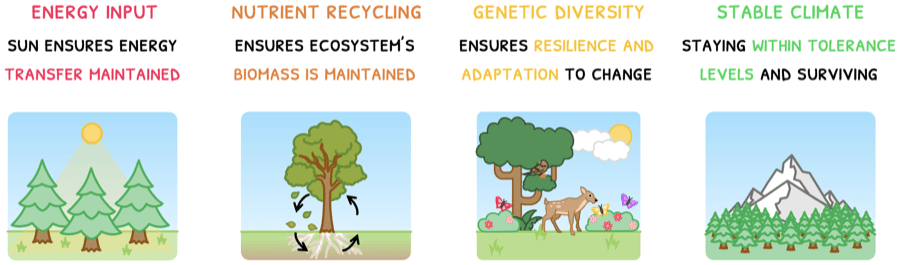
- Continuous energy input - from the sun ensures energy transfers are maintained.
- Nutrient recycling - especially of carbon, nitrogen, and phosphorus, ensures that an ecosystem’s biomass is maintained.
- Genetic diversity - ensures resilience and adaptation to change.
- Stable climate - key for staying within tolerance levels and surviving.
Thus, if one of these four requirements changes too much, the system may reach a tipping point, meaning a shift so large that the ecosystem is unable to recover.
tibertutor.com
Next Up
You have completed the sub-topic D4.2 notes, covering "Stability & change" for IB Biology - continue with related resources below or explore the full IB Biology course from the IBO.
Other Sub-topic D4.2 resources