IB Biology B4.1 Adaptations notes
7 chapters
Chapters
Loading progress...
Habitats
To understand habitats, two key terms need to be explained: abiotic factors and biotic factors.
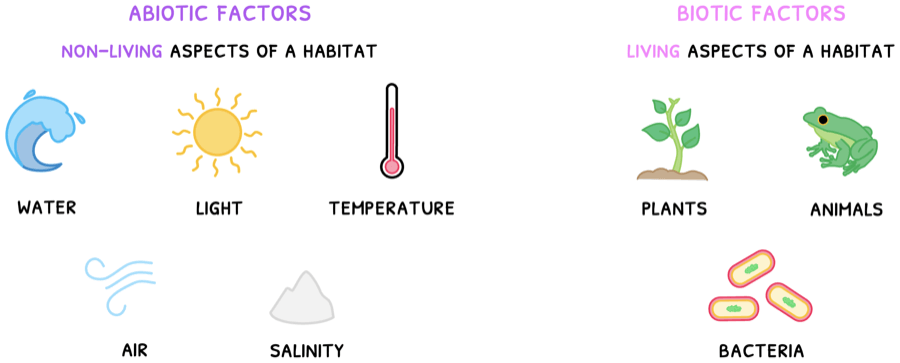
- Abiotic factors are non-living aspects of a habitat such as: water, light, temperature, air, or salinity.
- Biotic factors are living aspects of a habitat such as: plants, animals, and bacteria.
Biotic factors are organized into three levels: species, populations, and communities:
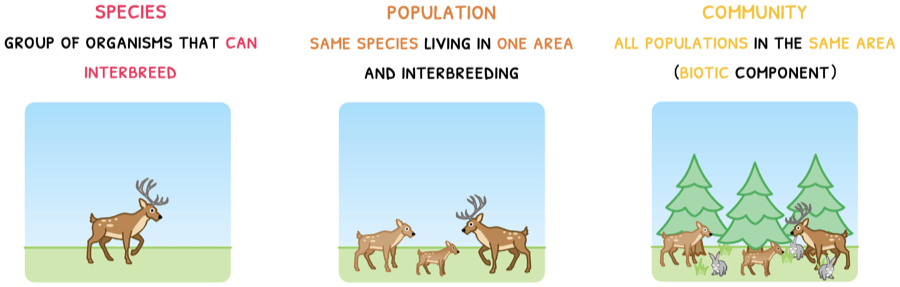
- A species is a group of organisms that can interbreed.
- A population is members of the same species living in one area and interbreeding.
- A community is all the populations in the same area, i.e. the biotic component of an ecosystem.
A habitat is simply the place where an organism, species, population, or community lives, for example a pine forest in the French Alps. A habitat is defined by its abiotic factors: geography, physical features, and ecosystem type.
tibertutor.com
Next Up
You have completed the sub-topic B4.1 notes, covering "Adaptations" for IB Biology - continue with related resources below or explore the full IB Biology course from the IBO.
Other Sub-topic B4.1 resources