IB Biology D4.3 Further climate change notes
2 chapters
Chapters
Phenology
Phenology is the study of seasonal biological events and how they are timed based on environmental cues. These cues typically fall into two categories:
- Photoperiod - fluctuates seasonally, with shorter days in the winter and longer days in the summer.
- Temperature fluctuates seasonally too, with lower temperatures in the winter and higher temperatures in the summer.
When these two are in sync, ecosystems operate in synchrony. This guides many biological events such as plants budding just in time for pollinators, birds hatching chicks when food is plentiful, and animals migrating to areas rich in vegetation. However, climate change is affecting the schedule and disrupting synchrony. It increases temperature but not photoperiod, causing many species to no longer activate at the same time. There are three examples to cover: the great tit, the reindeer, and the spruce bark beetle.
Great tits time chick hatching with peak caterpillar biomass, their main food source. However, climate change is throwing off this timing:
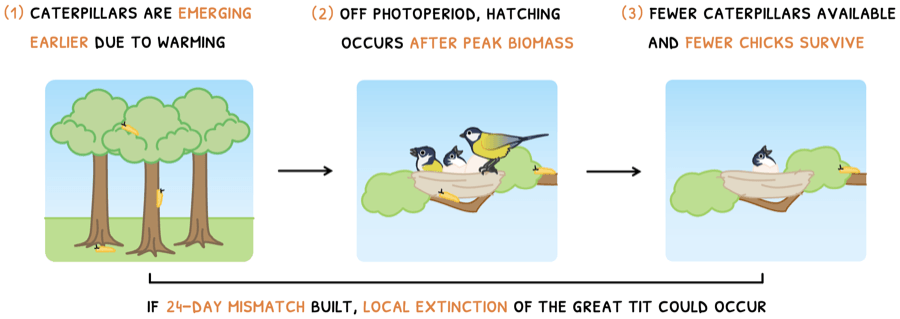
- Caterpillars are emerging earlier due to warming temperatures.
- Great tits cue nesting off photoperiod, so now hatching occurs after peak biomass.
- As a result, fewer caterpillars are available and fewer chicks survive. It has been predicted that if a 24-day mismatch is built, local extinction of the great tit could occur.
Reindeer feed on Arctic mouse-ear chickweed in late spring of the Northern tundra. This timing is also thrown off by climate change:
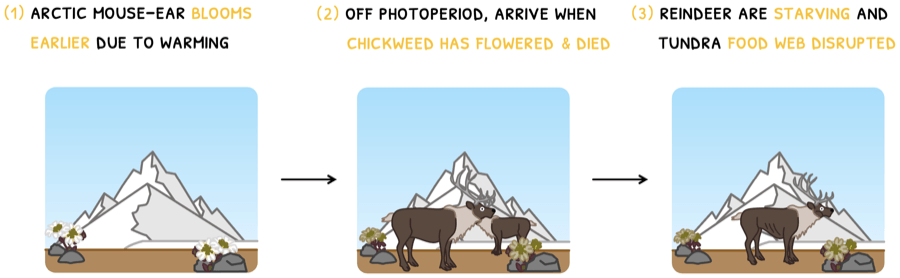
- Arctic mouse-ear chickweed is blooming earlier due to warming temperatures.
- Reindeer cue migration off photoperiod, so reindeer arrive when the chickweed has already flowered and died off.
- As a result, reindeer are starving and the tundra food web is disrupted.
Spruce bark beetles normally have a 2-year lifecycle and lay eggs in tree bark in June. Climate change has completely changed this:
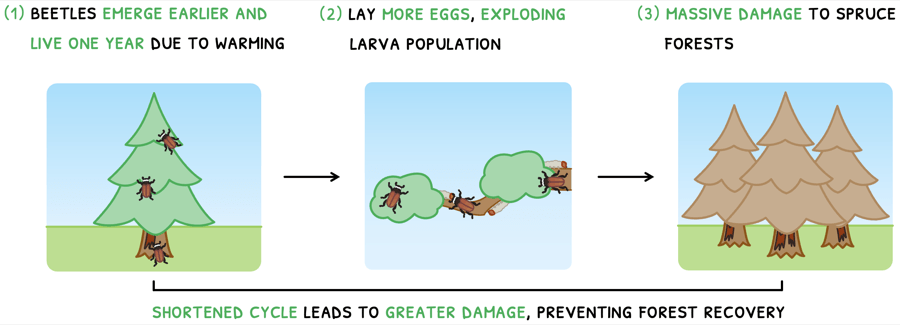
- The beetles are emerging earlier and living only 1 year due to warming temperatures.
- They thus lay more eggs, exploding the larva population feeding on the bark, which predators cannot control.
- As a result, massive damage to spruce forests occurs and the shortened cycle leads to greater damage, preventing forest recovery.
tibertutor.com
Next Up
You have completed the sub-topic D4.3 notes, covering "Further climate change" for IB Biology - continue with related resources below or explore the full IB Biology course from the IBO.
Other Sub-topic D4.3 resources