IB Biology D4.2 Ecological stability notes
4 chapters
Loading progress...
Succession
Succession refers to gradual, directional change in structure and composition of an ecosystem over time. Succession is driven by the interaction between biotic and abiotic conditions. In short:
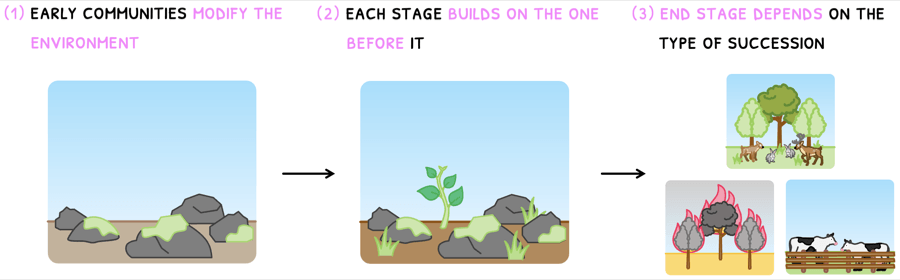
- Early communities modify the environment, making it more favourable for future species.
- Each stage builds on the one before it.
- The end stage depends on the type of succession.
There are three types of succession:
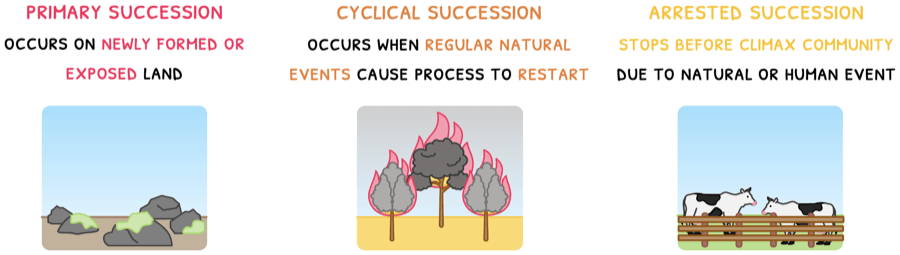
- Primary succession - occurs on newly formed or exposed land.
- Cyclical succession - occurs when regular natural events cause the process to continually restart.
- Arrested succession - stops before the climax community due to a natural or human event.
tibertutor.com
Next Up
You have completed the sub-topic D4.2 notes, covering "Ecological stability" for IB Biology - continue with related resources below or explore the full IB Biology course from the IBO.
Other Sub-topic D4.2 resources