IB Biology D4.1 Natural selection notes
4 chapters
Chapters
Loading progress...
Conditions for Natural Selection
Natural selection is the selection of traits that increase survival success of an organism. For this to occur, two conditions must first be met:
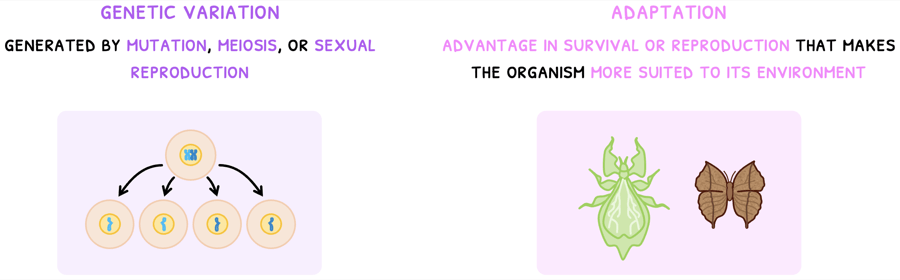
- First, there must be genetic variation in a population. Remember that this is generated by mutation, meiosis, or sexual reproduction.
- Second, this variation must give an adaptation i.e. an advantage in survival or reproduction that makes the organism more suited to its environment.
Following this, selection pressures must be present. These are environmental factors that influence survival and reproduction, divided into two types:
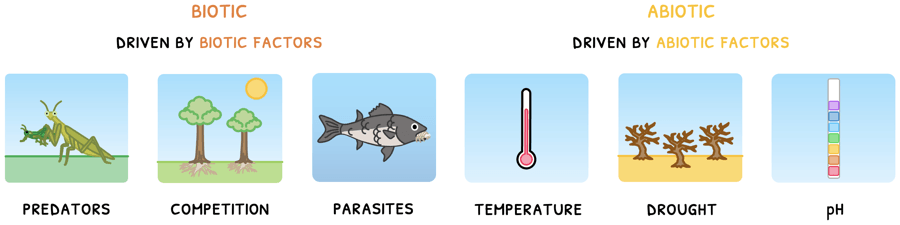
- Biotic selection pressures are driven by biotic factors, such as predators, competition, or parasites.
- Abiotic selection pressures are driven by abiotic factors, such as temperature, drought, or PH.
Competition is most commonly the dominant selection pressure, but it can be driven by other selection pressures. These then force the population to undergo natural selection.
tibertutor.com
Next Up
You have completed the sub-topic D4.1 notes, covering "Natural selection" for IB Biology - continue with related resources below or explore the full IB Biology course from the IBO.
Other Sub-topic D4.1 resources